Designing Digital Key Access Around Lease Status & Permissions
 July 22, 20266 min read
A resident gives notice, moves out a week early, and hands the keys to a friend taking over the lease. Your smart lock integration sees a single "lease end" date three weeks out and a single "tenant" record. So either the old resident keeps working access they shouldn't have, or the new one can't get in until paperwork catches up. This is the part of digital key access that vendor demos skip: lease status is rarely a clean on/off switch, yet most systems treat it like one. If you want access permissions that actually match who is legally allowed in a unit, you have to design around the real shape of a lease, not a single move-out flag.
Why Lease Status Is the Real Source of Truth
Most guides frame access control as a hardware decision, then wave at "PMS integration" as the thing that makes it automatic. That framing hides the actual problem. A lock doesn't know anything. It grants or denies based on whatever permission record you push to it, and that record is only as correct as the lease data behind it.
The reason this matters: a lease has more than two states. There's signed-but-not-started, active, in-notice, holdover, partially assigned, terminated-for-cause, and fully ended. A resident in notice still has full legal access. A resident who has been served but hasn't vacated may have restricted access. Treat all of those as "active or revoked" and you'll either lock people out illegally or leave doors open to people who should be gone.

The cost of getting this right isn't trivial either way. Industry research shows electronic access control can save an average of $80,000 per building annually by removing rekeying and lockout overhead. Those savings only hold if the system reflects lease reality. The moment staff have to manually correct access because the lease model was too crude, you're back to the friction you paid to remove.
Modelling Permissions for Multi-Party and Assigned Leases
Here's where naive complex system integration falls apart. Off-the-shelf lock-to-PMS connectors assume one lease maps to one person. Real residential leases don't. Three roommates can share a single lease, each needing their own credential and their own audit trail. One of them leaves mid-term and assigns their share to someone new. The lease is still active. The unit hasn't turned over. But the people attached to it have changed.
A permission model that works treats the lease as a container and each occupant as a separate access subject linked to it. Access rights are derived, not assigned by hand: a credential is valid because a person holds an active role on a lease that grants entry to a specific door for a specific window. Change the role, and access recalculates automatically.
This is exactly the problem NUS Technology solved building VestaLiving for an Irish property developer. The legacy system was built for simple single-tenant leases and couldn't handle multi-party leases or mid-lease takeovers. NUS built a Multi-Party Lease Engine that handles multiple roommates and mid-lease assignments, then tied digital key access rights so they sync automatically with lease status and duration. Today that platform runs across more than 1,000 high-end apartment units and 966 active leases. The point isn't the unit count. It's that access stops being a thing staff manage by hand and becomes a thing the lease state decides.
Edge Cases That Break Naive Implementations
The clean cases are easy. Move-in grants access, move-out revokes it. The cases that generate angry phone calls and security incidents are the in-between ones, and they're the ones vendor pages don't mention.
Consider the holdover tenant: lease ended Friday, but they're still in the unit Monday pending a new agreement. Auto-revoke at midnight and you've locked out someone with arguable legal occupancy. Consider the partial move-out: one roommate leaves, the lease continues, and you need to kill exactly one credential without touching the others. Consider notice periods where a resident's access should narrow rather than end. Consider a lease assignment that's signed but where the digital identity verification for the incoming tenant isn't complete yet.
Each of these needs a defined rule, not a default. VestaLiving paired its lease engine with automated KYC using AWS Textract for document scanning and Rekognition for facial matching, so a new occupant's identity is verified before their access rights activate. That's the bridge between "the lease says they're allowed" and "the system trusts they are who they claim." Without it, mid-lease assignment becomes a manual bottleneck or a security hole. Planning these states up front is the difference between workflow automation that gives you operational visibility and a system that quietly produces wrong access.
Building the Integration Layer Between Lease Data and Locks
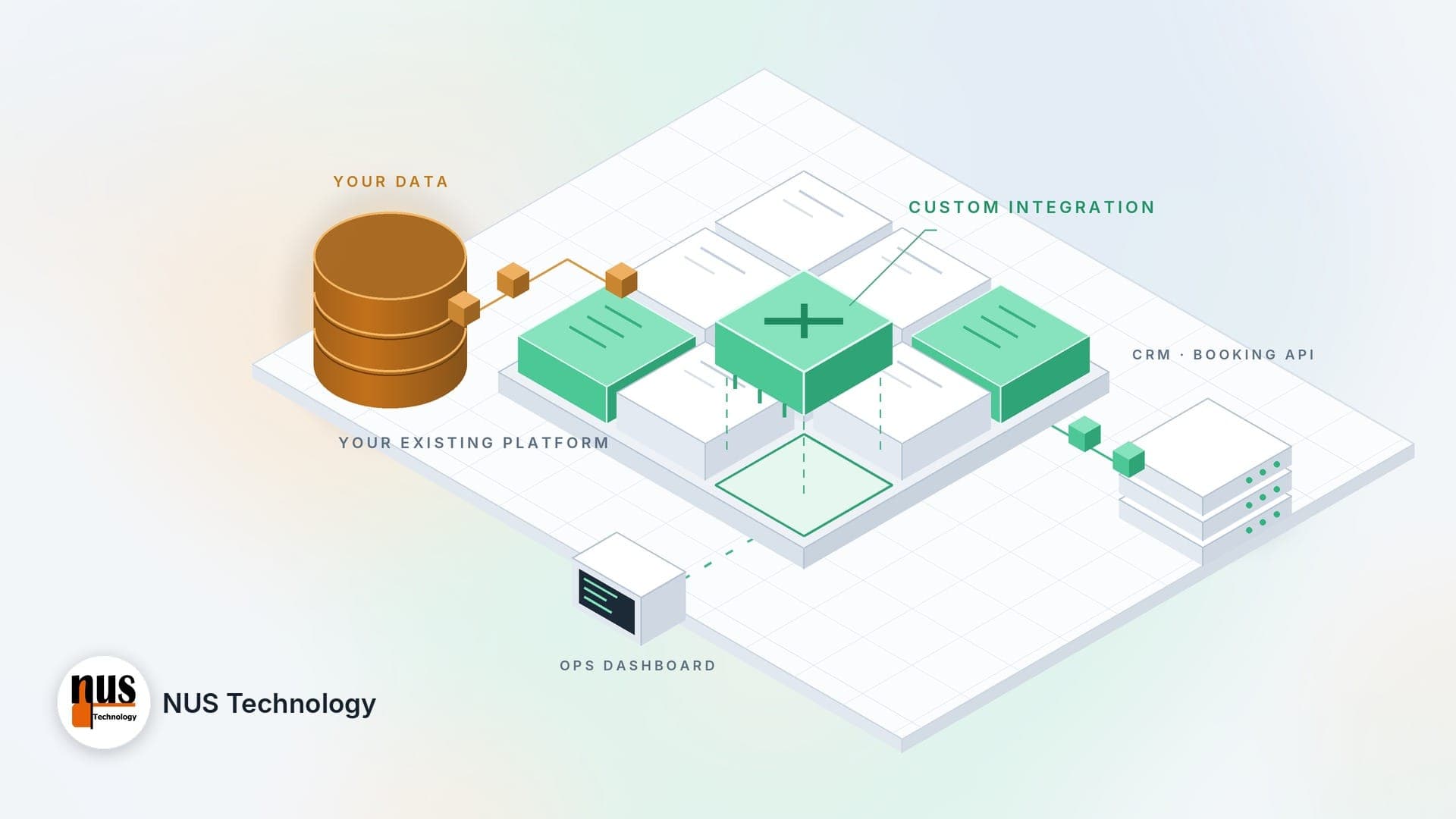
The lock hardware is the last and least interesting step. The work sits in the layer that watches lease state and translates it into credential changes across whatever door hardware you run. That layer needs to do four things reliably: detect a lease state change, decide which occupants are affected, calculate the new permission set for each, and push it to the right doors, with a full log of what changed and why.

Role-based access control is what keeps this manageable at scale. Instead of editing individual credentials, you define roles, primary leaseholder, co-tenant, assigned occupant, maintenance, and let lease state drive role membership. One short-term-rental analysis found that role-based automated access saved roughly 37.5 hours of admin labour per week across a 50-property portfolio, purely by removing manual code handling. Residential leases are more complex than nightly stays, so the leverage is larger, not smaller.
This is the kind of operations backbone platform work where the integration logic, not the lock, is the product. It also has to survive real conditions: locks go offline, a credential push fails, a sync lands out of order. A serious implementation queues changes, retries, and reconciles, so a dropped message never leaves a door in the wrong state.
FAQ
How does digital key access get revoked automatically when a lease ends?
The access system watches lease status in your property management data and triggers a credential change when the lease moves to an ended state. The lock itself does nothing on its own. An integration layer reads the lease event, removes the occupant's permission for that unit's doors, and logs the change. Done well, it also handles notice and holdover states rather than revoking on the end date alone.
Can smart locks handle leases with multiple tenants?
Yes, but only if the underlying model treats each occupant as a separate access subject linked to the shared lease. Many off-the-shelf integrations assume one lease equals one person and break on roommates. A proper design issues each co-tenant their own credential and audit trail, so you can revoke one person's access during a partial move-out without disturbing the others on the same active lease.
What happens to access during a mid-lease assignment or takeover?
The lease stays active while the people attached to it change. The system should deactivate the departing occupant's credential and activate the incoming one once their identity is verified, often through automated document and facial-match checks. The unit never "turns over" in the traditional sense, so access has to follow the occupant change rather than a move-out flag. This is a common failure point for systems built around single-tenant assumptions.
Do I need to replace my locks to tie access to lease status?
Usually not. Most modern smart locks expose an API for issuing and revoking credentials, so the real work is the integration layer between your lease data and the hardware you already run. The harder, higher-value engineering is modelling lease states correctly and building reliable sync, not swapping door hardware. Many portfolios connect existing locks rather than rip-and-replace.
Conclusion
Tying digital key access to lease status sounds like a configuration setting and turns out to be a data-modelling problem. The systems that work treat the lease as the source of truth, handle the messy states between move-in and move-out, and recalculate permissions automatically as occupants and lease roles change. The ones that fail assume one lease, one tenant, one clean end date, and then break the first time a roommate leaves early or a lease gets assigned. If you're building or modernising a platform where lease state needs to drive access reliably across multi-party and mid-term scenarios, NUS Technology has done exactly this work before and we're happy to talk through your access model.