
Our web applications turn your strategy into a scalable, reliable platform. With strong architecture and disciplined execution, we build technology that gives you a lasting competitive edge.
 OUR APPROACH
At some point, every growing business hits the ceiling of off-the-shelf software. The workflows are too specific, the integrations too complex, the reporting too custom. The tool that got you to $1M ARR becomes the obstacle between you and $10M.
A purpose-built web application removes that ceiling but only if it is built well. Poorly architected applications create a different kind of ceiling: technical debt that slows every new feature, reliability problems that erode user trust, and systems that only one developer understands.
We are architecture-first engineers. Before writing a line of code, our senior architects design the system structure that your product will scale on for the next five years, not just the next sprint. That is the difference between software that compounds in value and software you end up rewriting.

 Our Powerhouse
We build SaaS platforms and modernize legacy Rails apps for startups and scale-ups that can’t afford slow delivery. Our senior RoR team has shipped production apps across fintech, healthtech, and e-commerce, and we know how to move fast without accruing technical debt.
Master Your Rails Platform
Need a live chat platform, a high-throughput API, or a microservices backbone? Node.js is our go-to for event-driven systems where milliseconds matter. We’ve built systems processing millions of concurrent requests for SaaS, logistics, and marketplace companies.
Build for Modern Scale
Whether you’re building a new Laravel application or rescuing a legacy PHP codebase, we deliver secure, maintainable solutions built to last. Trusted by businesses managing large catalogs, custom workflows, and multi-tenant platforms.
Leverage Our PHP ExpertiseWe build polished, high-performance front-ends with React, Vue.js, and Angular, working directly from your designs or collaborating with our in-house UI/UX team to get there.
Whether you need a fast-loading SaaS dashboard, a complex data-heavy interface, or a consumer-facing app that needs to feel effortless, our front-end engineers deliver production-ready code optimized for Core Web Vitals, accessibility, and long-term maintainability.

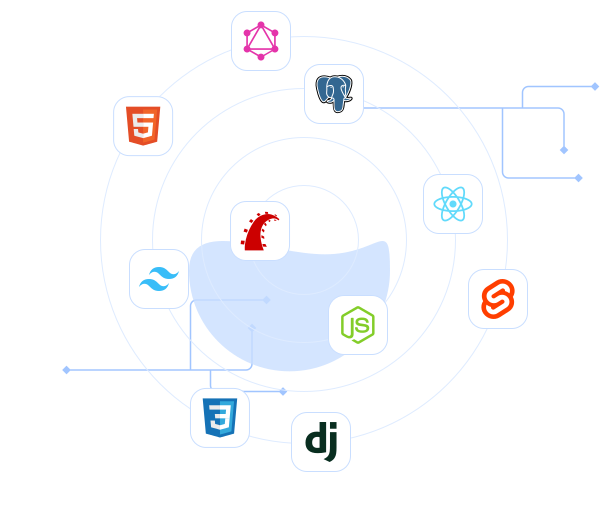
While we specialize in our core technologies, our polyglot engineering team has the versatility to use the right tool for the right job. We have successfully delivered projects using a wider range of modern technologies, including:

Ruby on Rails, NodeJS, PHP, .NET, Django

React, Angular, Vue.js, Svelte, HTML5/CSS3, Tailwind, Bootstrap

PostgreSQL, MySQL, MongoDB, Redis

REST, GraphQL
Some of the most valuable work we do starts not with a blank slate but with a codebase in crisis: over-budget builds abandoned by previous vendors, systems accumulating technical debt faster than new features can be shipped, architectures that made sense at 1,000 users but break at 50,000.
Our rescue process starts with a Technical Audit: we document what exists, identify what is sound and what is not, and produce a prioritised remediation plan. We then stabilise the system before extending it because building on a broken foundation is how projects fail twice.
If you have inherited a software problem, we want to hear about it.


Let’s discuss how our expert engineering can bring
your vision to life.