Real client work
Shipped for an agricultural retailer and a motorcycle parts retailer.



Storefront, warehouse, ERP, and carrier: when these systems update on their own schedule, stock counts drift and orders fall out of sync. We build the integration layer that keeps them consistent, so a sale in one place is reflected accurately everywhere else.
Shipped for an agricultural retailer and a motorcycle parts retailer.
XPO Logistics, DB Schenker, GLS Group, Australia Post.
Order sync mismatches on one retail platform.
Sync carries over cleanly during a platform migration.
Most inventory and order problems come down to the same root cause: two or more systems that disagree about the current state, because nothing keeps them talking.
Near real-time synchronization between your e-commerce platform and warehouse management system, so stock levels reflect what's actually on the shelf.
Connecting your ERP to storefronts, marketplaces, and internal tools, without requiring a disruptive ERP replacement.
Direct integrations with carrier networks like XPO Logistics, DB Schenker, GLS Group, and Australia Post, so shipping status flows back automatically.
Moving between e-commerce platforms, including off legacy systems like Magento, without breaking the inventory and logistics integrations already in place.
Structured extraction when a supplier, marketplace, or legacy system doesn't expose the data you need through a usable API.
One accurate view of stock and order status across every channel and warehouse, instead of reconciling exports by hand.
A small mismatch between systems doesn't stay small. It turns into overselling, delayed shipments, and a support team fielding complaints they can't fix.

Selling stock that isn't actually available means cancellations and refunds, and a customer who's less likely to order again.
Spreadsheet-based stock checks and manual order matching work at low volume, then become the bottleneck as order volume grows.
The more systems involved in fulfilling an order, storefront, warehouse, ERP, carrier, the more places a silent failure can quietly cause a mismatch.

"I have been working with this company for a while now, and they are serious about their business. They have a wide range of developers with different coding expertise, as well as project managers and team managers, which means they can achieve advanced and complicated tasks without a problem. They take great pride in their work, and the result is the delivery of high-quality products."

We start with the specific systems in your supply chain today, not a generic ERP integration checklist.
A review of your storefront, ERP, warehouse, and carrier systems, and exactly where they currently fall out of sync.
Which systems sync directly, which need a custom integration layer, and how conflicts get resolved when two sources disagree.
Sync logic is validated against realistic order and inventory scenarios, including edge cases like backorders and partial shipments, before going live.
A new carrier, a new sales channel, or an ERP upgrade doesn't have to mean rebuilding the sync layer from scratch.
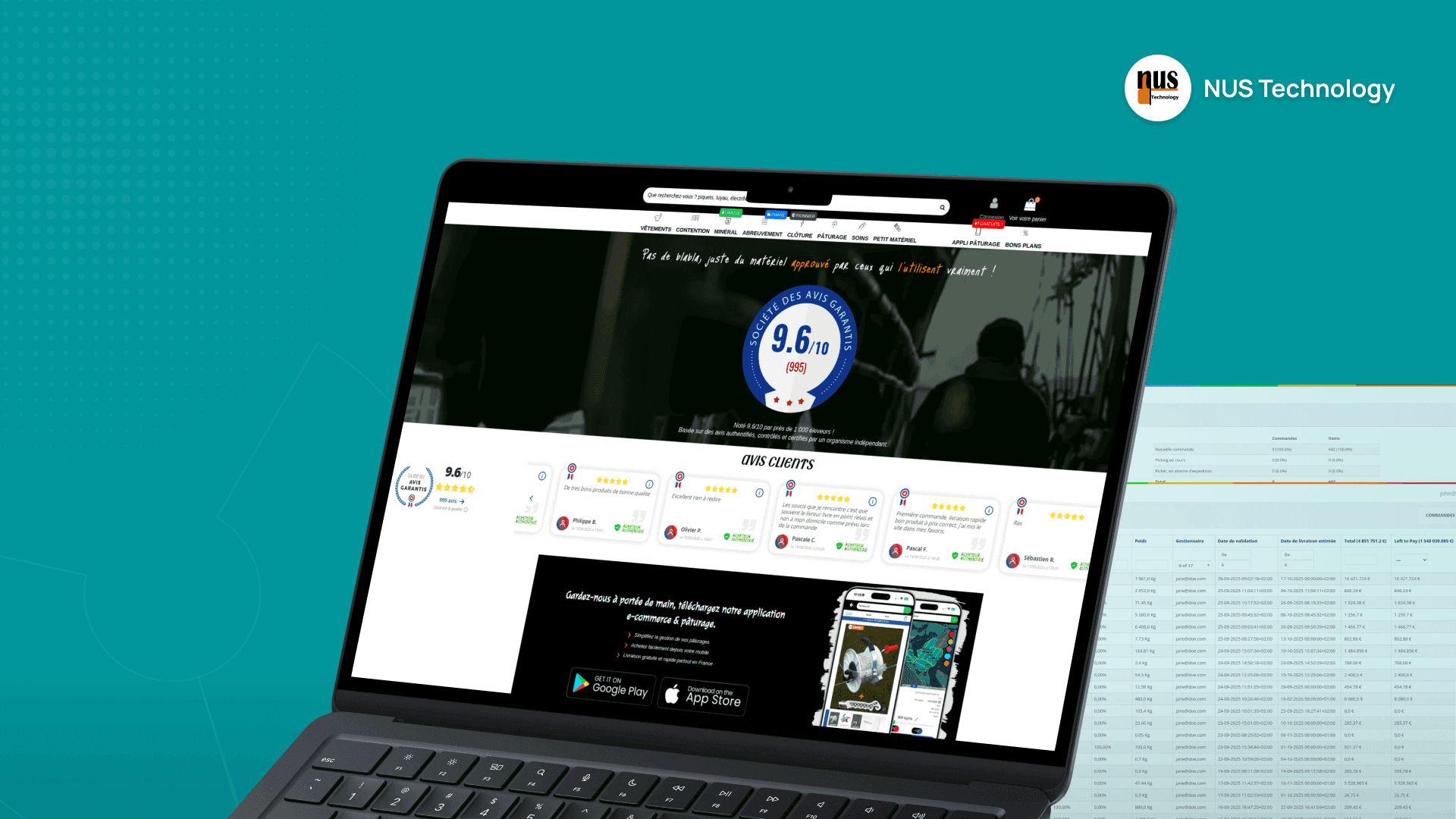
From fragmented systems to connected commerce, this agricultural ecommerce platform unifies online sales, warehouse management, and logistics, achieving 97% inventory accuracy, 35% faster picking, 55% fewer delayed shipments, and 90% fewer order sync errors.


Notes on the decisions behind building and maintaining real software.

 September 25, 20265 min read
Mindbody webhooks arrive twice and out of order? Here is the two-path sync architecture we use to keep a local database honest in production.
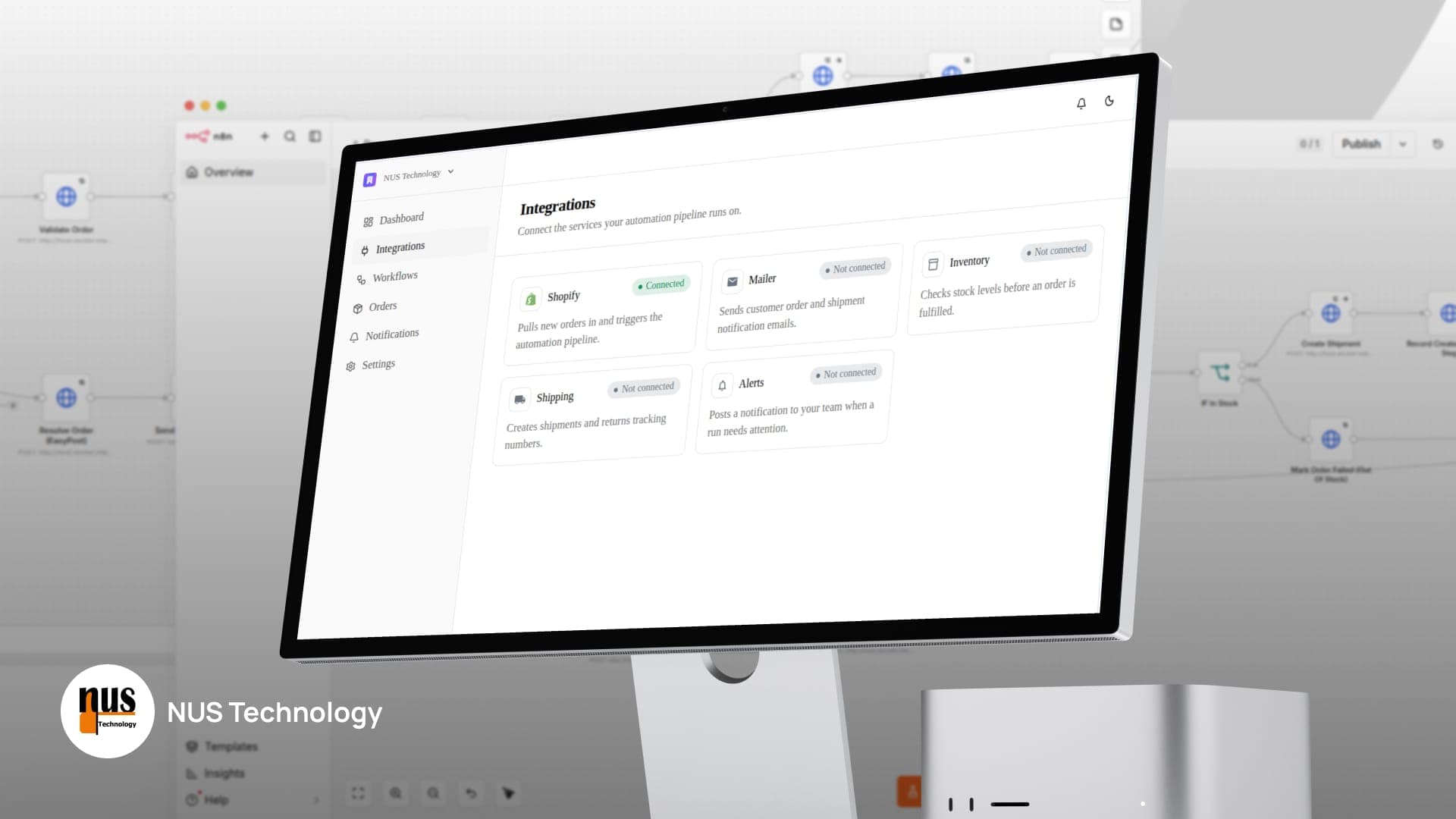 September 17, 20266 min read
See how we built n8n eCommerce automation into a multi-tenant SaaS: Shopify orders, Zoho stock checks, EasyPost shipping, and the architecture behind it.
 September 2, 20264 min read
Automate document compliance: How we paired AI heuristics with OOXML patching & PDF tree parsing to tag DOCX, PPTX & PDF with zero layout damage.
Tell us which systems are involved and where the mismatches keep showing up. Most conversations start with a 30-minute call.