
Education & Learning

Plia, developed by BestEx Research, operates at the intersection of two worlds that have little tolerance for ambiguity: financial compliance and institutional relationships. The platform serves as the primary information-sharing channel between financial Advisors and Brokers, a workflow where data accuracy, audit trails, and access control are not features, they are regulatory obligations.
When BestEx Research engaged NUS Technology, the ask was not to build something new. It was harder than that: take over a live, production codebase and keep it running while continuing to grow it.

Name
Plia
Backend
Ruby on Rails (API-only)
Database
PostgreSQL
Frontend
Node.js + Grunt + CoffeeScript/Sass (Legacy), Nuxt 2 (Vue.js) + TailwindCSS
Infrastructure
AWS (Elastic Beanstalk, ECR, RDS, S3)
Industry
FinTech / Financial Information Management
Market
Global
Integration
Stripe, SendGrid, SAML SSO (Okta / PingFederate / ADFS), New Relic, Honeybadger, Scout APM
 THE CHALLENGES
The Plia codebase was functional, but it carried the weight of its origins. The frontend had been built using an older Node.js + Grunt + CoffeeScript/Sass stack, a combination that predated the modern JavaScript ecosystem by nearly a decade. Meanwhile, a newer billing module had been added using Nuxt 2 (Vue.js), creating a split frontend architecture that required the team to context-switch between two completely different paradigms.
For a platform carrying sensitive financial and compliance data, this fragmentation created real operational risk:
Debugging and extending the legacy frontend was slow, documentation for the older libraries was sparse or deprecated, and syntax patterns were unfamiliar to engineers trained on modern frameworks.
The split architecture made consistent UI and behavior difficult to guarantee across different parts of the product.
The backend, while built on the mature Ruby on Rails framework, had performance bottlenecks that needed to be resolved without interrupting service for active users.
The enterprise SSO integrations, spanning Okta, PingFederate, and ADFS via SAML, required a deep understanding of identity protocols that most development teams never encounter.
BestEx Research didn't need engineers who would ask to rewrite everything. They needed a team that could understand a complex, inherited system quickly and improve it without breaking what was working.
 THE SOLUTION
NUS Technology's approach to inheriting the Plia codebase was methodical. Rather than treating the legacy architecture as a liability, we treated it as a domain to master. The team invested significant time in understanding not just what the code did, but why it was structured that way, a prerequisite for making safe changes in a compliance-sensitive environment.
The older CoffeeScript/Sass/Grunt build system required NUS engineers to build internal knowledge from first principles. With limited modern documentation available, the team developed their own working references, enabling them to extend and debug the frontend without the risk of regressions. This wasn't a one-time exercise – it became an operational capability that now sits inside NUS's ongoing partnership with BestEx Research.
NUS conducted a systematic audit of the Ruby on Rails API backend, identifying the architectural patterns responsible for slow response times. Through targeted refactoring – not a wholesale rewrite – the team reduced backend response times by 30%. In a platform where Advisors and Brokers are acting on time-sensitive financial information, this improvement directly translates to a better experience and more reliable data delivery.
Plia's enterprise customers required authentication through their own identity providers – Okta, PingFederate, and ADFS – using the SAML SSO standard. NUS engineered and maintained these integrations, ensuring that large institutional clients could connect their workforce to the platform without deviating from their internal IT security policies. This capability is rarely handled well by typical development teams; for NUS, it became a reliable part of the Plia infrastructure.
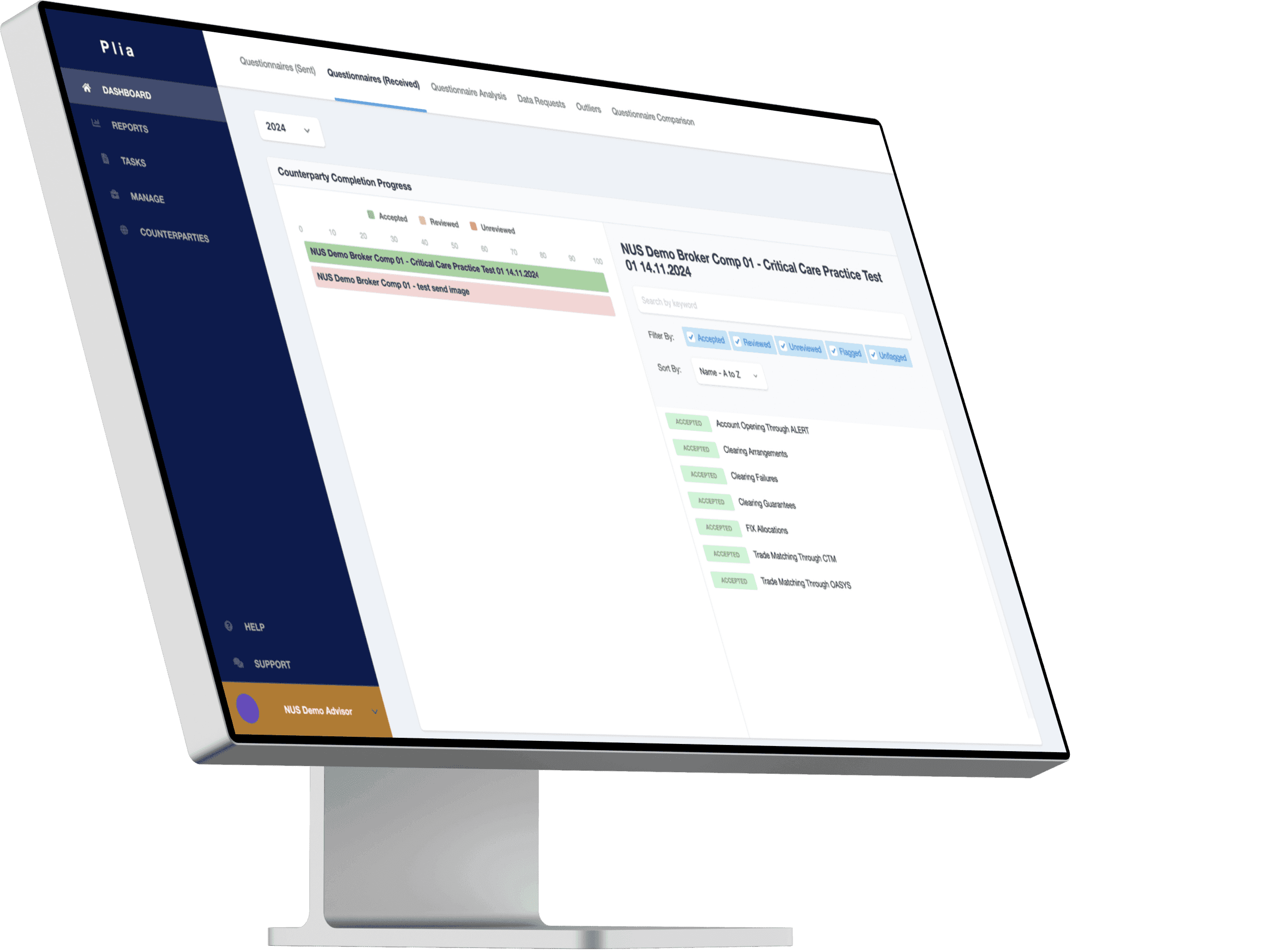
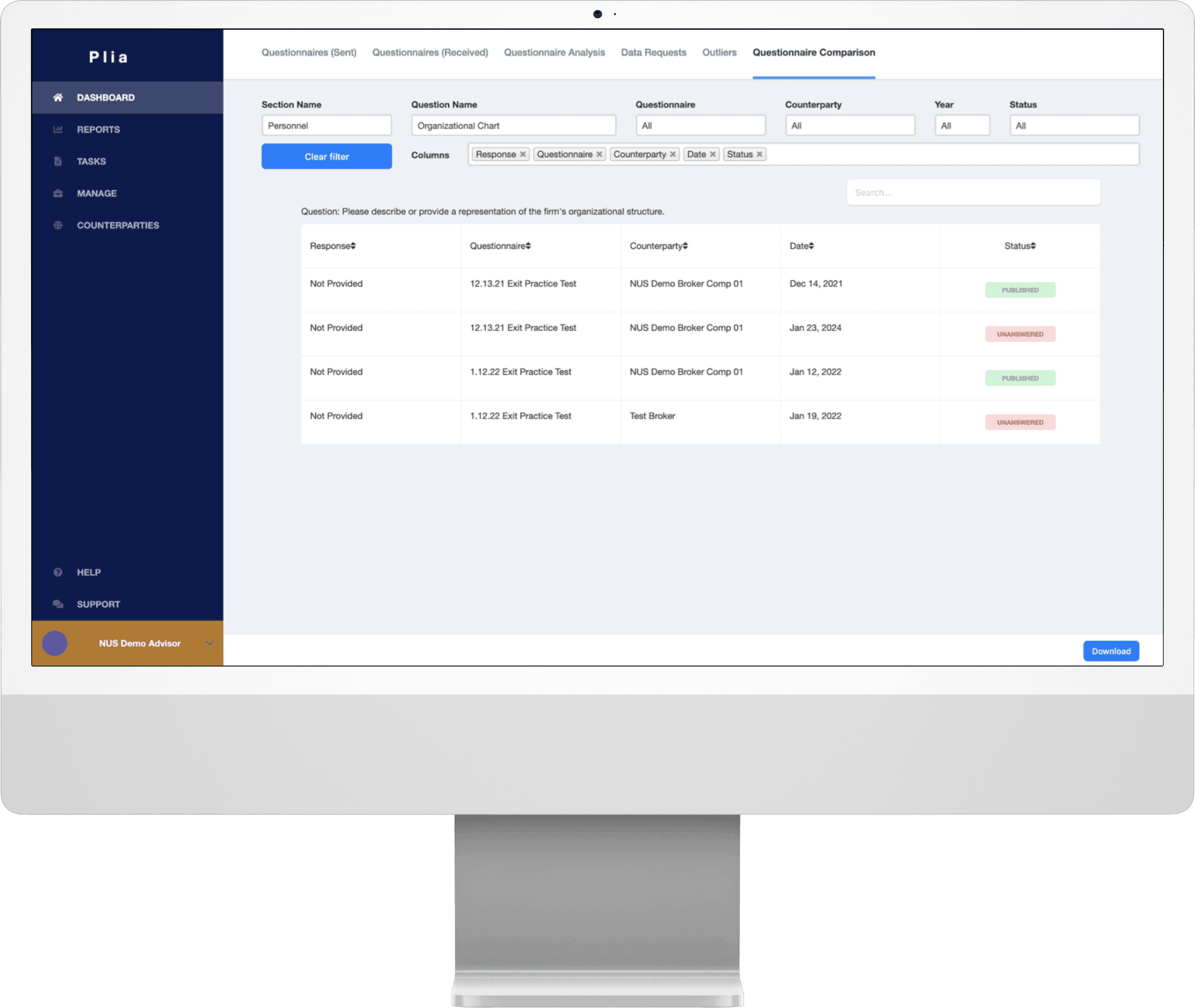
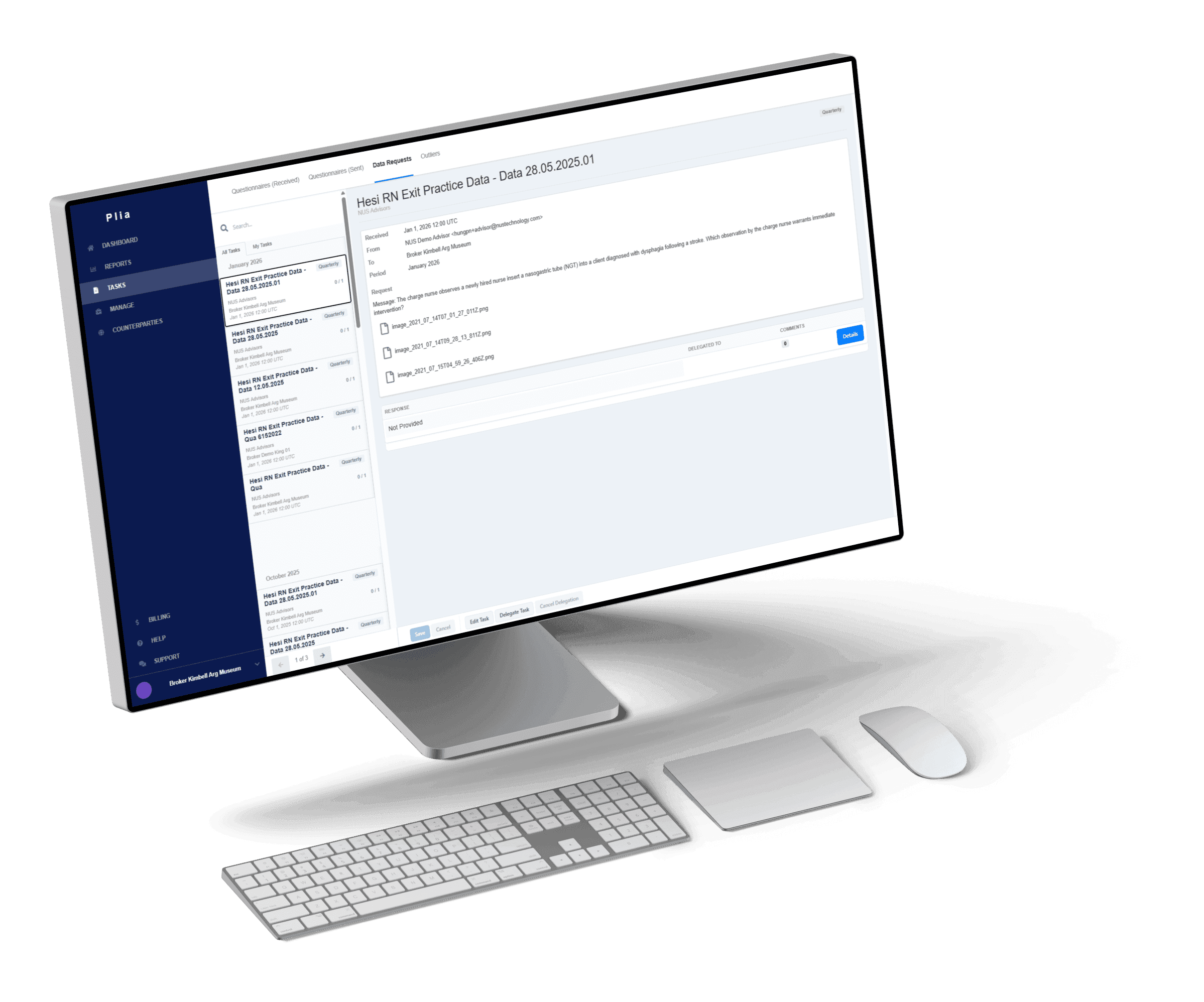
The core of Plia is not its UI – it is its workflow logic. Questionnaires and data requests pass through multiple review stages, with different user roles required to approve, annotate, or reject submissions at each step. NUS built and extended this multi-step review engine to model exactly how Advisors and Brokers actually work, including:
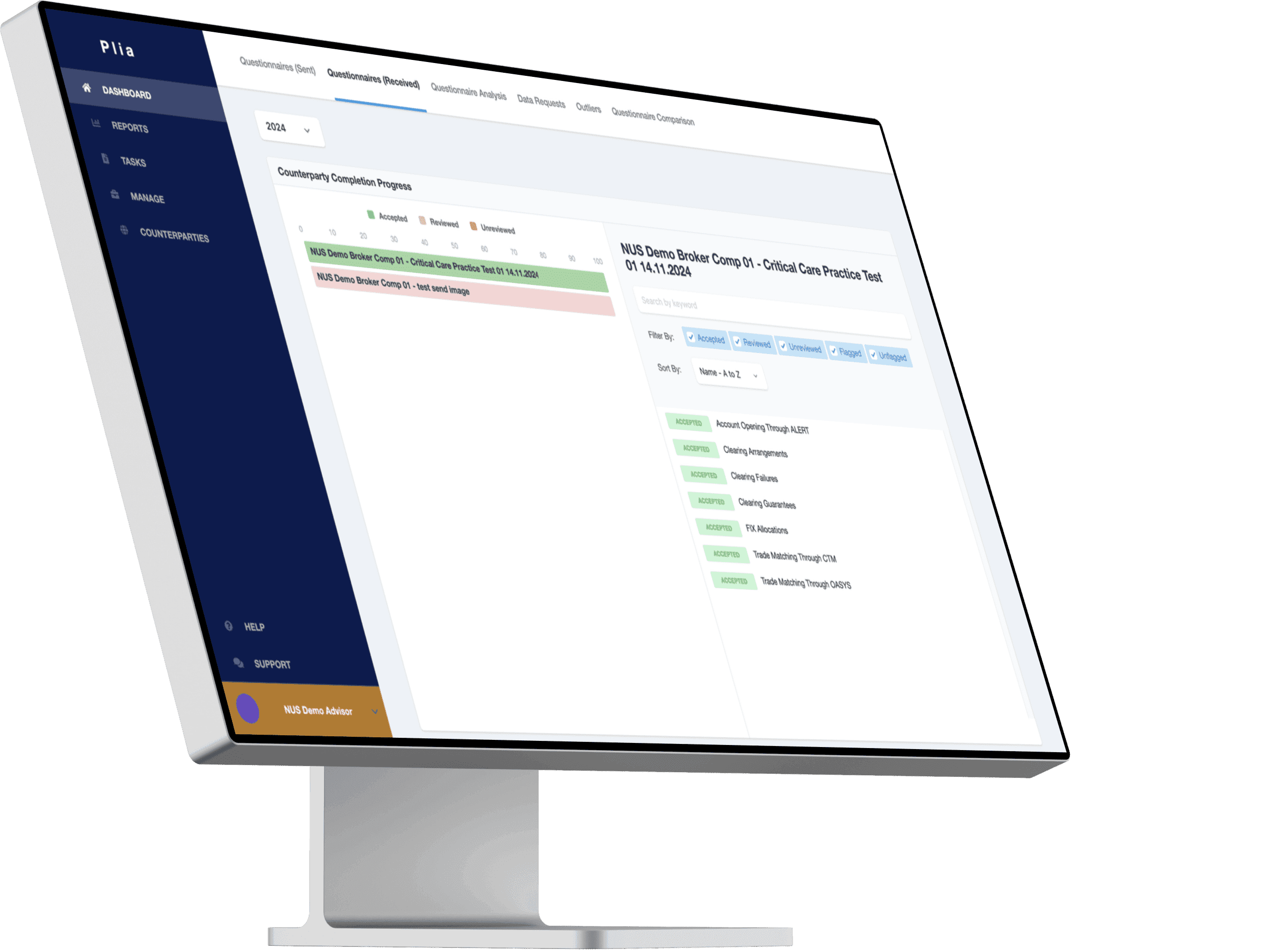
Configurable questionnaire creation with question-level and category-level weighting, giving Advisors control over how responses are scored and compared.
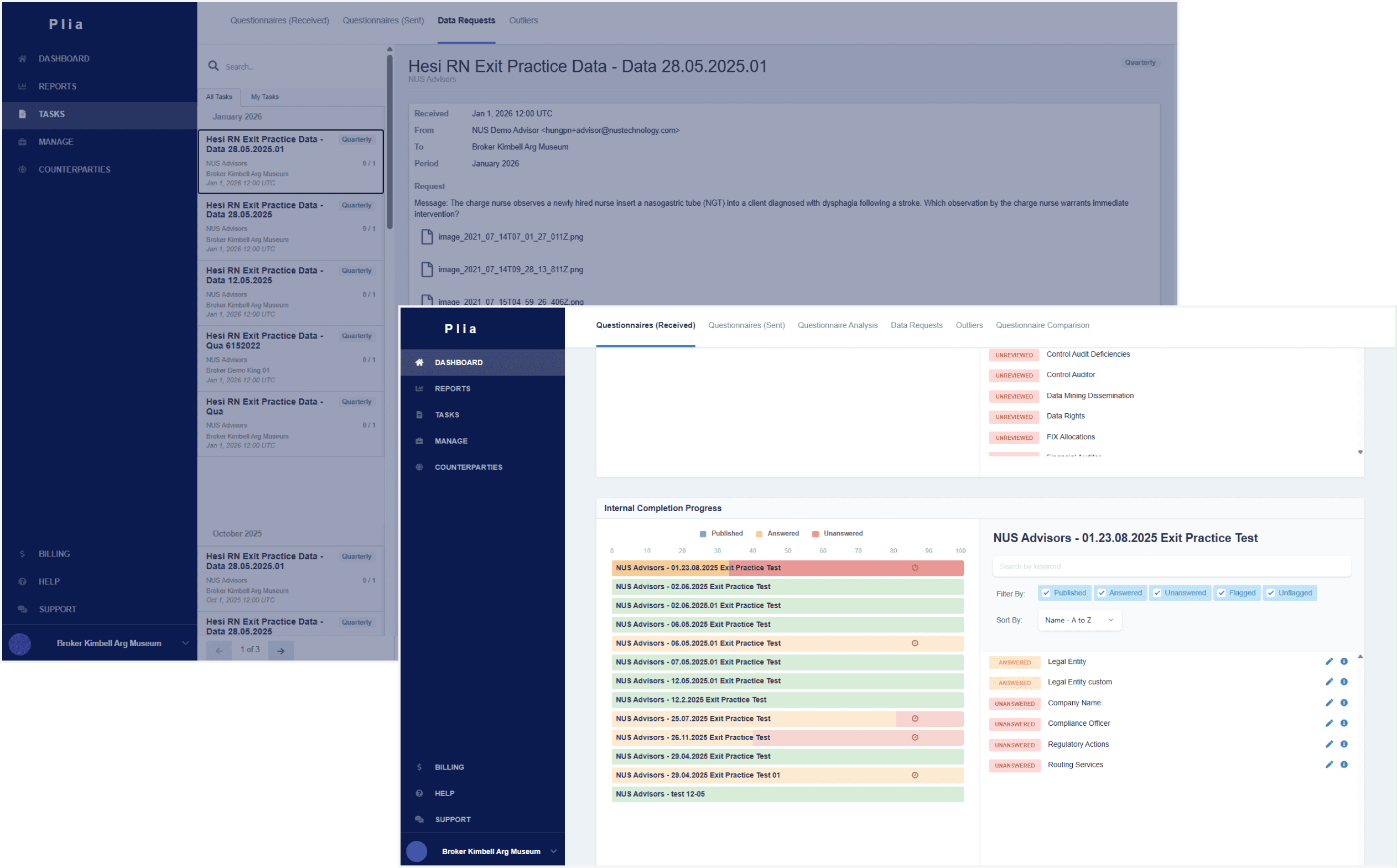
A task management layer allowing Advisors to assign specific review tasks to Brokers and track completion and reported outcomes.
Role-based access controls including an admin impersonation capability – allowing administrators to view and test the platform exactly as any user role would experience it, without requiring separate test accounts.
A per-user and per-counterparty dashboard giving both sides of the Advisor-Broker relationship a consolidated view of outstanding requests, task statuses, and data history.
The platform's supporting integrations were built to operate without interruption:
Stripe: Subscription billing and global payment processing, including webhook-based event handling for billing lifecycle events.
SendGrid: Transactional email delivery across the platform, including bounce management to maintain deliverability health for institutional users.
New Relic, Honeybadger & Scout APM: A three-layer observability stack providing performance monitoring, error alerting, and application profiling – ensuring that issues are detected and addressed before they affect users.
The production environment runs on AWS Elastic Beanstalk with Docker containers, with images stored in Amazon ECR, database on Amazon RDS PostgreSQL, and file storage on S3. NUS manages this infrastructure as part of the ongoing partnership, not as a separate engagement.
 THE RESULT
The transition from a stalled, difficult-to-maintain codebase to a stable, actively evolving platform delivered measurable results across performance, reliability, and operational efficiency:

Backend response times improved by 30% after targeted refactoring of the Rails API layer, helping Advisors and Brokers work with time-sensitive data more smoothly.
Average bug resolution time dropped by roughly 40% within the first six months, as the team’s growing familiarity with the codebase reduced diagnostic overhead.
99.9% uptime maintained across production deployments — a baseline expectation for a compliance-grade platform, and one that required disciplined release practices to sustain.
No data incidents or compliance breaches since NUS assumed operational ownership of the platform.
30% faster API response times after targeted backend refactoring
~40% reduction in average issue resolution time within the first six months.
99.9% platform uptime maintained across production deployments
Zero data incidents or compliance breaches under NUS operational ownership

Beyond the numbers, the more significant outcome is operational confidence. BestEx Research can develop and release new features on a platform they trust, one where the team managing the codebase understands its history, its edge cases, and the compliance requirements that shape every decision.
Most development teams, when handed an aging codebase, will push for a rewrite. NUS Technology took a different approach with Plia: learn the system, stabilize it, and extend it, on the client's timeline, not ours.
The Plia engagement reflects how NUS operates as a long-term operations partner. We didn't deliver a project and move on. We took ownership of a complex, business-critical platform and became the team that BestEx Research depends on to keep it running, growing, and compliant. The legacy stack, the enterprise SSO integrations, the multi-role review workflows, these are not obstacles we worked around. They are systems we now know as well as the clients who built them.
For BestEx Research, that depth of operational knowledge is the product.
 TESTIMONIAL
CEO at Plia
"Building features, including subscription and payment capabilities. Our software enables clients to conduct due diligence on their vendors. NUS helped us upgrade our features and update the UI. Overall, we've been with NUS for over 5 years, and they've always been accommodating and fair. We would recommend them to anyone looking for quality work, especially if on a strict budget."
Get the full story in PDF format, including project details, technical insights, and measurable results you can apply to your own business.


Let’s have a strategic conversation about your goals and how we can achieve results like these for your business.