Field Service & Workforce
Aged care is an industry where the gap between what's documented and what actually happened can have real consequences for residents, families, and care providers. When a nurse enters a room, that visit needs to be recorded accurately and immediately. When a resident moves outside their expected area, someone needs to know now, not at the end of the shift.
Charles Chang founded Acredia around a clear mission: give aged care and home care providers a digital operations platform that closes this gap, replacing clipboards, manual entries, and end-of-day reconciliation with real-time, hardware-verified records. The Care Direct App was built to be that platform.
By mid-2024, Acredia had a working product and a growing user base. What they needed was a technical partner capable of extending the platform with the hardware integration layer that would make presence verification reliable in real-world care environments and doing so without disrupting an app already in active use.

Name
Care Direct App
Mobile
React Native (iOS & Android)
Industry
Aged Care / Home Care Services
Market
Australia
Integration
NFC Manager, Custom Bluetooth / iBeacon Detection, QR Code
 THE CHALLENGES
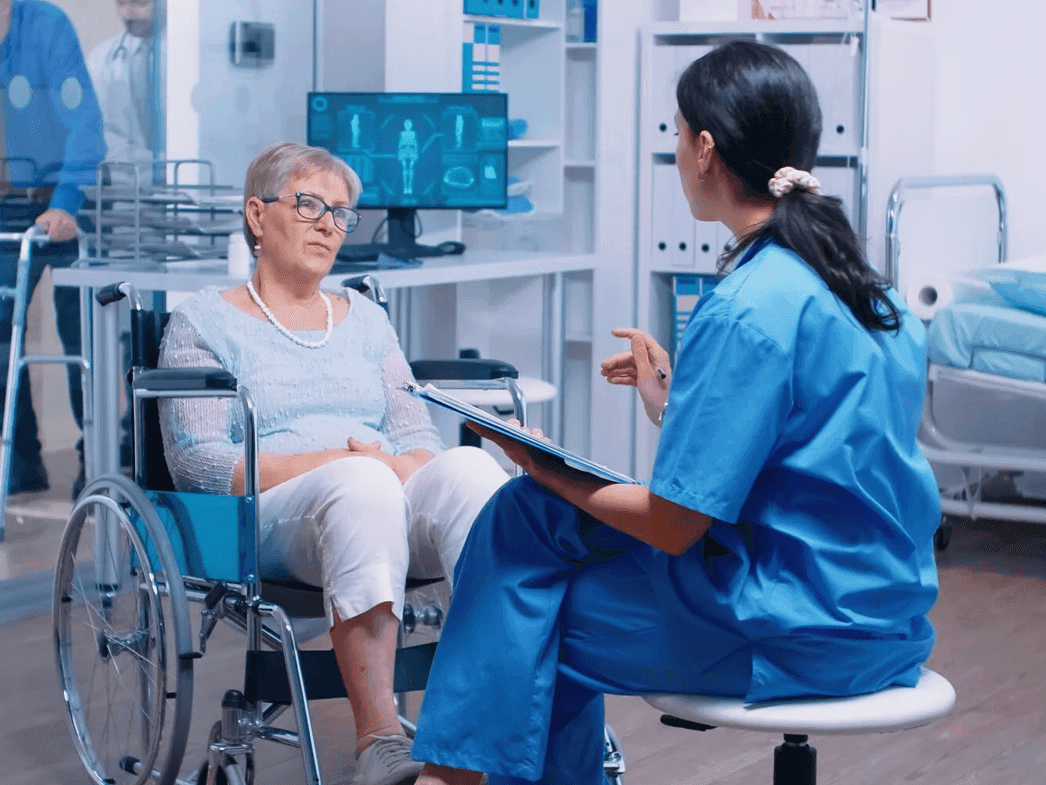
The core problem Care Direct was solving is deceptively difficult to implement well. In theory, tracking whether a care worker has visited a resident is simple. In practice, it requires the software to answer a question that manual systems routinely get wrong: was someone physically present, at the right place, at the right time?
Three operational demands shaped the engineering challenge:
Reliability at scale: The platform needed to handle growing user volumes without degrading. In care environments, a failed check-in isn't just a technical error, it's a missing record that can affect compliance and resident safety.
Real-time data, not end-of-day summaries: Coordinators and family members needed to see care activity as it happened, filtered by resident, care worker, or location zone. Batch reporting wasn't acceptable.
Zero tolerance for recording errors: Medical records and treatment histories must be accurate. Any system that relied on staff manually entering data introduced the risk of omission, transcription errors, or, in high-pressure moments, nothing being recorded at all.
Solving this meant moving from a software-only model to one where the app could respond to physical hardware signals: NFC tags placed in rooms, iBeacons deployed across facility zones, and QR codes on resident profiles. The technical challenge wasn't connecting to these devices, it was building logic reliable enough to act on their signals with confidence.

 THE SOLUTION
NUS Technology joined the Care Direct project as a feature development partner, extending an existing React Native codebase with the hardware integration layer and care workflow modules Acredia needed to take the platform to market.
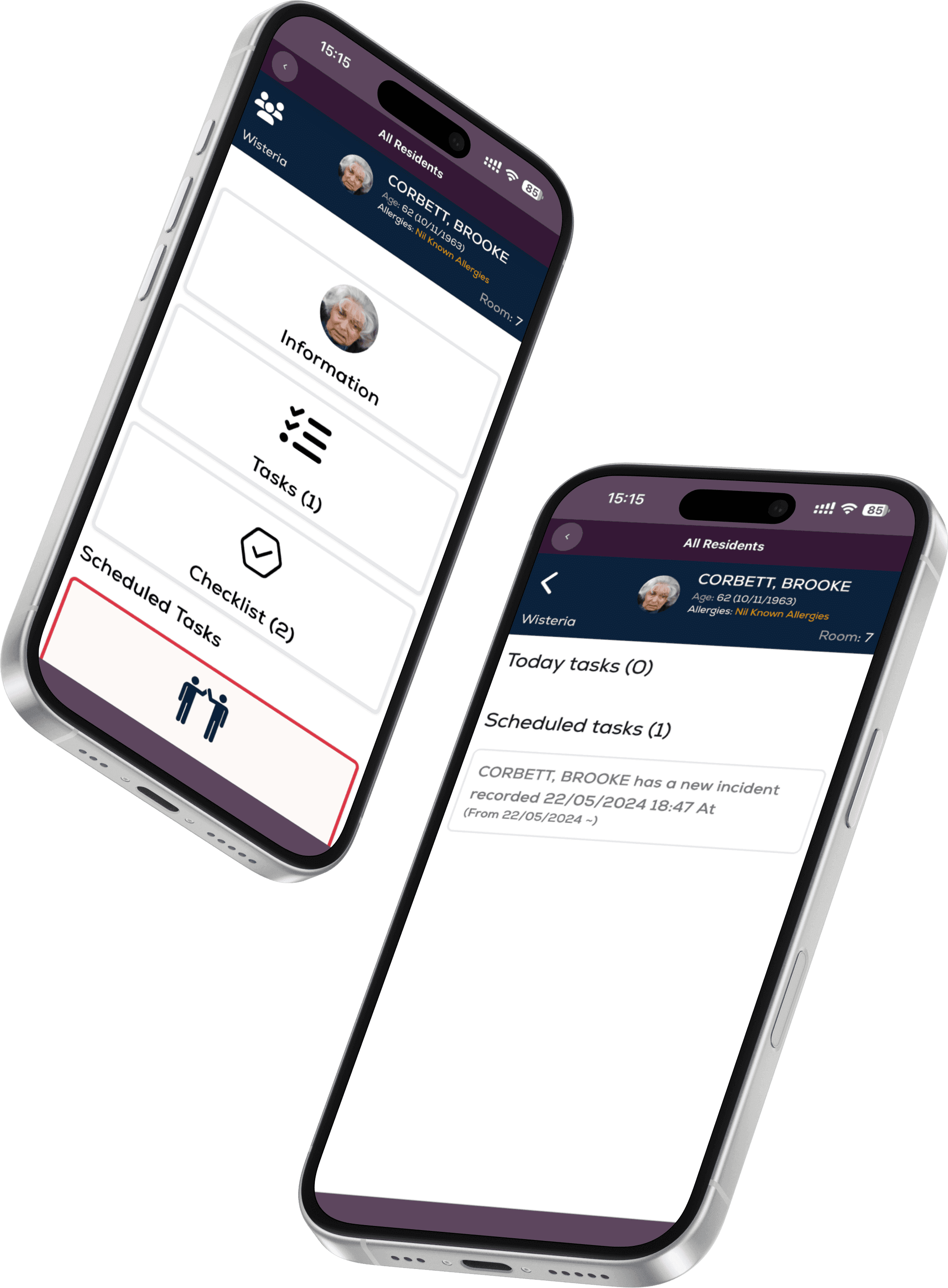
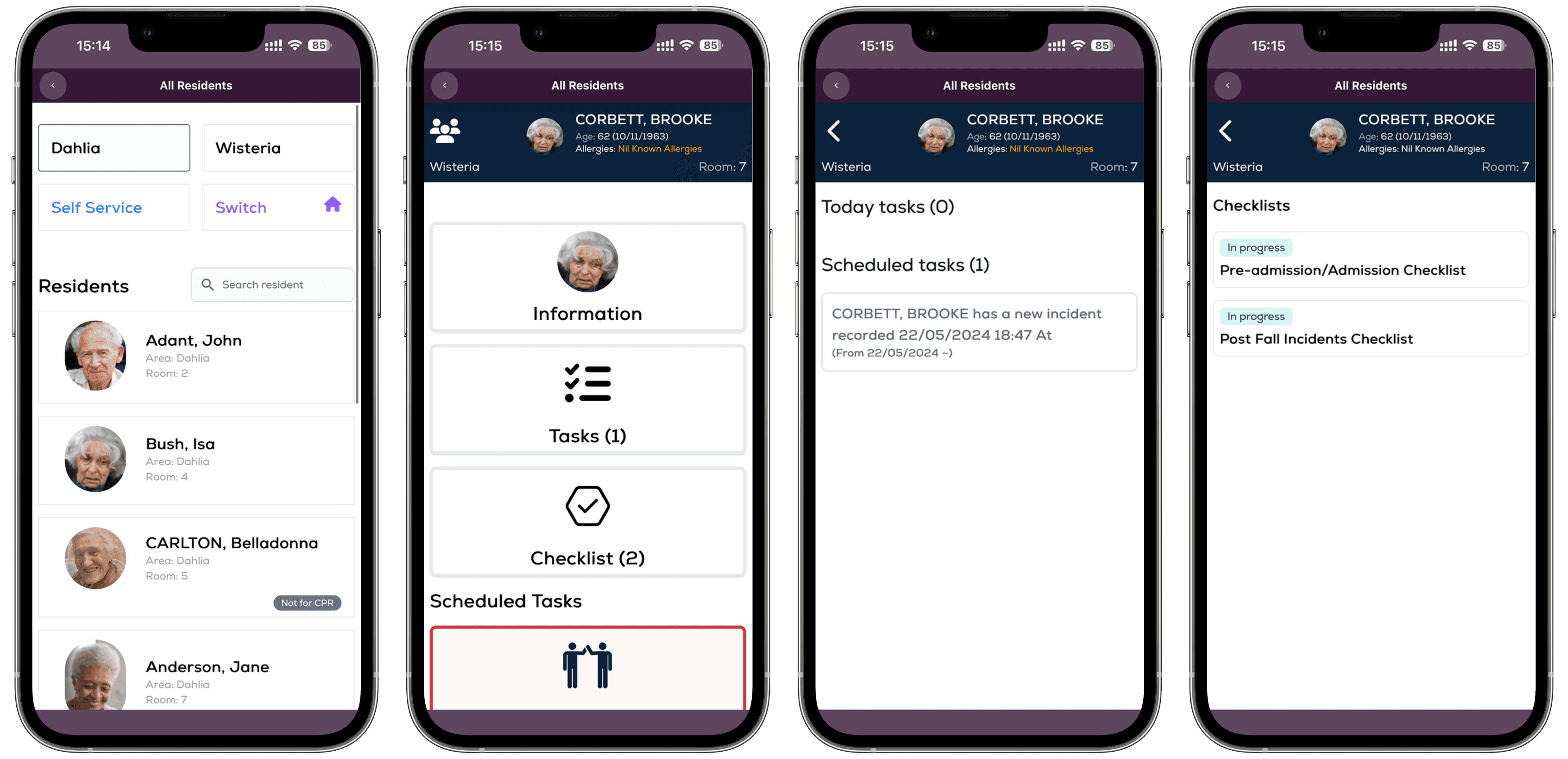
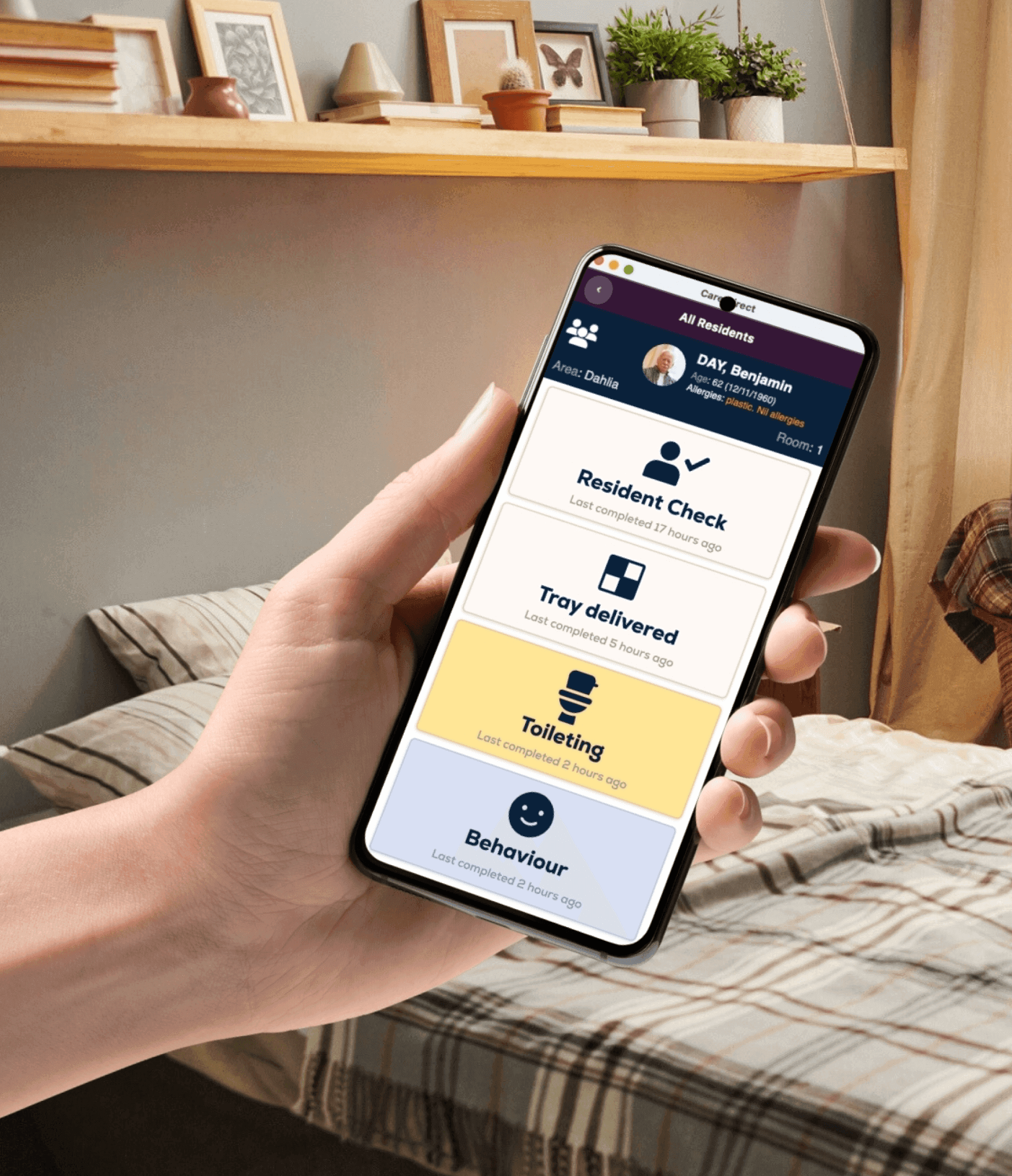
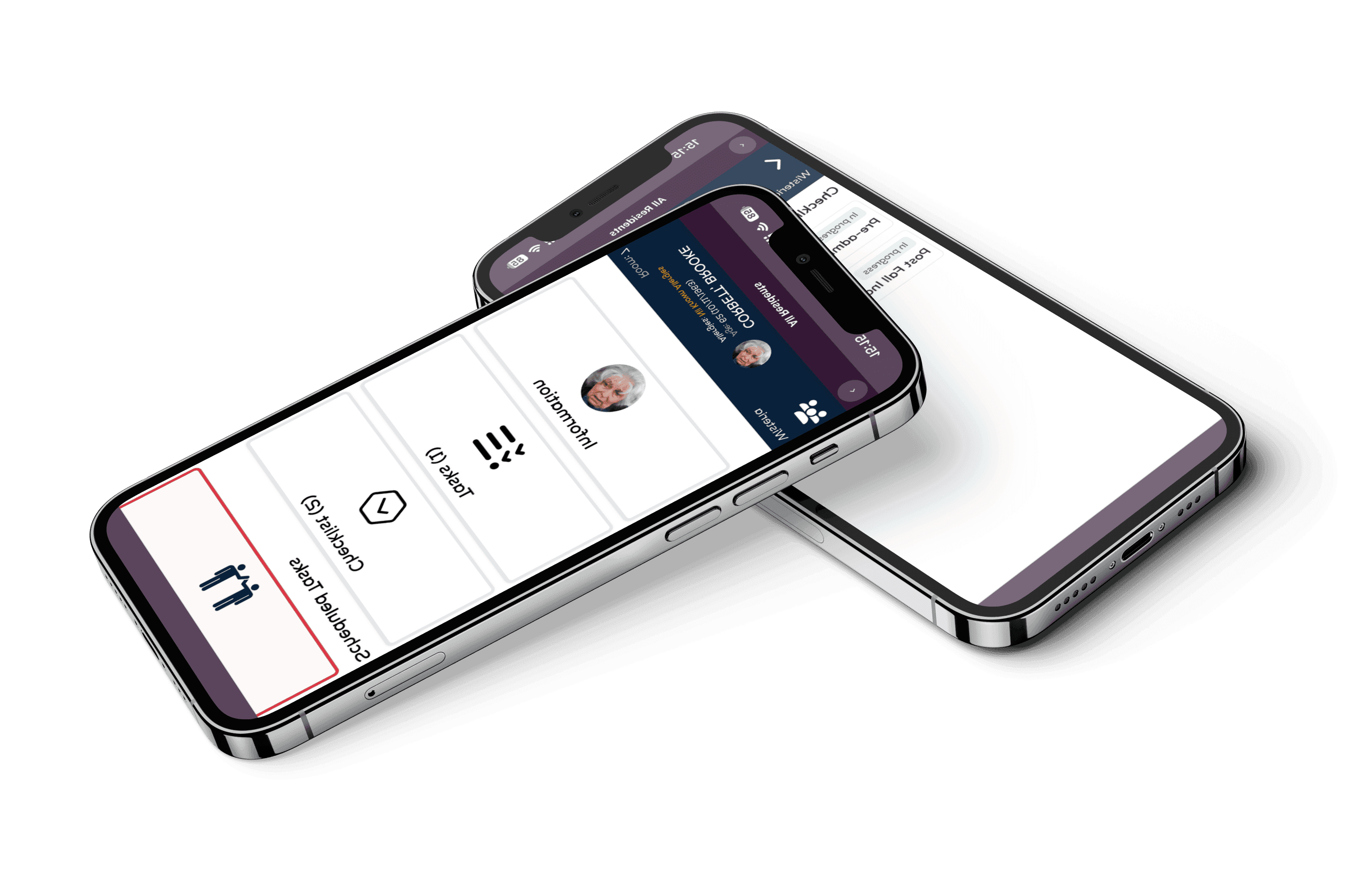
NUS built out the Residents module as the operational hub of the platform: a centralised record system where care workers can access a resident's full medical history, current conditions, and treatment log instantly. The interface is designed for speed, care staff working under time pressure need information in seconds, not minutes. Records are structured so that coordinators can filter and review across residents by geographic zone, giving management a real-time view of care delivery across multiple locations.
To eliminate manual identification errors, NUS integrated NFC tag scanning and QR code reading directly into the care worker workflow. When a staff member arrives at a resident's room, they scan the NFC tag or QR code, the app instantly pulls the correct resident profile and logs a verified check-in with a timestamp. There's no ambiguity, no risk of recording against the wrong file, and no reliance on staff memory at the end of a busy shift.
This single capability, replacing a manual step with a hardware-verified one, addresses one of the most persistent sources of error in care documentation.
The most technically demanding component of the project was presence detection at the zone level. Off-the-shelf Bluetooth libraries weren't suited to the precision Acredia required, so NUS built the iBeacon detection engine from scratch.
The engine continuously reads signal strength from deployed iBeacons and applies custom logic to determine presence states: whether a care worker is actively in a resident's zone, how long they've been there, and whether a resident has moved outside their expected area. Signal noise, device interference, and the physical variability of care environments, thick walls, multiple floors, high staff density, were all accounted for in the design. The output isn't raw signal data; it's actionable presence status that the app can use to trigger alerts, update dashboards, and generate verified attendance records.
Beyond real-time presence, NUS built the scheduling and daily task modules that turn Care Direct into a complete shift management tool. Coordinators can plan and assign care visits in advance; staff receive structured daily task lists with the specific care steps required for each resident. The system sends reminders for time-sensitive procedures and ensures that nothing in a resident's care plan is missed, even across high-turnover care environments where institutional knowledge can't be relied upon.
 THE RESULT
The platform Acredia took to market with NUS combines hardware-verified presence detection, real-time medical record access, and structured workflow management into a single mobile interface. Care Direct launched in mid-2024 and reached 100+ downloads in its initial rollout phase, an early signal of adoption in a sector that is slow to trust new technology.
The operational impact aligns with what the research on care digitisation consistently shows:

Studies of automated check-in systems in aged care settings consistently find that replacing manual logging with hardware-triggered records reduces administrative time per shift by 60-70%. For a care worker completing 8–12 visits per shift, that's the difference between 45 minutes of paperwork and under 15.
Manual record entry in busy care environments carries an error rate of 5–10% in industry audits, most commonly wrong-resident entries and missed visit logs. NFC and QR-based identification removes the conditions that produce these errors entirely.
Facilities using real-time zone monitoring report significantly faster response to resident wandering events compared to shift-end reconciliation. The custom iBeacon engine delivers the same capability: coordinators are alerted while the situation is still manageable.
Geographic filtering allows a single coordinator to monitor care delivery across multiple locations simultaneously, a capability that manual systems or siloed spreadsheets cannot replicate at any staffing level.
Every care interaction is captured automatically. Compliance reporting that previously required hours of record consolidation becomes a query, not a task.
Documentation time cut by 60–70%
Near-elimination of resident identification errors
Incident response times improved by ~40–50%
Coordinator oversight expanded without adding headcount
Full audit-readiness, zero additional staff effort

These figures reflect published outcomes from comparable digitisation projects in aged care and home care settings. As Care Direct scales beyond its initial rollout, Acredia is positioned to validate and report against these benchmarks with their own operational data.
Acredia wasn't looking for a team to build isolated features. They needed a partner who could understand the operational constraints of aged care, where reliability isn't a nice-to-have, accuracy is regulated, and the people using the software are caregivers, not technologists, and translate that understanding into software that fits the environment.
NUS Technology's experience building mission-critical systems in regulated industries was the deciding factor. The ability to step into a live product, take ownership of complex hardware integration, and deliver without disruption gave Acredia the confidence to move fast, and Care Direct the foundation to scale.
 TESTIMONIAL
CEO of Acredia
"We've worked with NUS Technology across both mobile and web, and they've consistently delivered. Their mobile app developer has built and maintained a number of our applications, and their WordPress expert stepped in to restore our company website and has kept it running reliably ever since. What sets them apart is a combination of real technical capability and a willingness to understand the business behind the brief. They keep us informed, stay accountable, and treat our systems as if they were their own. Having dependable people we can call on across both platforms makes a genuine difference, and I'd recommend NUS Technology to any organisation looking for a capable, straight-dealing technology partner."
Get the full story in PDF format, including project details, technical insights, and measurable results you can apply to your own business.

Let’s have a strategic conversation about your goals and how we can achieve results like these for your business.