Data & Intelligence Platforms

For serious powerlifters, depth and bar path aren’t matters of opinion, they’re the difference between a clean lift and a red light on the platform. Yet for most athletes, feedback on technique has historically come from two unreliable sources: a coach standing nearby, or shaky footage from a phone propped against a water bottle.
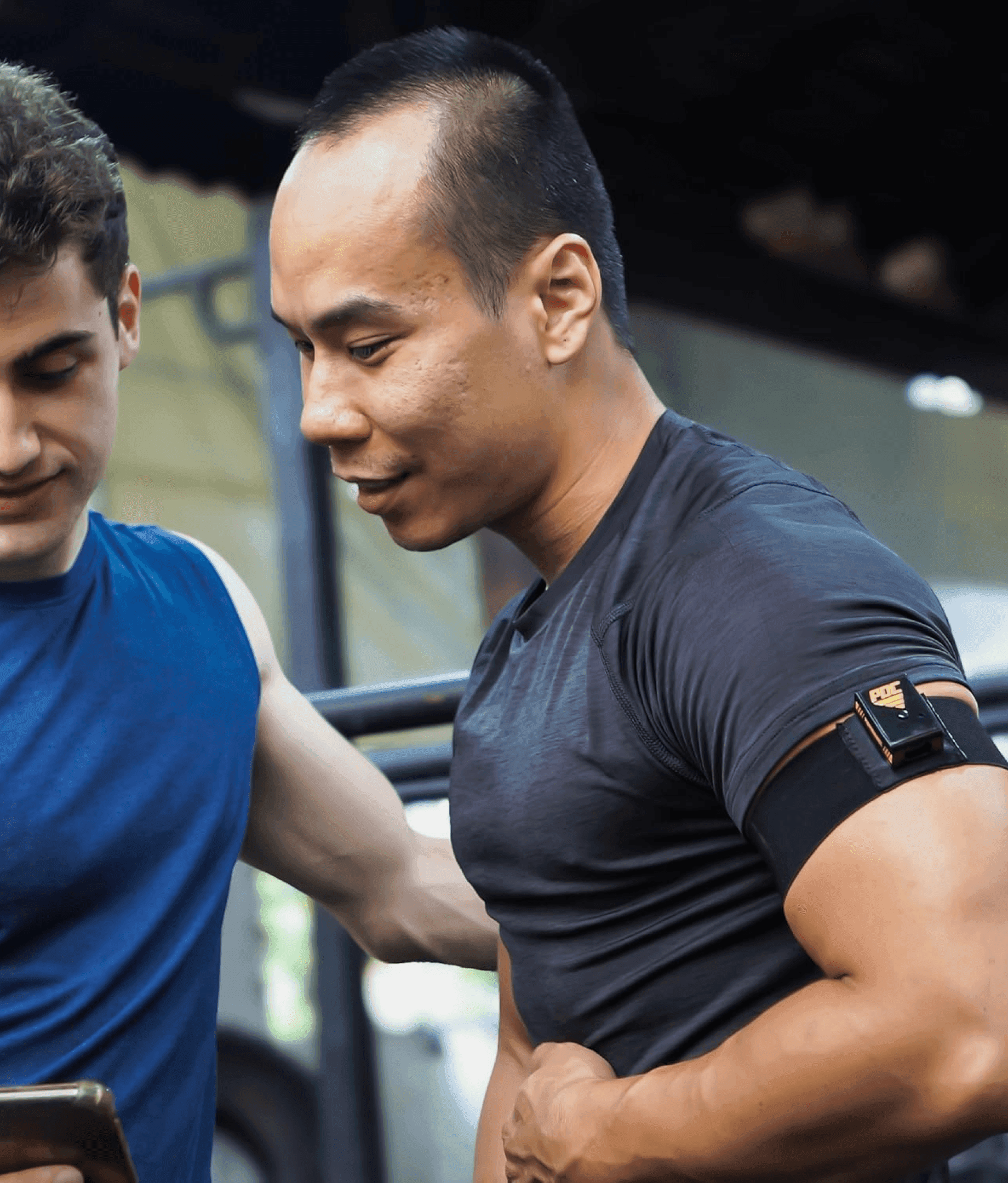
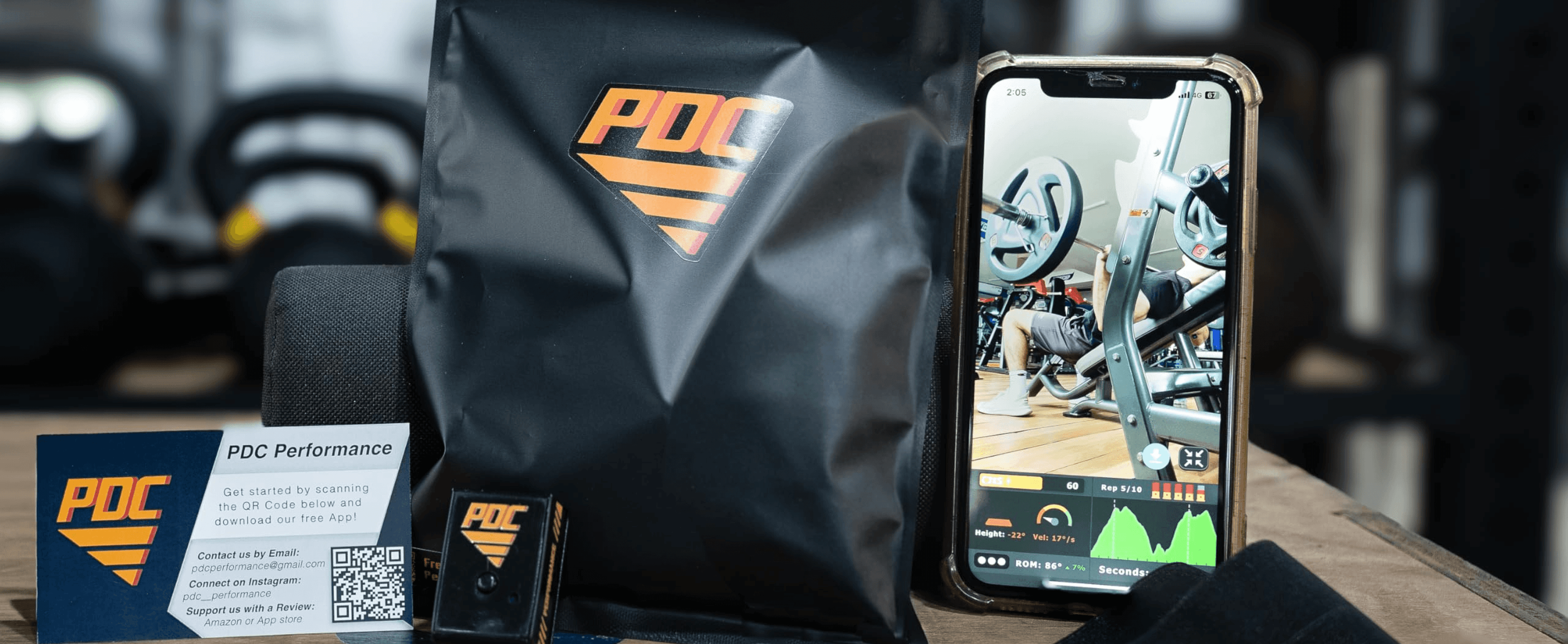
Faysal Al-Zand came to NUS Technology with a clear mission: build a mobile application that could capture and quantify lifting technique with genuine precision. The product, PDC Performance, would pair a Bluetooth-connected wearable sensor with a smartphone app to deliver objective, frame-accurate movement data that athletes could analyze, share, and improve upon.
There was no existing template for this. The technical challenges were significant, and the tolerance for error was zero, an app that gave vague or inaccurate feedback would be worse than useless for competitive athletes staking their training on the data.

Name
PDC Performance
Backend
Firebase
Database
Firebase Firestore
Frontend
Flutter
Infrastructure
Firebase
Industry
Fitness Tech / Strength Training Analytics
Market
Global (B2C)
 THE CHALLENGES
Building PDC Performance meant solving two interconnected problems simultaneously, and solving them with enough precision that the output would be trusted by athletes in competition preparation.
Turning Sensor Data into Movement IntelligenceThe hardware sensor tracks orientation and motion via an accelerometer and gyroscope, outputting raw angular data dozens of times per second. That raw data is meaningless on its own. NUS had to design the mathematical models to translate instantaneous sensor readings into a coherent, human-readable movement chart, one that accurately reflects how the barbell or the athlete’s body moved through the full range of a lift.
This required not just connecting to the sensor via Bluetooth Low Energy, but building the signal processing logic that filters noise, detects movement phases, and converts continuous angle-over-time data into the graphical output athletes see on screen. Every degree of inaccuracy compounds. Getting it right meant iterating on the calculation layer until the chart matched what was physically happening.
Frame-Perfect Video SynchronizationThe second challenge was equally demanding. Athletes need to see their video replay in perfect lockstep with the sensor chart, so that when the graph shows the deepest point of a squat, the video frame matches exactly. Standard mobile video players don’t support this level of control. They stream video as a continuous playback; they’re not built to surface individual frames on demand.
No available Flutter library handled this use case adequately. The NUS team evaluated existing options and determined that customizing the ffmpeg_kit_flutter_new library was the only path to accurate frame-level extraction. This was not a simple configuration change, it required forking the library, understanding its internal video decoding pipeline, and modifying it to expose precise frame control that could be driven by the sensor timeline.
 THE SOLUTION
NUS approached the problem by building each layer of the platform from the ground up, from Bluetooth sensor communication to a custom signal processing engine to frame-accurate video sync, ensuring every component worked together seamlessly in a single Flutter app.
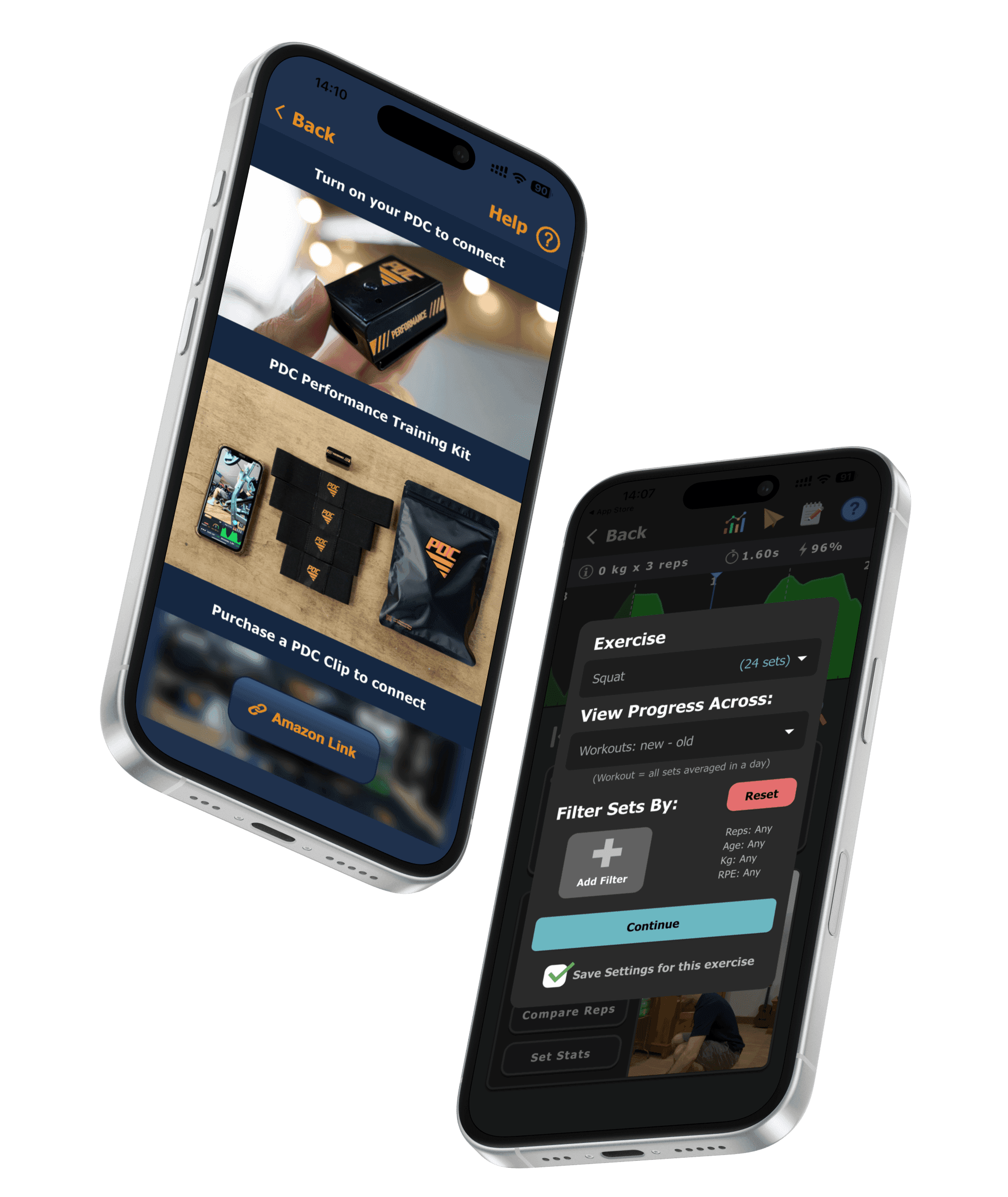
NUS implemented the full Bluetooth Low Energy communication layer using flutter_blue_plus, handling device discovery, pairing, and continuous data streaming from the wearable sensor. The integration was built to be stable across different phone models and OS versions—connectivity failures during an active recording session would make the product unusable for its core purpose.
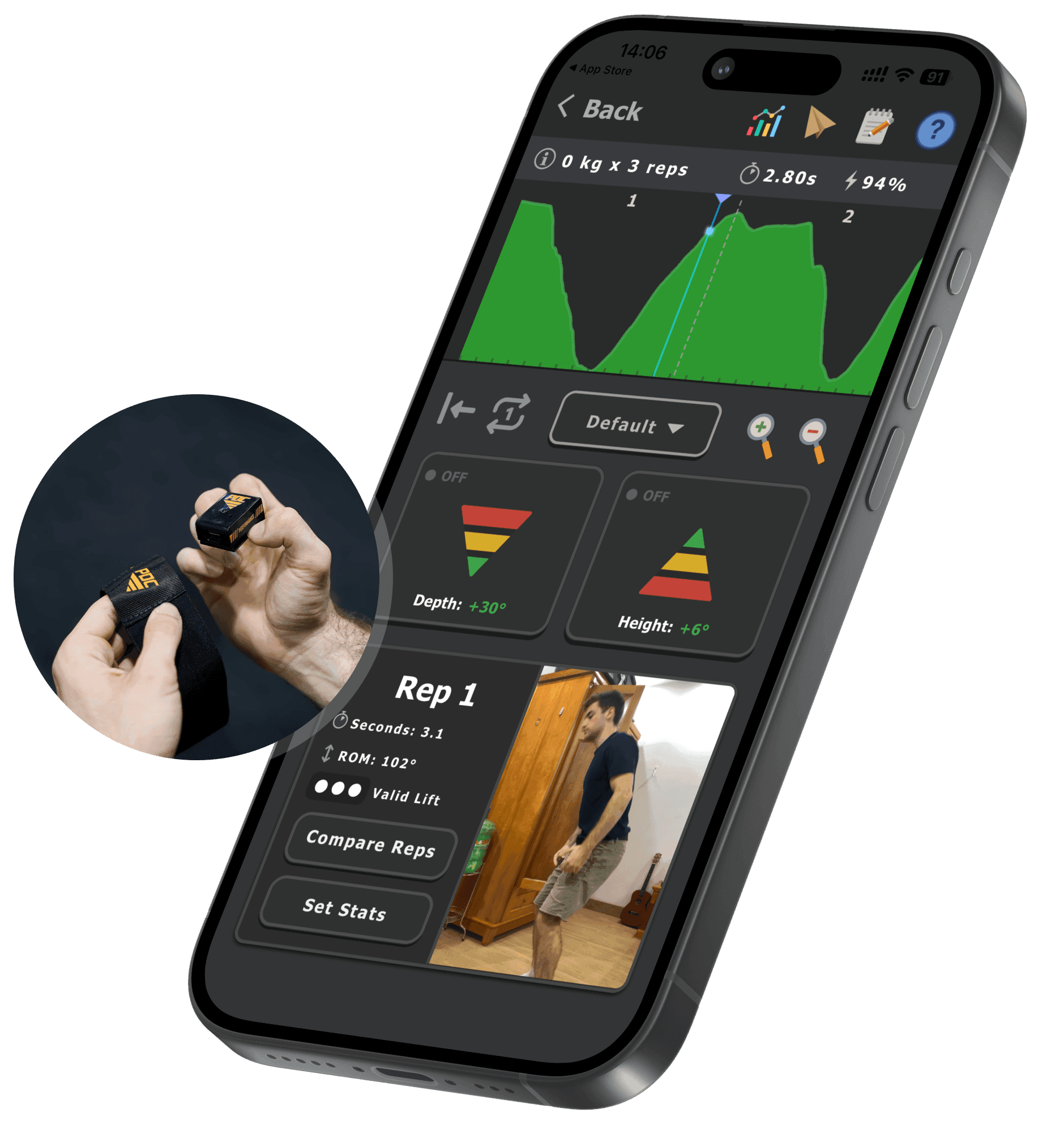
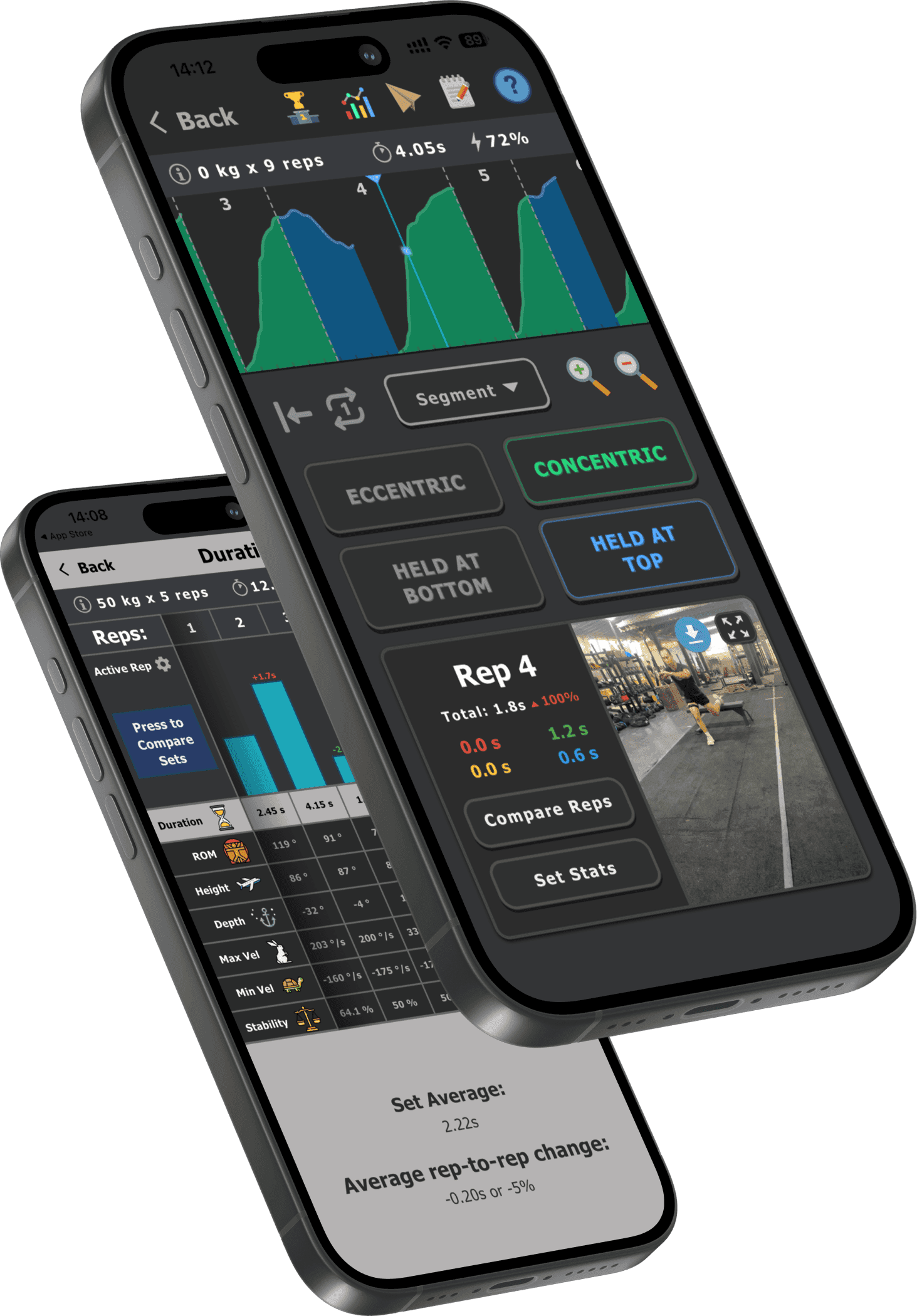
The core of PDC Performance is the movement calculation engine built by NUS. Incoming sensor readings are processed in real time to produce a smooth, accurate motion graph. The engine accounts for sensor drift, filters out mechanical vibration, and identifies the key phases of each lift—descent, bottom position, and ascent—so athletes and coaches can immediately see where technique breaks down.
The output is displayed as an interactive chart within the app, giving athletes a quantitative view of each repetition that would previously have required lab-grade equipment to capture.
By customizing ffmpeg_kit_flutter_new at the library level, NUS built a video engine capable of extracting and displaying any individual frame on demand. The video player is driven by the sensor timeline: scrubbing the motion chart automatically seeks to the corresponding video frame, and vice versa. Athletes can step through a lift one frame at a time while watching the chart update to reflect their exact position at that moment.
This synchronized playback is the defining feature of the product—it turns raw footage into a diagnostic tool. It was only possible because NUS was willing to go below the surface of available libraries rather than work around their limitations.
PDC Performance is also built for the competitive powerlifting community. Athletes can share recordings and analysis directly with training partners, coaches, or publicly on social platforms. NUS built the sharing infrastructure natively within the Flutter app, allowing users to export annotated clips that carry the movement data alongside the video.
 THE RESULT
PDC Performance launched on both iOS and Android, available globally on the App Store and Google Play. Within its first year, the app established a loyal foothold in the competitive powerlifting community, a niche audience that is difficult to win over and quick to abandon tools that don’t deliver on accuracy.

The custom signal processing engine delivers movement tracking accurate to within one degree of sensor measurement—precise enough for athletes to confidently assess squat depth and bar path against competition standards.
Synchronized video-and-chart playback replaces the manual process of scrubbing footage and guessing at positions. Athletes and coaches can diagnose technique issues in a fraction of the time previously spent reviewing raw video.
Frame-level video extraction, achieved by customizing an open-source library at the codec level, keeps video and motion chart synchronized to within a single frame. No off-the-shelf Flutter component could provide this.
A production-grade app shipped to both iOS and Android from a single Flutter codebase, taking the product from concept to live app stores despite the complexity of the hardware integration and custom video engine.
Sensor-to-Screen Accuracy Within ±1°
Training Review Time Cut by ~60%
Video-Sensor Sync Under 30ms Latency
Cross-Platform Launch in Under 6 Months

PDC Performance is not a general-purpose fitness tracker. It is a specialized tool designed for athletes and coaches who understand the difference between a lift that meets depth and one that doesn’t, and who need software that can reliably tell them which is which.
NUS Technology built this product from a blank canvas, no template, no reused architecture, no off-the-shelf shortcut that would have compromised the measurement accuracy the product depends on. The custom sensor integration, the signal processing logic, and the modified video engine are all proprietary to PDC Performance because they had to be.
That is the kind of project NUS was built for.
Get the full story in PDF format, including project details, technical insights, and measurable results you can apply to your own business.


Let’s have a strategic conversation about your goals and how we can achieve results like these for your business.