Commerce & Marketplace

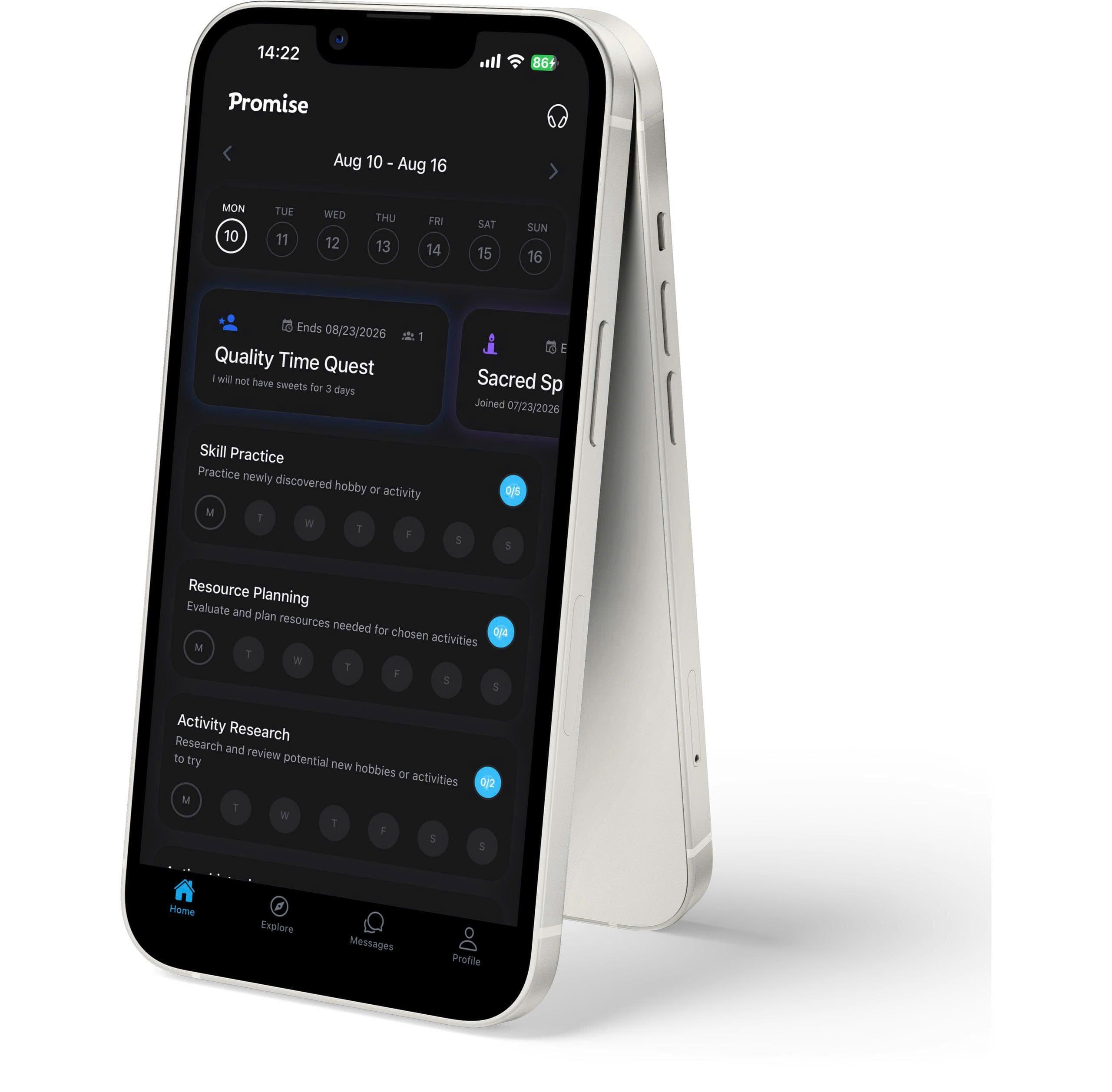
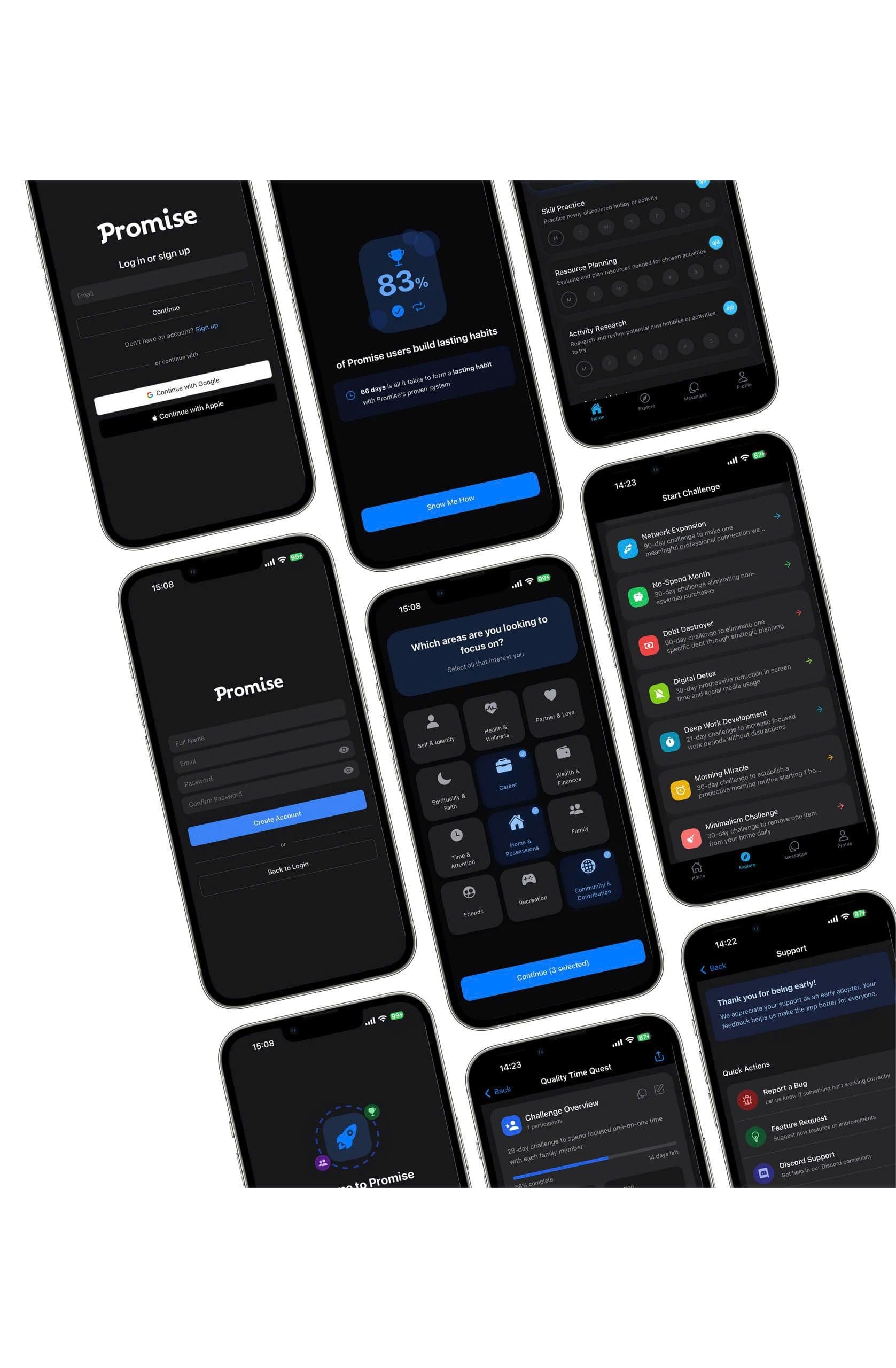
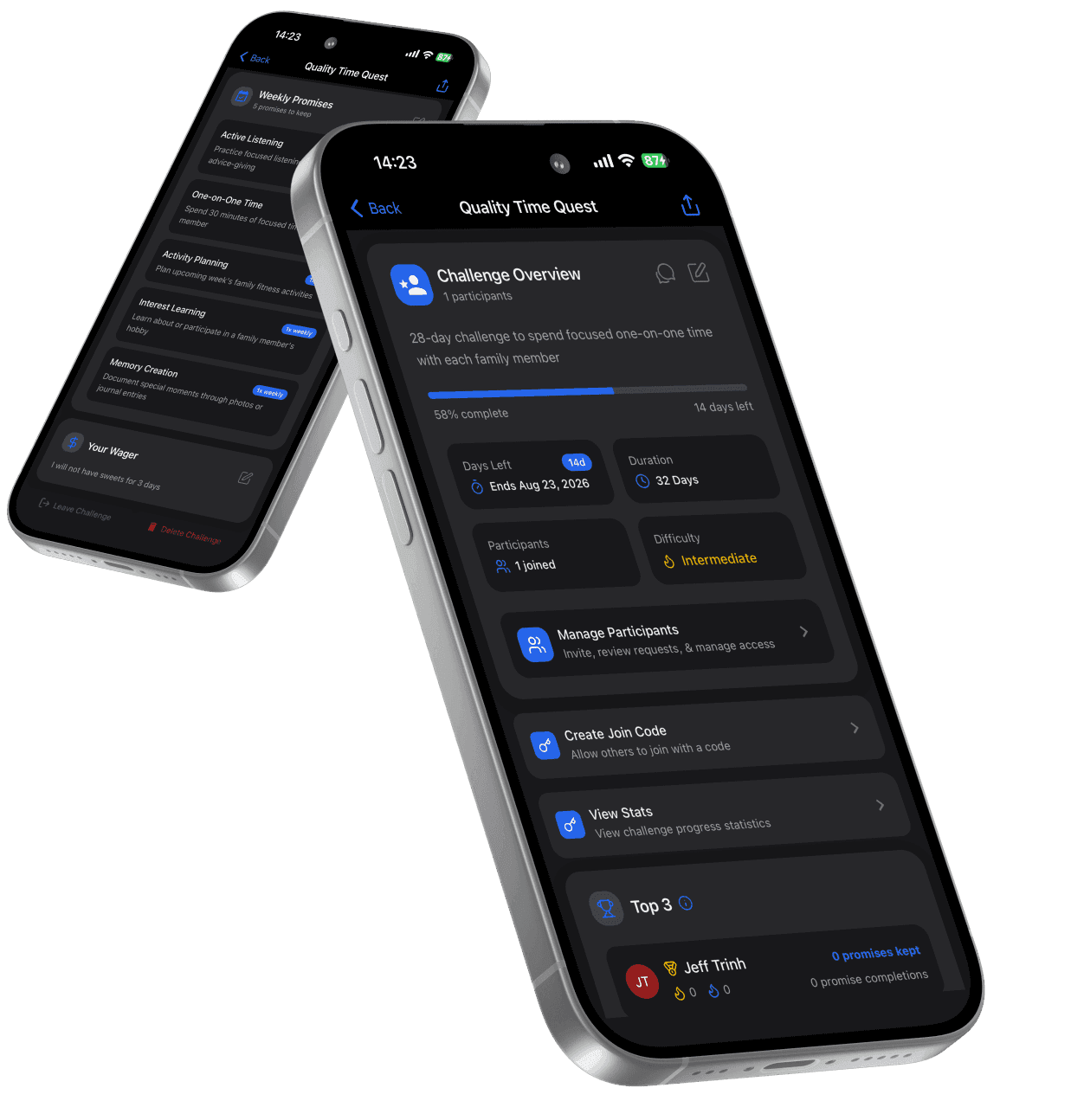
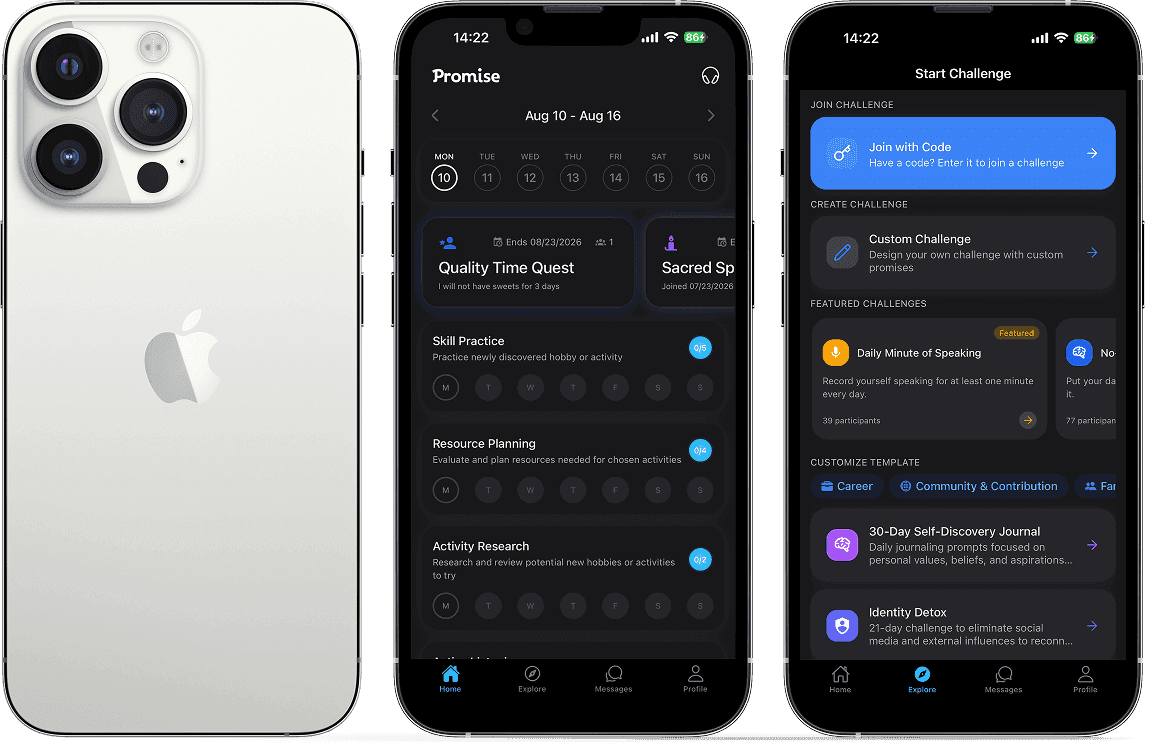
Promise: A Better You, also known as iPromise, is a consumer mobile application that helps people follow through on personal goals by making accountability a shared experience.
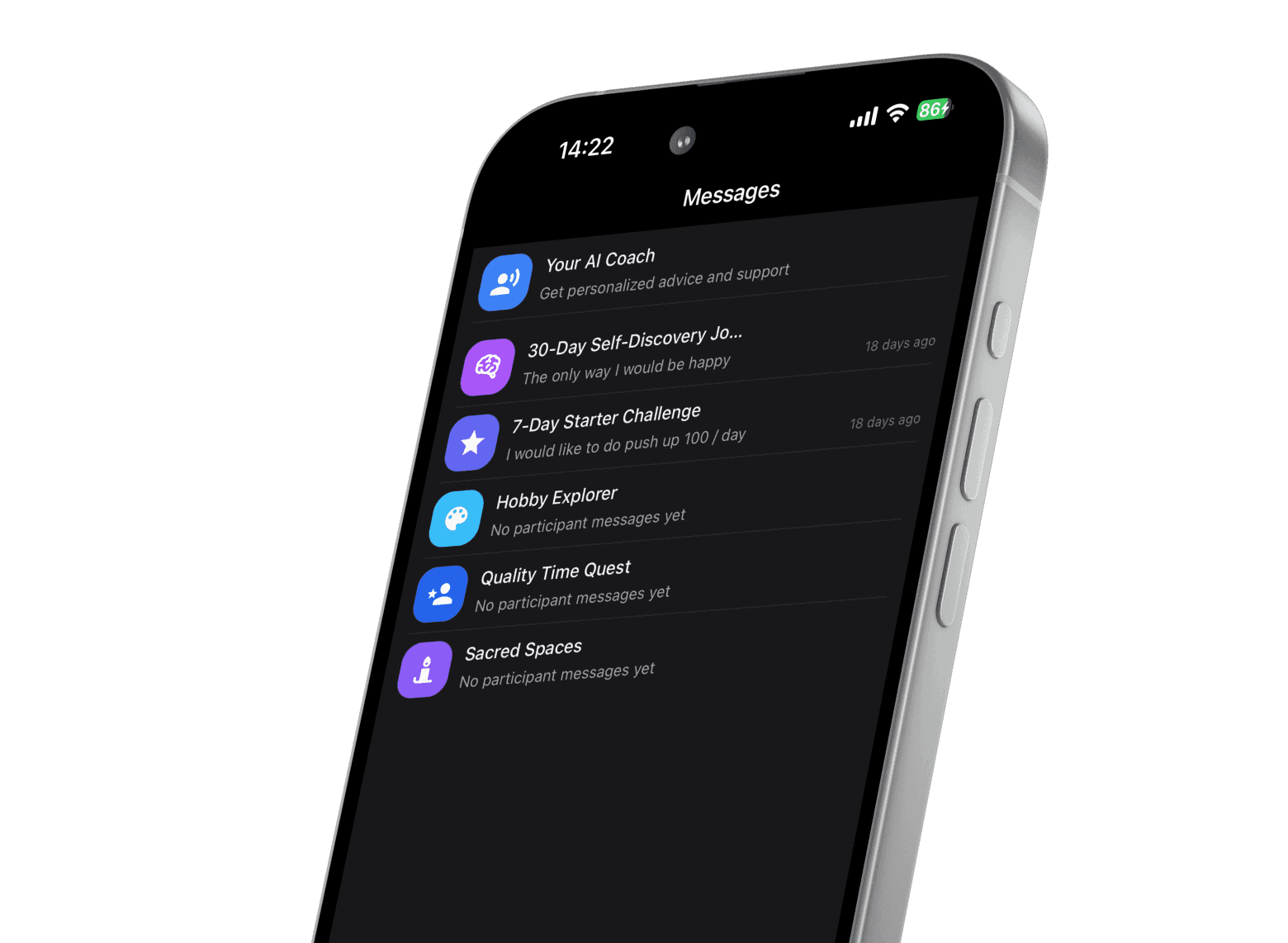
Designed primarily for the U.S. market, the application allows users to create or join challenges, make commitments with friends, track progress, communicate through group chat, and receive additional motivation from an AI coach. For supported goals, health data can also be used to verify completed activities.
In March 2025, Courtney Guertin engaged NUS Technology to support the existing mobile application. Rather than rebuilding a product that was already in use, NUS joined the project to resolve functional defects, improve UI consistency, and help maintain a dependable experience across iOS and Android.

Name
Courtney Guertin
Backend
Next.js
Mobile
React Native, TypeScript
Industry
Consumer Lifestyle — Habit Formation, Accountability & Self-Improvement
Market
The US
Integration
Firebase Cloud Messaging, Apple HealthKit, React Native Mentions, React Query
THE CHALLENGESFor a habit-forming application, consistency is part of the product’s value. Every reminder, progress update, chat interaction, and completion status contributes to the user’s motivation to continue.
This means seemingly small defects can create meaningful friction:
Interrupted user journeys: Navigation, layout, or functional issues can make it harder for users to record progress or complete a commitment.
Inconsistent mobile experiences: UI behavior must remain predictable across different devices, screen sizes, and mobile operating systems.
Connected feature dependencies: Notifications, health data, chat, and server-side data synchronization all contribute to the same accountability experience. A problem in one area can disrupt the broader user journey.
A live codebase with established behavior: Because the application was already built, improvements had to preserve existing functionality while addressing specific issues efficiently.
Promise needed a team that could understand the current React Native application, communicate clearly about individual issues, and deliver focused improvements without introducing unnecessary disruption.
 THE SOLUTION
NUS joined the project as a product support and development partner, working within the existing React Native and TypeScript codebase.
The engagement centered on resolving UI issues and fixing functional bugs as they were identified. Instead of proposing a broad rebuild, the team focused on practical changes that protected the product experience and allowed the application to continue evolving.
NUS addressed UI issues that affected how users interacted with the application. This included reviewing existing screens and flows, identifying inconsistencies, and implementing targeted corrections.
For iPromise, visual polish was not treated as a purely cosmetic concern. A clear and consistent interface helps users move through the core accountability cycle:
Set or join a challenge.
Make a commitment.
Receive reminders and encouragement.
Record or verify progress.
Interact with friends and track shared results.
By reducing friction across these interactions, NUS helped make the application feel more dependable and easier to use.
The application combines multiple technical components to support its social and habit-forming features:
Firebase Cloud Messaging delivers notifications that bring users back to their commitments and group activities.
Apple HealthKit provides permission-based access to relevant health data, allowing supported activities to be tracked and marked as completed inside the application.
React Native Mentions enables users to mention other participants in chat, supporting more direct interaction within challenge groups.
React Query manages communication with backend APIs, caches server data, and synchronizes the interface after users create, update, or delete information.
Amazon S3 provides storage for application assets and user-generated content.
NUS worked within this existing landscape when diagnosing and resolving issues. This required understanding not only the visible symptom of a bug but also how the affected screen or feature interacted with backend data and third-party components.
The project did not present a single large technical obstacle. Its defining characteristic was the steady coordination required to review, discuss, and resolve a series of smaller issues.
NUS maintained a direct working process with the client: clarify the expected behavior, identify the source of the issue, implement the correction, and confirm that the surrounding experience continued to work as intended.
This focused approach kept development aligned with the client’s immediate priorities and avoided adding complexity where it was not needed.
 THE RESULT
Since March 2025, NUS has provided Promise with a consistent engineering path for addressing UI and functional issues as the application evolves.
The engagement strengthened product continuity and stability while reducing recurring defects, rework, and user-reported interface issues.

Repeat Defect Reduction: Targeted fixes across the addressed areas resulted in around 10% fewer repeat defect reports, indicating more durable corrections and greater stability across subsequent iterations.
Fix Acceptance Rate: More than 90% of completed fixes were accepted without reopening, reducing rework and allowing development effort to remain focused on upcoming product priorities.
Crash-Free Stability: Focused maintenance and issue resolution helped maintain a 99.3% crash-free session rate across supported application releases, supporting a more dependable mobile experience.
UI Issue Reduction: Targeted interface corrections reduced user-reported UI and navigation issues by 15%, helping create a more consistent and easier-to-use experience across core interactions.
Repeat defect reports decreased by around 10%
More than 90% of completed fixes were accepted without reopening
A 99.3% crash-free session rate was maintained
User-reported UI and navigation issues decreased by 15%

Supporting the Product Users Already Rely On
Not every successful software engagement begins with a ground-up build. For iPromise, the priority was to improve an existing product through careful, focused execution.
NUS adapted to the application’s established architecture, addressed the issues that mattered to the current user experience, and supported the client without forcing the product into an unnecessary rebuild. The result was a more polished and dependable accountability application, allowing the Promise team to remain focused on helping users turn personal commitments into lasting habits.
Get the full story in PDF format, including project details, technical insights, and measurable results you can apply to your own business.


Let’s have a strategic conversation about your goals and how we can achieve results like these for your business.