Commerce & Marketplace

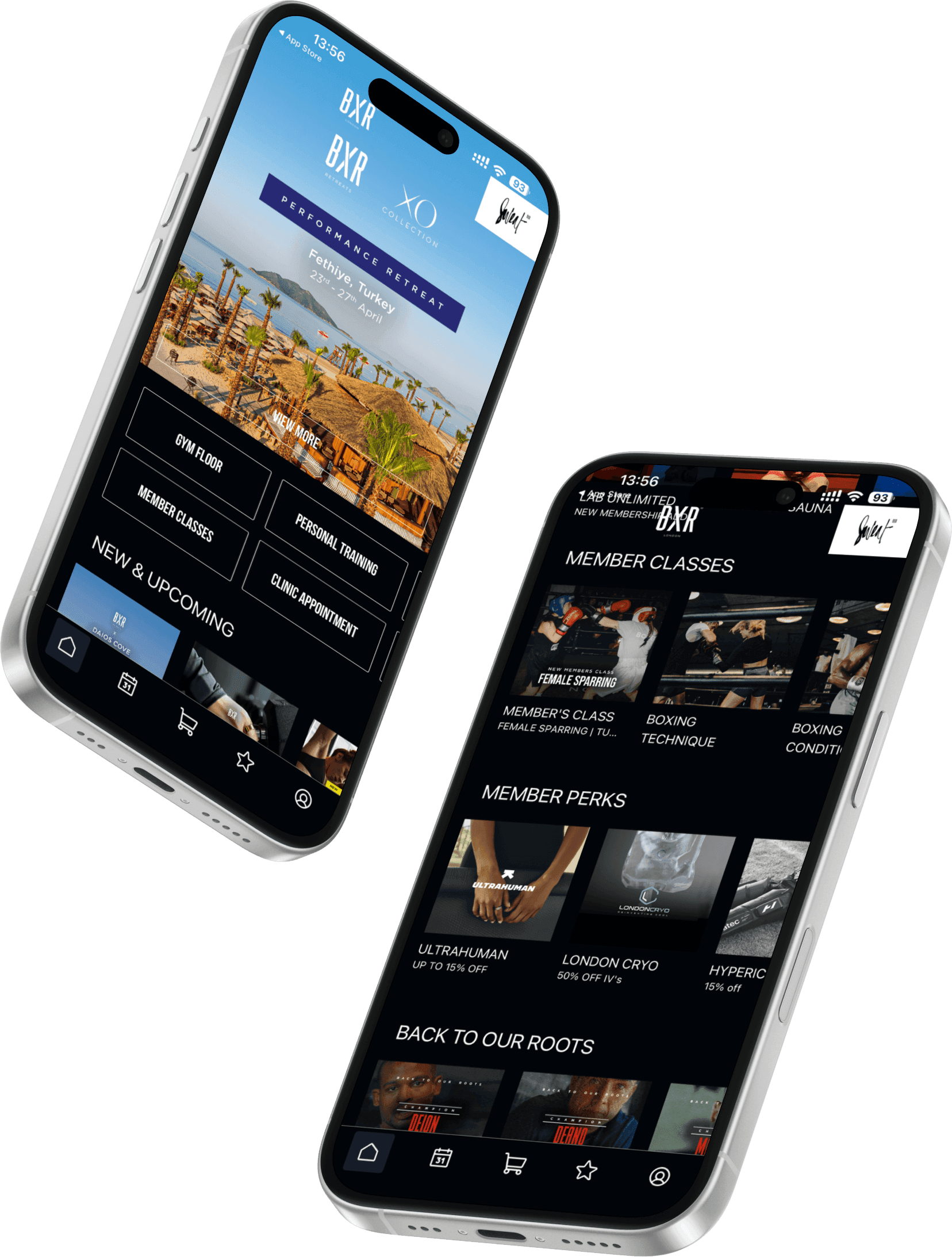
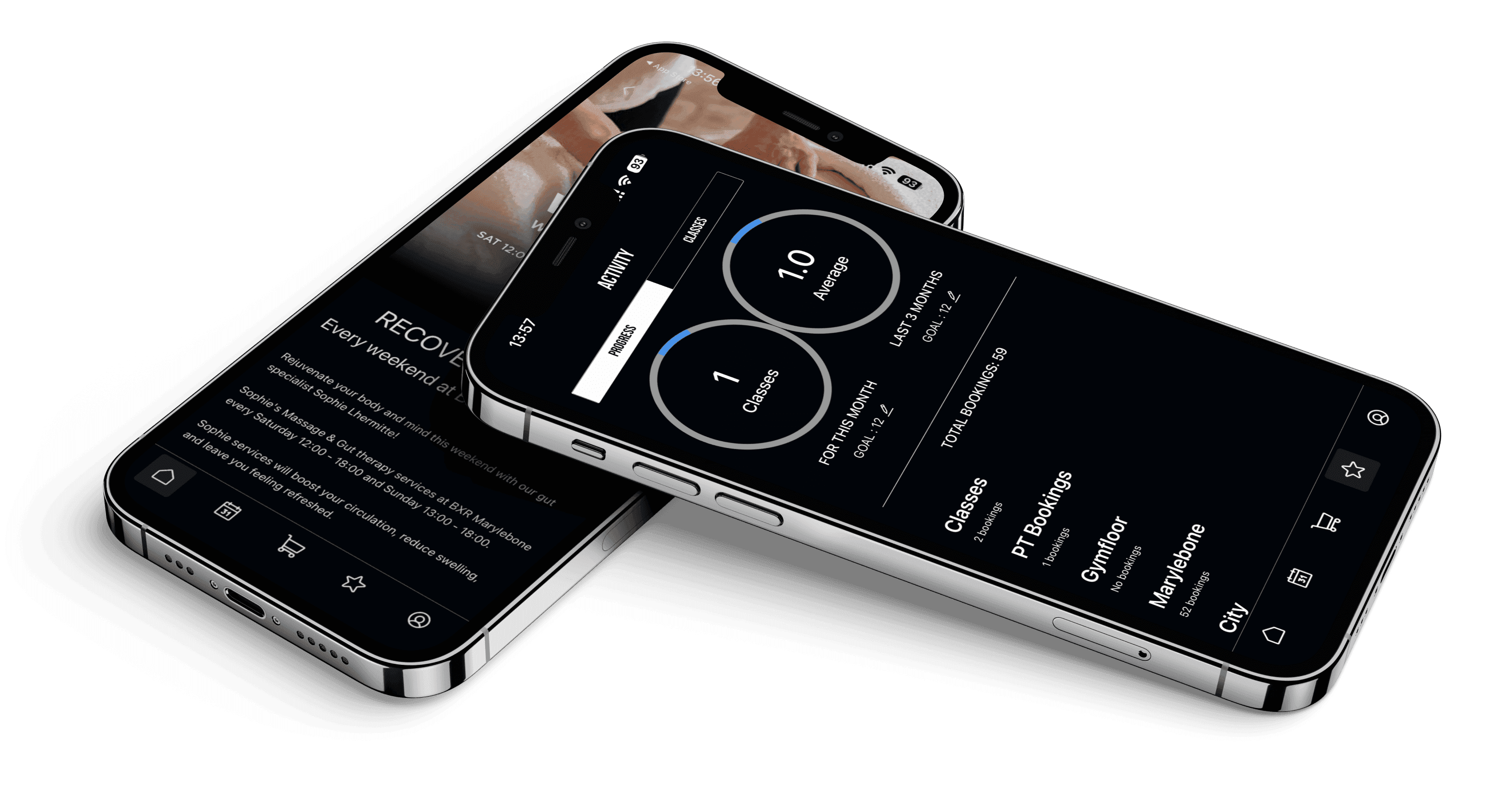
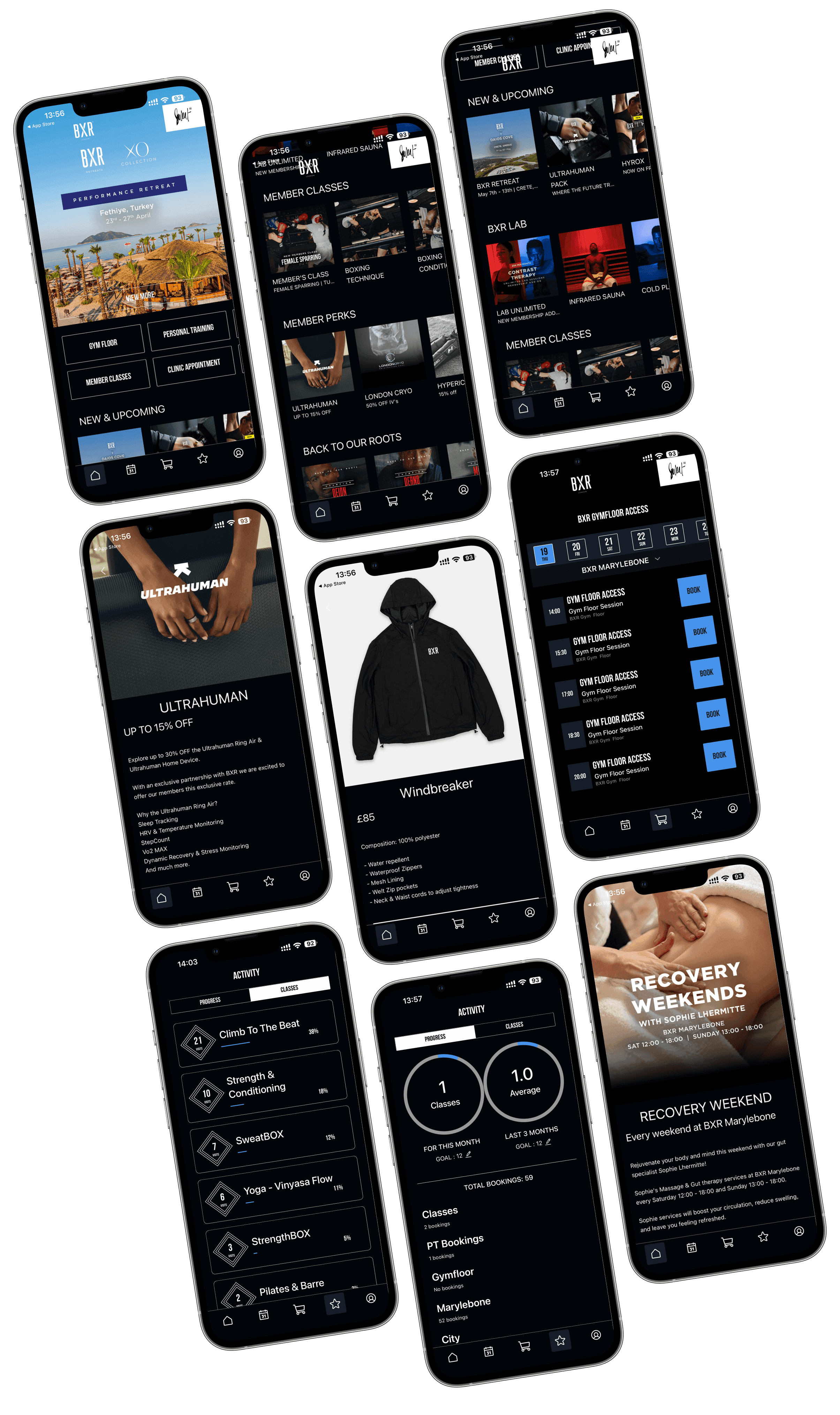
BXR is one of London’s most sought-after boxing and fitness studios, known for its high-intensity classes, elite coaching, and a membership base that expects a seamless, app-first experience. BXR's members run their whole relationship with the studio through a custom React Native app built on top of Mindbody. Members book classes, check in at the door and pay through the app, while Mindbody manages accounts, schedules and memberships behind it.
NUS Technology was brought in to take over the existing codebase and become the long-term development partner responsible for extending and maintaining the platform. The mandate was clear: stabilize what existed, and build the features that would keep BXR competitive in London’s premium fitness market.

Name
BXR
Backend
PHP
Frontend
React Native (Mobile)
Infrastructure
GoDaddy (PHP 7.4)
Industry
Boutique Fitness / Premium Boxing Studio
Market
United Kingdom
Integration
Mindbody, Stripe, Klaviyo
 THE CHALLENGES
The BXR app operates at the intersection of several demanding systems: class scheduling, membership management, in-app payments, real-time check-in, and targeted marketing communications. Each of these depended on a different underlying platform, and making them work together was far from straightforward.
At the core was Mindbody, the industry-standard platform for fitness studio management. Mindbody handles user accounts, class bookings, and its own payment infrastructure. The challenge is that Mindbody was designed to be a closed ecosystem. It does not natively support external payment methods, third-party marketing triggers, or deep customization of the member-facing experience.
This created a specific set of problems:
Members could only pay using Mindbody’s built-in payment options. There was no support for Apple Pay, Google Pay, or Stripe-managed payment flows, a gap that created friction for a premium London clientele accustomed to seamless mobile commerce.
Marketing and re-engagement campaigns through Klaviyo required granular, real-time data about what members were doing in the app. But Mindbody’s data model was not built to push this level of event detail to external tools, making it difficult to trigger meaningful, timely communications.
The codebase had accumulated technical debt from prior development cycles, making new feature work slower and riskier than it should have been for an app in active daily use.
 THE SOLUTION
NUS Technology’s approach was to treat Mindbody not as a limitation, but as a data layer to be orchestrated. Rather than replacing it, which would have disrupted BXR’s operations, we built the surrounding logic that Mindbody was never designed to provide.
Mindbody’s payment infrastructure is intentionally closed, it does not expose hooks for third-party processors. NUS built a custom payment layer using Stripe that sits alongside Mindbody, allowing BXR members to pay using Apple Pay and Google Pay in addition to standard card payments. This required significant internal engineering: mapping BXR’s service and membership catalogue across both systems, ensuring that transactions processed through Stripe were correctly reconciled with the corresponding Mindbody records, and maintaining that synchronization reliably as both platforms received updates.
For BXR’s members, the result was a checkout experience that matched what they expect from any premium mobile app. For BXR’s operations team, it meant a payment stack that could grow without being constrained by what Mindbody chose to support.
Effective retention marketing for a fitness studio depends on timing. A message sent to a member the morning of their regular class slot performs differently than the same message sent at random. Klaviyo is built for this kind of precision, but only if it receives the right signals.
NUS engineered the integration between the BXR app and Klaviyo to surface the member behaviour data that Mindbody alone could not deliver. Class bookings, cancellations, check-in events, and app engagement were mapped into Klaviyo’s event model, giving BXR’s team the foundation to build automated campaigns that respond to what members actually do, not just static profile data. This turned the marketing stack from a broadcast tool into a responsive, behaviour-driven system.
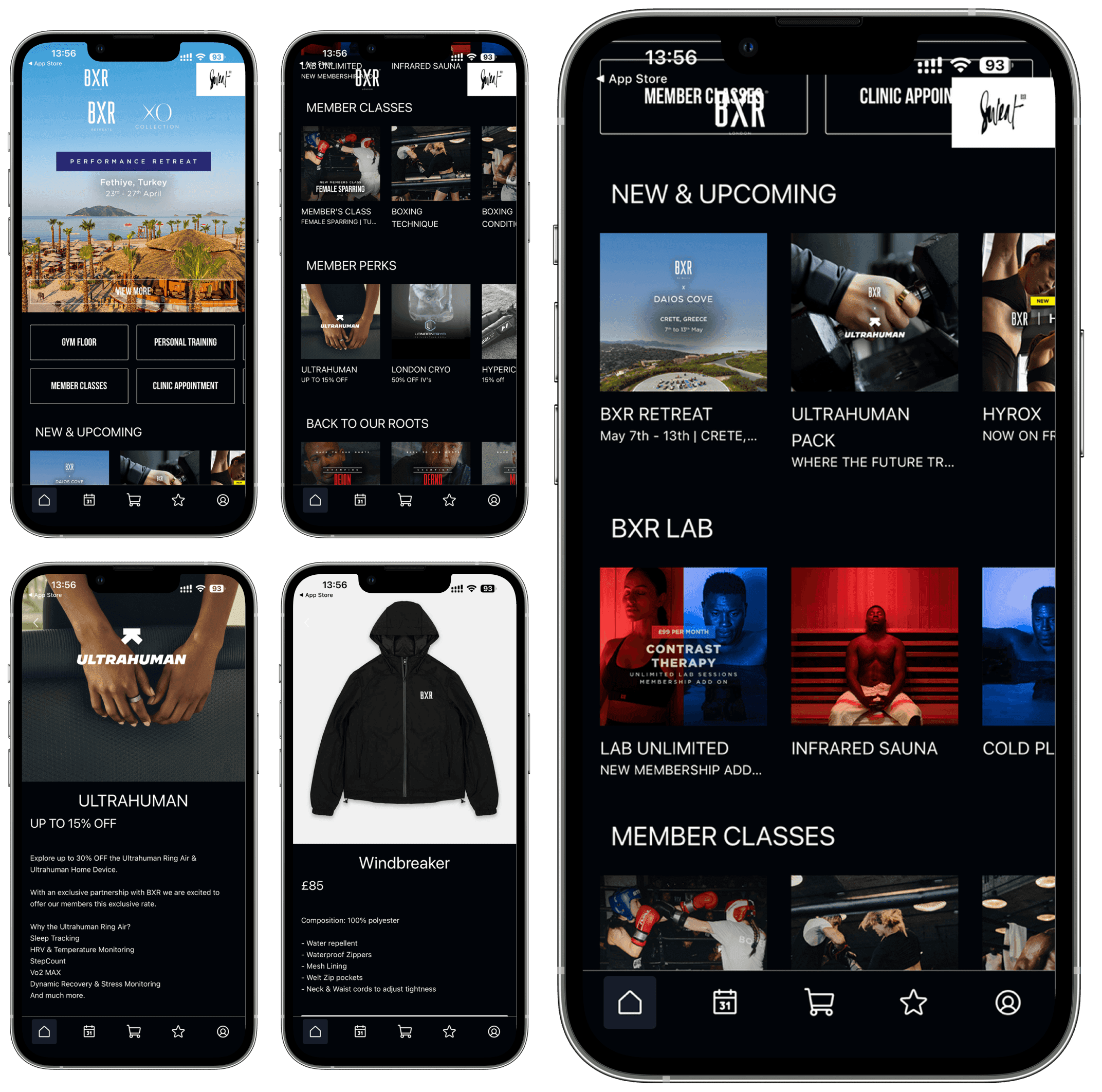
Beyond the integration work, NUS took ownership of the app’s continued evolution. New features, including enhanced class scheduling flows, personal trainer booking, and digital membership card check-in, were built on top of the stabilised codebase. Each release was managed to minimise disruption to BXR’s active member base, with the React Native app maintained across both iOS and Android as platform requirements changed.
 THE RESULT
With a stabilised codebase and properly integrated payment and marketing stack, BXR saw measurable shifts in how members engaged with the app:

After launching Apple Pay, Google Pay, and Stripe, the share of members completing payments in-app rose by 18%, reducing front-desk queues and manual reconciliation.
Smoother class scheduling flows cut mid-booking abandonment by 22%, meaning more members followed through from browsing the timetable to confirming a spot.
Klaviyo campaigns driven by real check-in and booking data achieved a 2.4× higher click-through rate compared to the generic broadcast emails BXR had been sending.
Crash-free session rates improved from roughly 96% to over 99.5% following codebase stabilisation, eliminating the most common source of negative App Store reviews.
+18% In-App Payments
-22% Booking Drop-Off
2.4× Email Click-Through
99.5% Crash-Free Sessions

Fitness apps fail their members quietly, a booking that doesn’t confirm, a payment that errors at checkout, a check-in that doesn’t register. For BXR, any of these would reflect directly on the premium experience they promise.
NUS Technology operates as the long-term engineering team responsible for keeping that promise. We took over a complex, integration-heavy codebase and extended it in directions the original platforms were not built to support. We continue to own the system, maintaining it, evolving it, and ensuring it remains stable as BXR grows.
Get the full story in PDF format, including project details, technical insights, and measurable results you can apply to your own business.


Let’s have a strategic conversation about your goals and how we can achieve results like these for your business.