Education & Learning
The project was born from the vision of its founder, who saw a future where managing short-term rental properties was effortless. He saw firsthand how property managers were overwhelmed by the manual, repetitive tasks required to provide a great guest experience—from juggling bookings on multiple platforms like Airbnb and Booking.com to coordinating cleanings and managing key handovers. His goal was to create a fully integrated ecosystem that could automate the entire property management lifecycle, from booking to check-out.

Name

Unito
Backend
Ruby on Rails
Database
PostgreSQL
Frontend
jQuery, React, React Native, iOS
Infrastructure
AWS
Industry
Hospitality Tech / Property Management
Market
Japan
Integration
Airbnb API, Beds24 API, RemoteLock API, AWS Rekognition
 THE CHALLENGES
Without a unified system, property managers were buried in administrative work. Every booking required manual data entry, personalized guest messages, scheduling cleaners, and arranging check-ins. This fragmented process was not only time-consuming but also prone to human error, leading to double bookings, missed cleanings, and a disjointed experience for guests.
The core of their vision depended on aggregating booking data from major platforms, but they faced a critical initial obstacle: at the project's inception, Airbnb, the largest platform in the industry, did not offer an official API. This meant there was no standard way to programmatically access booking information, manage messages, or sync calendars, which put the entire project at risk.
 THE SOLUTION
NUS Technology was brought in not just as a developer but as a strategic innovation partner. Working closely with the founder and his team, NUS Technology devised a plan to overcome the API challenge and build out the comprehensive Zens ecosystem. The entire project was managed remotely, utilizing an Agile methodology to ensure the flexibility needed to navigate a complex and evolving technical landscape.
To support a multi-faceted ecosystem, the NUS team chose a powerful and scalable tech stack. Ruby on Rails was selected for the backend of all applications, providing a stable and secure foundation for the entire platform. The frontend was tailored to each product's unique needs: jQuery for the internal ZensApp dashboard, React for the interactive ZensTablet interface, and React Native and native iOS for the ZensWork and ZensTablet mobile apps, enabling robust performance. The entire infrastructure was built on AWS, ensuring high availability and scalability to support a growing client base.
The Zens ecosystem was designed with distinct user experiences in mind:
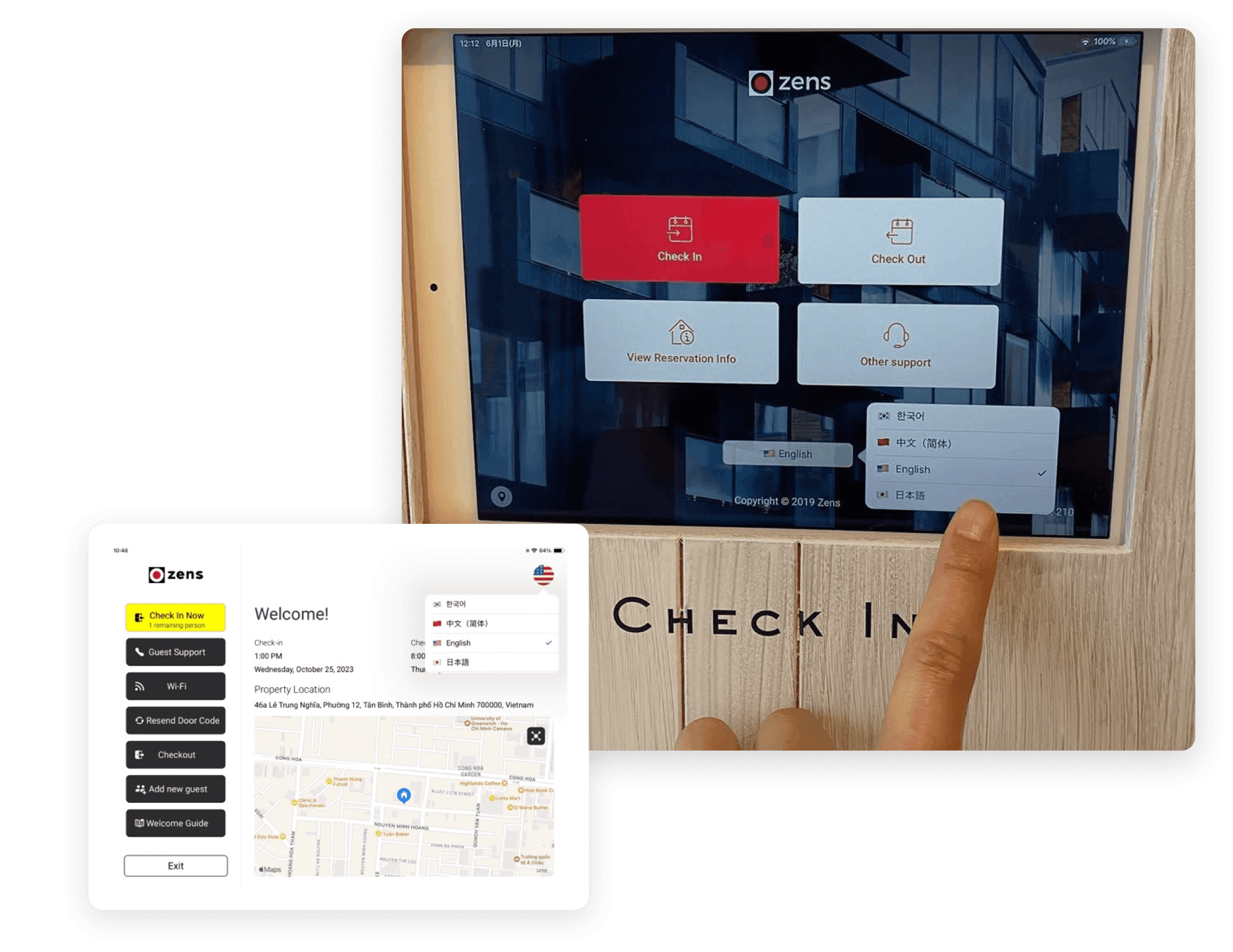
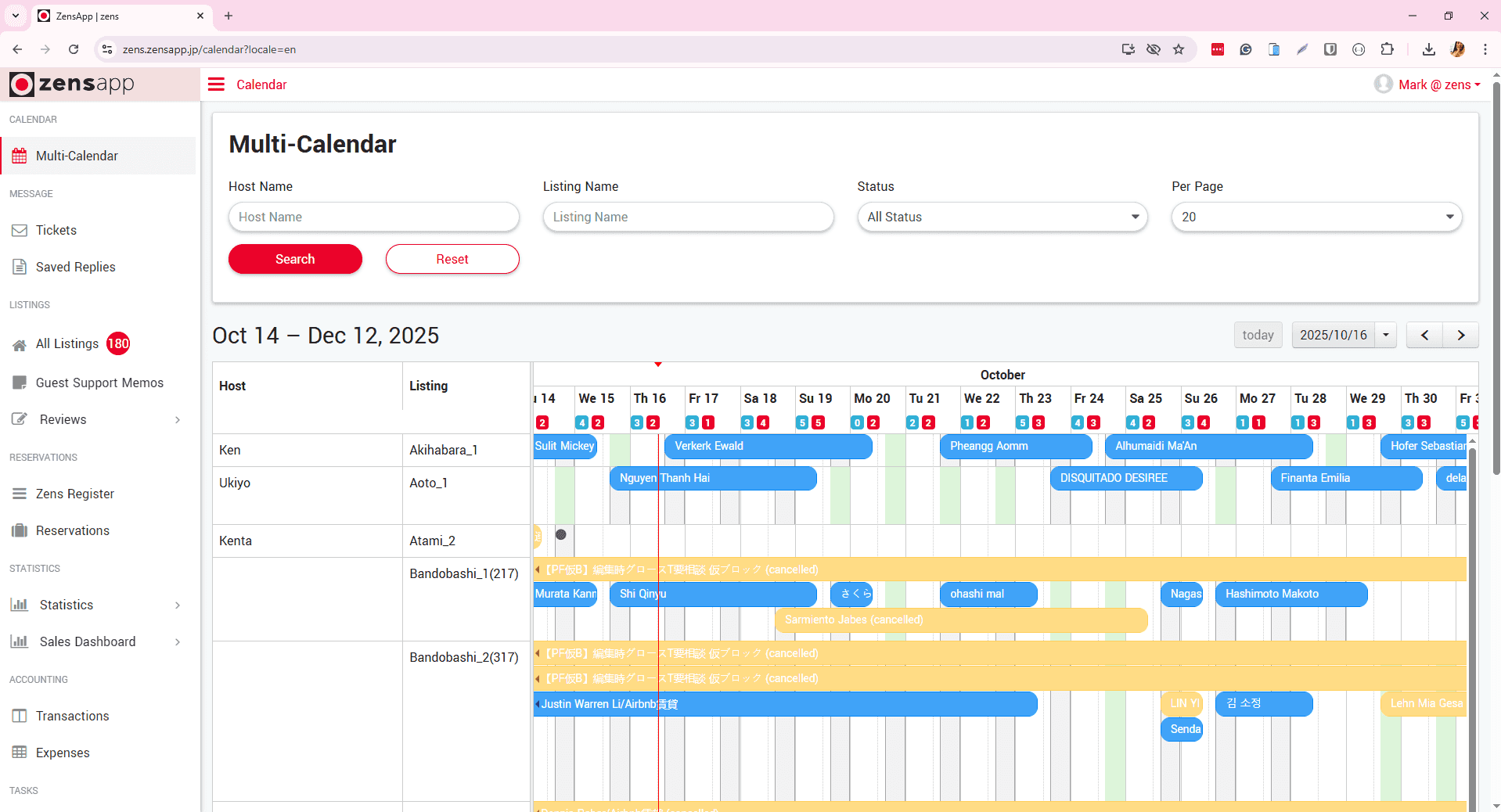
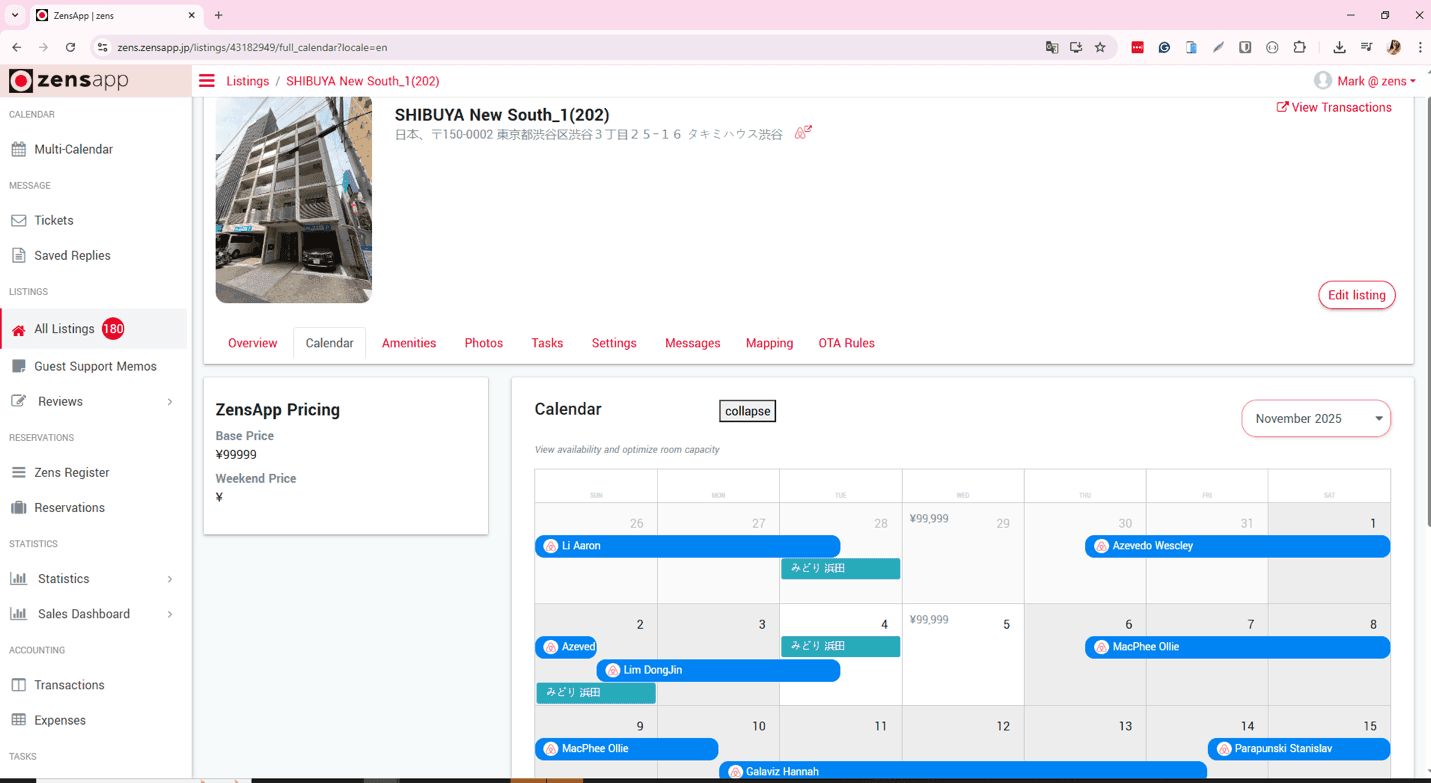
• ZensApp (For Property Managers): A centralized command center that aggregates bookings from all channels. It provides managers with a comprehensive overview of operations, automates guest communication, and seamlessly integrates with the other Zens products.
• ZensTablet (For Guests): Mounted at the property entrance, this tablet offers a futuristic, frictionless check-in experience. Using AWS Rekognition, it allows guests to check in via facial recognition, enhancing security and convenience.
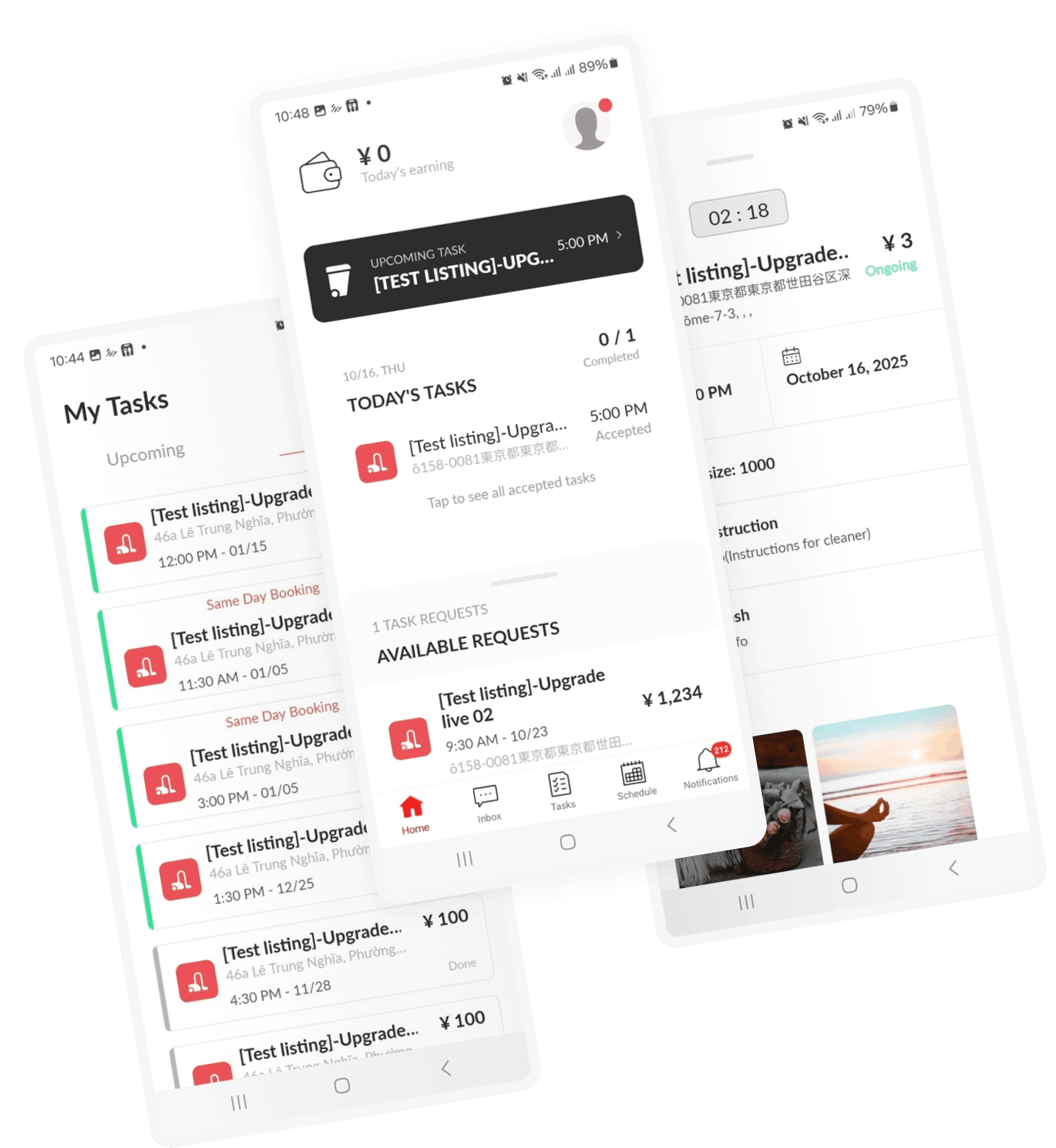
• ZensWork (For Cleaning Staff): A streamlined mobile app that automatically assigns cleaning jobs to staff based on booking end-dates. It provides all necessary details for each job, eliminating confusion and ensuring properties are always guest-ready.
The most significant challenge was the lack of an Airbnb API. To solve this, the NUS team engineered a sophisticated and resilient web crawler. This custom solution successfully navigated Airbnb's platform to extract booking details, host information, and even manage the message inbox. This innovation was the key that unlocked the potential of ZensApp, allowing it to function as a true central hub.
When Airbnb eventually released an official API, the system was seamlessly migrated, demonstrating the team's foresight and adaptable architecture. This solid foundation allowed for the integration of other cutting-edge technologies, including the RemoteLock API to generate unique, time-sensitive door codes for each guest and passport scanning technology to auto-fill guest registration forms.
THE RESULTThe launch of the Zens ecosystem transformed property management for its clients.
The platform delivered immediate and impactful results:

The biggest impact was on workload. By automating booking aggregation, guest messaging, and cleaner assignment, Zens cut manual handling time per booking by roughly 70%, from around 25 minutes to under 8, freeing an estimated 15 hours each week for a manager overseeing 40 to 50 properties.
The guest experience shifted just as sharply. Facial-recognition check-in via AWS Rekognition completed in under 30 seconds, replacing key handovers that once took 10 to 15 minutes. Roughly 80% of guests chose the contactless flow, and pre-registration completion via passport scanning reached around 88%.
Operational reliability improved in step. Automated assignment and syncing lifted on-time turnovers to about 99%, up from an estimated 85%, and cut double bookings and scheduling conflicts by roughly 95%. The web crawler, and later the official Airbnb API, synced new reservations within about 5 minutes of confirmation versus the prior multi-hour lag.
Admin Time per Booking Reduced by 70%
~80% Guest Adoption on Contactless Check-in Flow
Scheduling Errors Reduced by ~95%

Together these outcomes confirm NUS Technology's role as a strategic innovation partner, helping Ryoma (now Unito) turn a bold vision into a dependable, market-ready product suite.
The successful partnership between the Unito team and NUS Technology highlights how innovative problem-solving can redefine an industry. By refusing to be blocked by the initial API limitation and instead engineering a creative workaround, they laid the groundwork for a truly comprehensive automation platform. The Zens ecosystem demonstrates NUS Technology’s capability not just as a software developer, but as a technology partner capable of co-creating a complex, multi-product solution that solves critical business needs. Zens is now perfectly positioned to continue its growth as a leader in hospitality and property management automation.
 TESTIMONIAL
CEO at Zens. Inc
"I hired NUS to work on our existing Airbnb management software. They communicated well with our team and provided high quality work in short time. Their English skills were also great in both verbal and writing. In the end I worked with multiple developers, business analysts and quality control in NUS over 3.5 years. I'm very satisfied with their service. I think they are very good at building cloud based software and mobile apps."
Get the full story in PDF format, including project details, technical insights, and measurable results you can apply to your own business.


Let’s have a strategic conversation about your goals and how we can achieve results like these for your business.