XiD Technologies is a Singapore-based biometric technology company with over 20 years of industry experience. Their platform provides biometric access control, automated time and attendance management, and identity verification for businesses operating across construction sites, commercial offices, worker dormitories, banks, schools, and remote industrial environments such as mining operations and plantations. XiD’s solutions serve industries that are subject to strict regulatory requirements, notably Singapore’s Electronic Productivity Submission System (ePSS) and Biometric Authentication System (BAS) mandates for the construction sector.
When XiD’s growing client base began to expose the limits of their legacy deployment model, they turned to NUS Technology, a partner they already trusted from a prior engagement, to rebuild the platform from the ground up. That collaboration, which began in June 2024, remains ongoing today.

Name
XiD
Backend
Node.js, C#
Frontend
ReactJS
Infrastructure
AWS EC2
Industry
Biometric Technology / Identity & Access Management
Market
Global
Integration
ZKTeco, Hikvision (Biometric Hardware Sync)
 THE CHALLENGES
XiD’s original platform was built on vanilla PHP. Every time a new client signed on, the team had to manually clone the entire PHP project, configure a separate instance, and deploy it independently. What started as a workable process became an operational bottleneck as the client list grew.
Manual Tenant Provisioning: Onboarding each new client required cloning an entire codebase, setting up a dedicated environment, and configuring it from scratch. A single client onboarding could consume a full day of engineering time, effort that could have been spent on product development.
Maintenance Nightmare: With dozens of isolated PHP instances running in parallel, every bug fix or feature update had to be applied individually across all deployments. A single patch could take days to roll out completely, and inconsistencies between environments were inevitable.
Performance Limitations: The legacy PHP stack was not optimized for the real-time data demands of biometric access control. Slow response times affected the user experience, particularly at construction sites and offices managing hundreds of daily check-ins through connected biometric devices.
XiD needed a partner who could replace this fragmented approach with a unified, modern platform, one that could serve every client from a single codebase while maintaining the flexibility each deployment required.
 THE SOLUTION
NUS Technology was brought in to build the new XiD application from the ground up, drawing on the trust established during a prior collaboration. Rather than patching the legacy system, we designed a modern architecture that fundamentally changed how XiD operates and delivers its product.
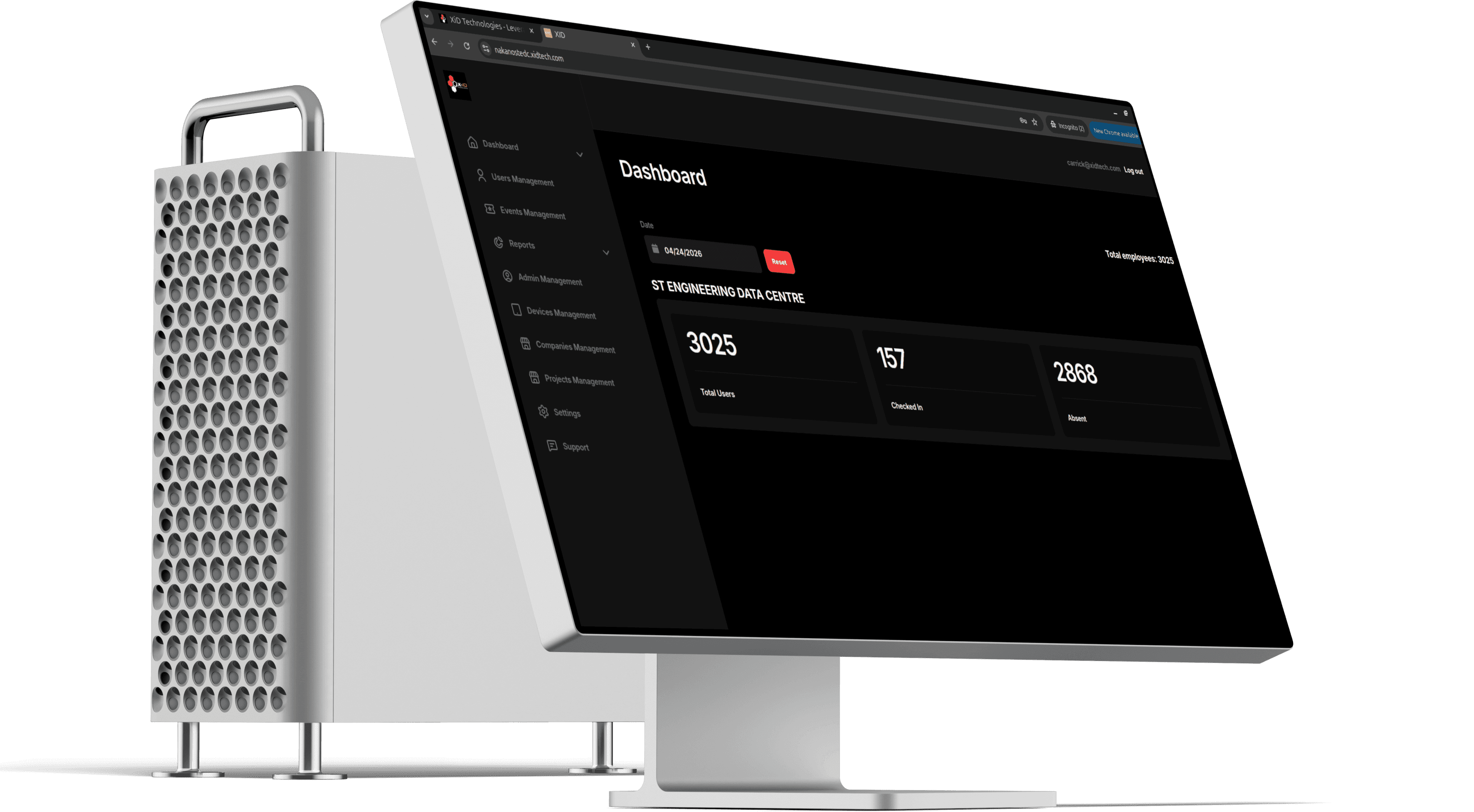
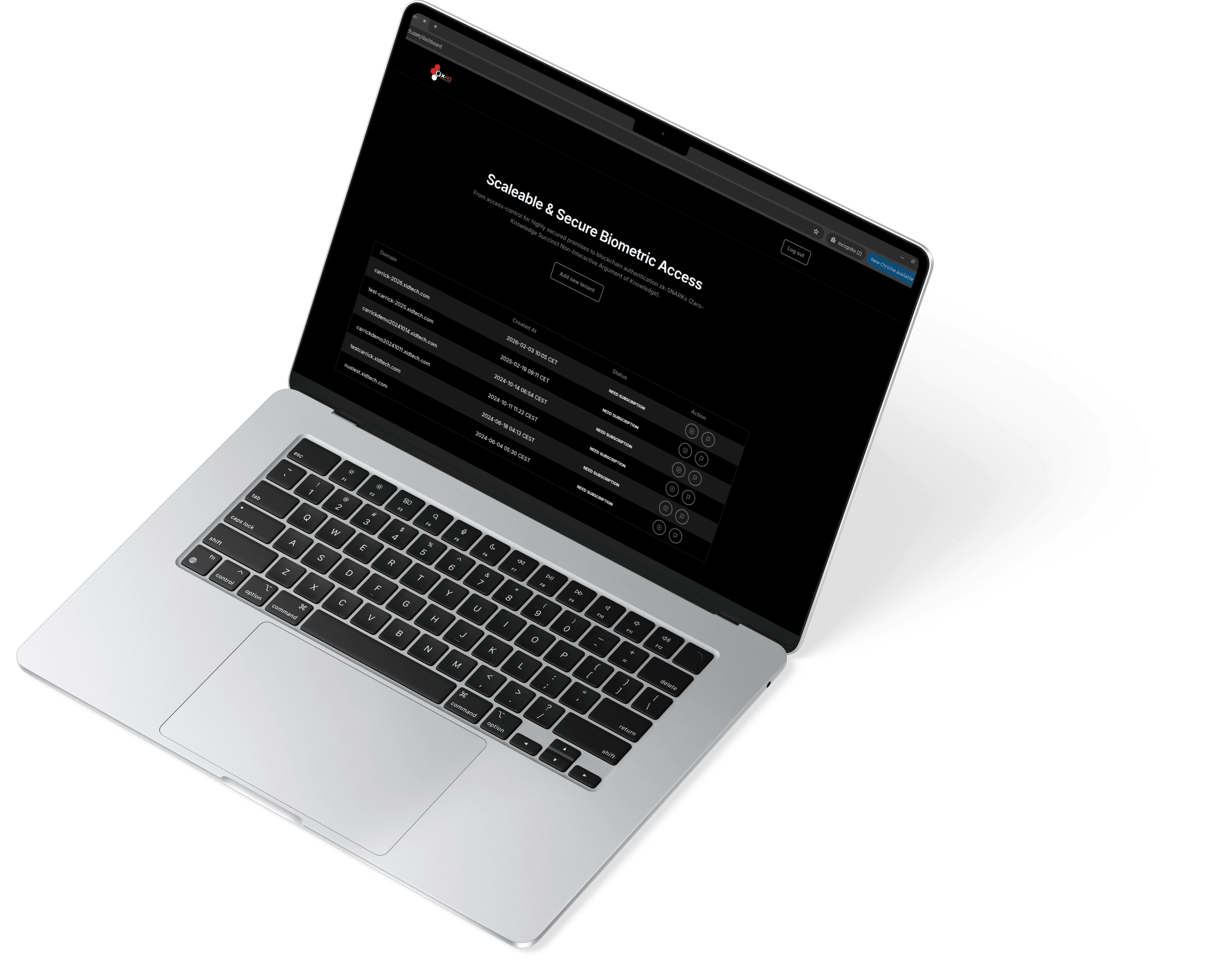
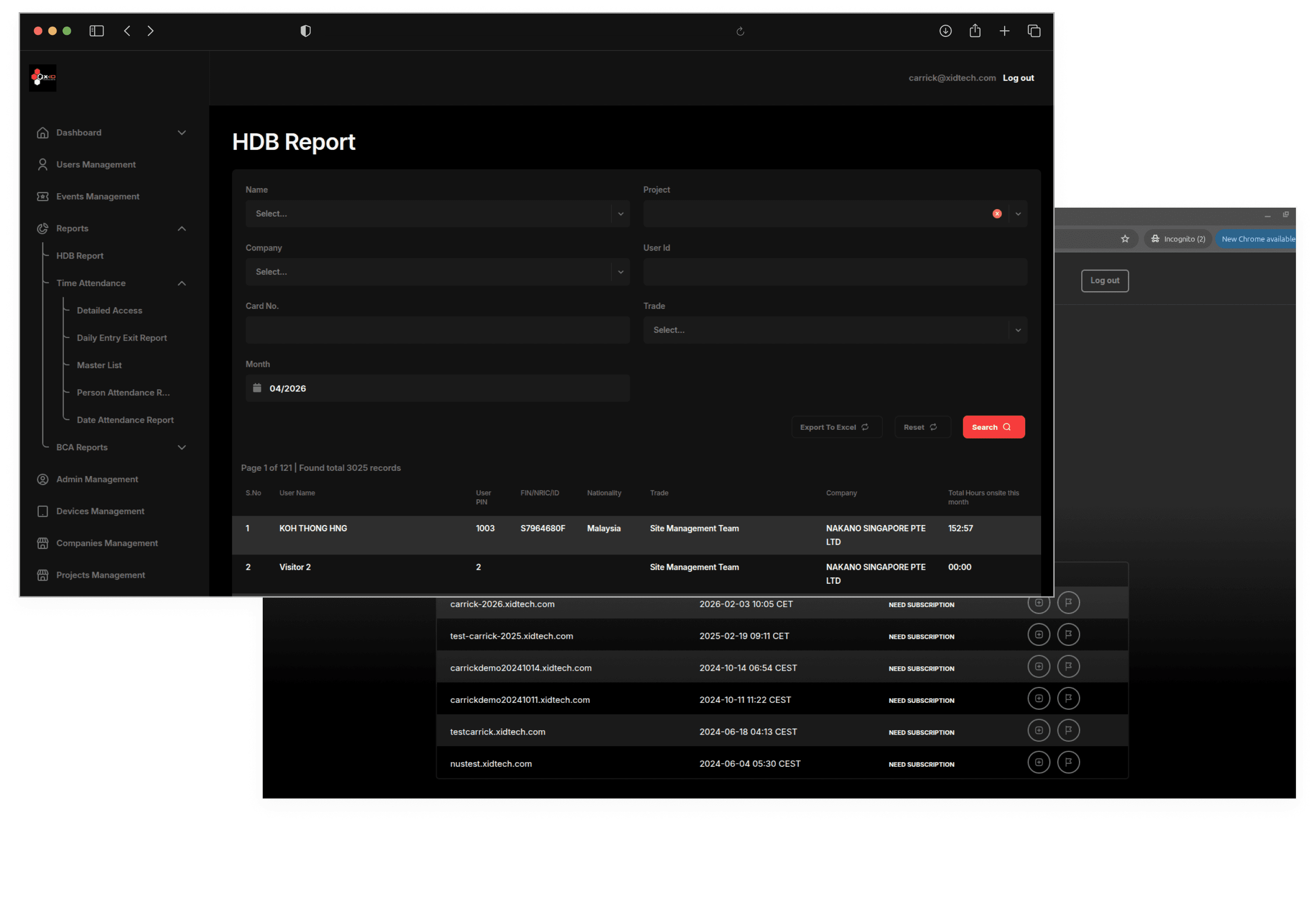
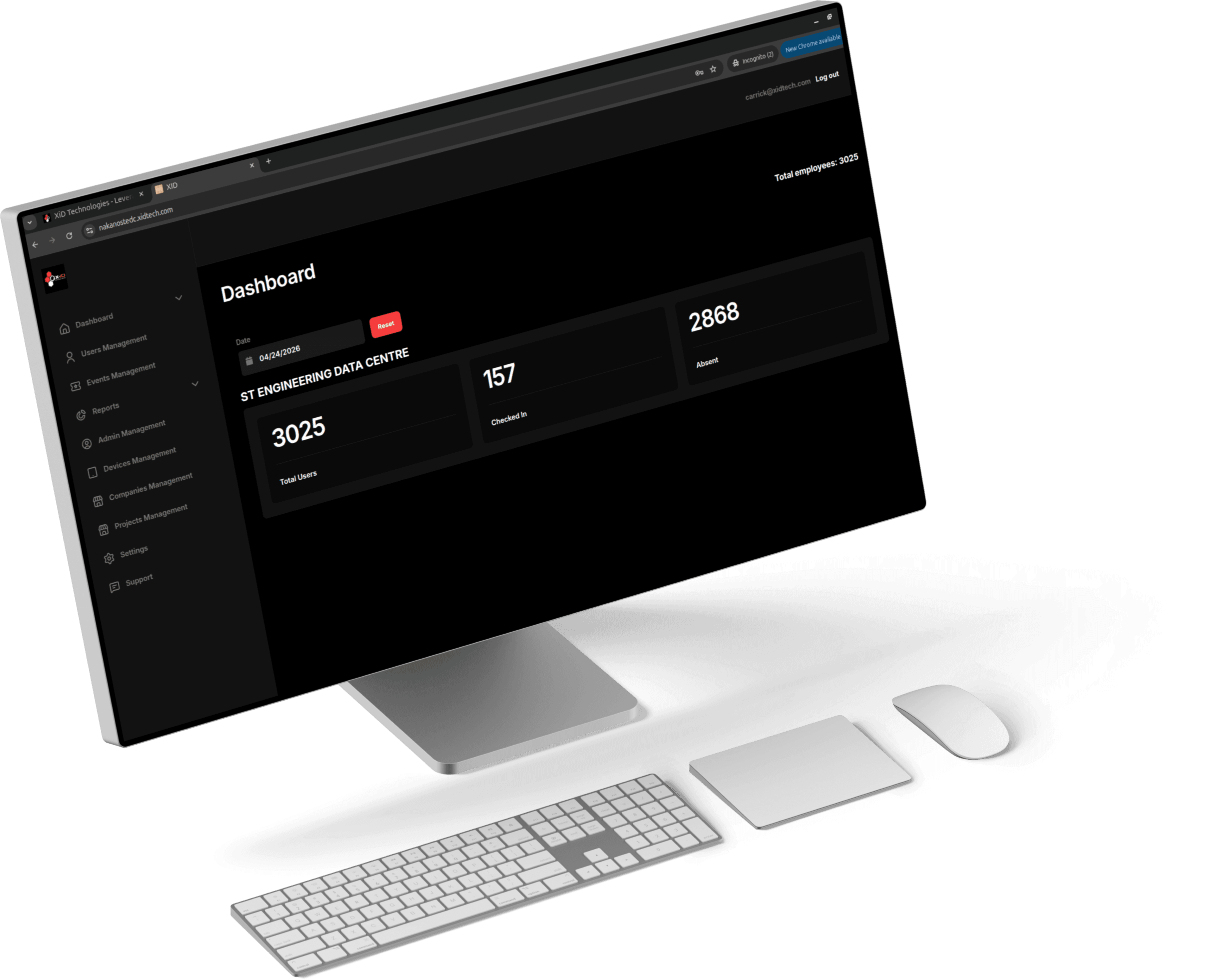
The core architectural decision was replacing dozens of isolated PHP instances with a single Node.js application serving all tenants. NUS engineered a multi-tenant system with robust data isolation, ensuring that each client’s biometric records, access logs, and configuration remain completely separated while running on shared infrastructure. This eliminated the need to clone and configure a new project for every client, whether that client is a bank in Singapore, a construction firm managing ePSS compliance, or a mining operation in a remote plantation.
What previously required a full day of manual setup, creating accounts, configuring environments, provisioning resources, was reduced to an automated workflow. New clients can now be onboarded in under an hour through a streamlined process that creates their tenant, sets up their workspace, and connects their biometric hardware with minimal manual intervention.
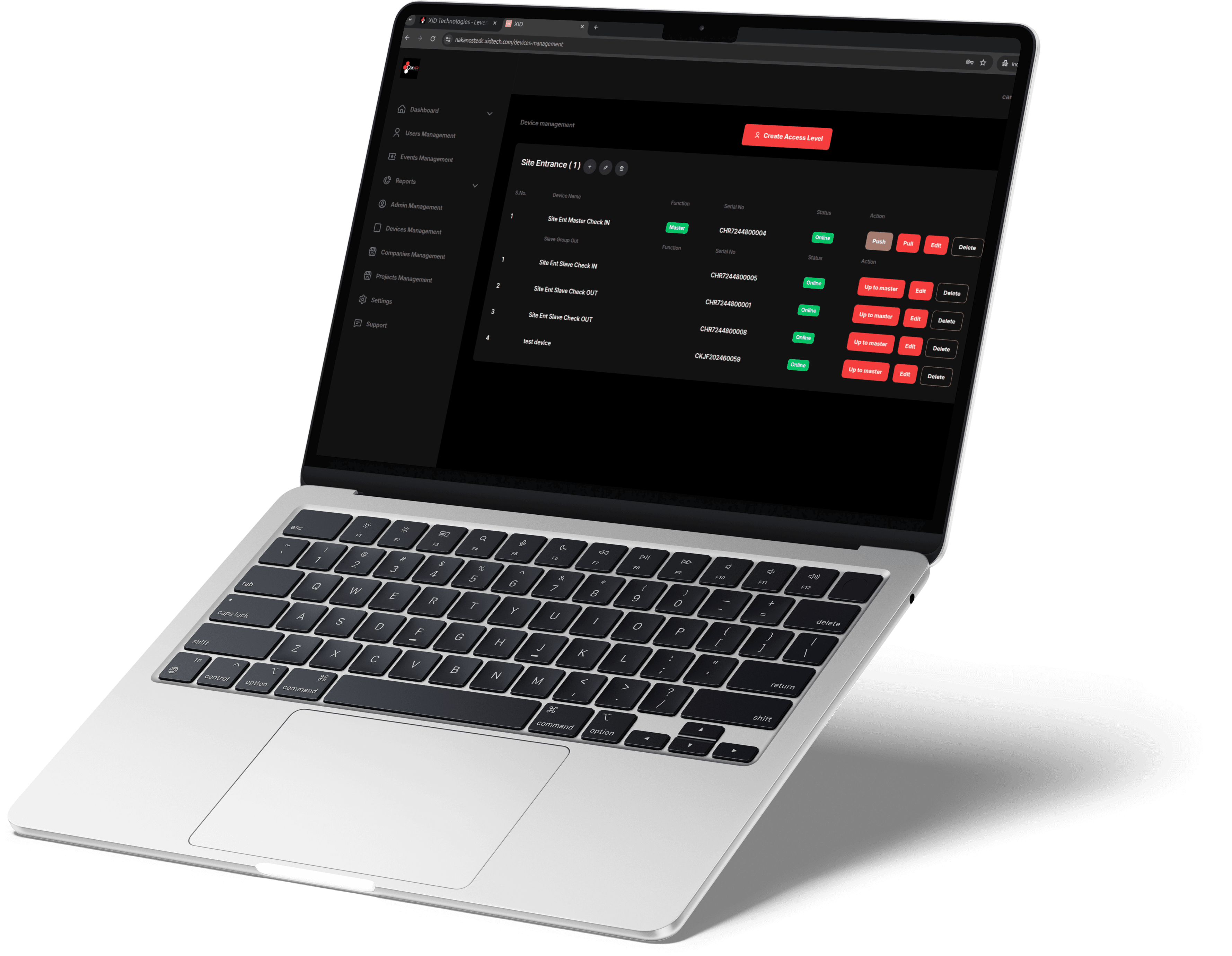
Biometric access control lives at the intersection of software and hardware. NUS built direct integrations with ZKTeco and Hikvision biometric devices, enabling the platform to pull attendance data, manage device configurations, and synchronize access control events in real time. XiD supports a multi-device strategy, allowing clients to deploy fingerprint scanners, facial recognition terminals, and card readers from different manufacturers, all managed from a single control plane. These are not surface-level API connections; they handle the complexity of managing diverse hardware fleets across multiple client sites, including remote locations where connectivity relies on SIM card routers rather than fixed broadband.
XiD’s platform serves clients in sectors with strict compliance requirements. In Singapore’s construction industry, for example, contractors must submit biometric attendance data through the government’s ePSS system and comply with BAS standards. NUS designed the reporting and data architecture to support these regulatory workflows natively, generating BCA-compliant reports, work permit expiry tracking, and daily entry-exit logs directly from the platform, without requiring manual data wrangling.
The migration from PHP to Node.js and ReactJS was driven by operational requirements, not technology preference. The biometric access control workflow demands fast response times: when a worker scans their fingerprint at a construction site gate, the system must validate, log, and respond within seconds. The new stack reduced average page load times by approximately 40%, delivering the speed and responsiveness that the legacy platform could not.
 THE RESULT
The transition from a manually-managed PHP deployment model to a unified SaaS platform fundamentally changed XiD’s operational capacity:

New client provisioning dropped from roughly a full day of engineering effort to under an hour. This freed the XiD team to focus on business growth rather than repetitive setup tasks.
Bug fixes and feature updates now deploy once and propagate to all clients instantly. Patch rollout time was reduced by an estimated 80%, eliminating the inconsistencies that plagued the multi-instance model.
The modern Node.js backend delivers approximately 40% faster page loads and improved responsiveness across all client environments, supporting real-time biometric data processing at scale.
Managing a single application instead of dozens of cloned instances reduced server overhead and operational complexity, cutting infrastructure management effort by roughly 60%.
96% Cutdown on Onboarding Time
80% Faster Platform-Wide Maintenance Updates
40% Faster Real-Time System Performance
60% Reduction in Infrastructure Overhead

XiD can now onboard new clients without proportional increases in infrastructure complexity or engineering overhead. The platform is built to grow with the business across its diverse verticals, from Singapore construction firms to remote mining operations.
NUS Technology was selected for this engagement based on demonstrated reliability from a previous project. That trust proved well-placed: NUS didn’t just deliver a new codebase, we designed the system that XiD’s entire operation runs on. From automated tenant provisioning to deep hardware synchronization with biometric devices from multiple manufacturers, the platform reflects how XiD actually operates, not how off-the-shelf software thinks they should.
The partnership, ongoing since June 2024, continues to evolve. As XiD expands into new verticals and geographies, NUS remains the engineering partner behind a platform that manages physical security and workforce compliance for businesses across industries and borders.
Get the full story in PDF format, including project details, technical insights, and measurable results you can apply to your own business.


Let’s have a strategic conversation about your goals and how we can achieve results like these for your business.