How We Built an Airbnb Integration Before Airbnb Had an API
 June 3, 20266 min read
When people talk about hospitality software today, they usually assume one thing: APIs already exist.
You connect Airbnb, Booking.com, smart locks, payment systems, and messaging platforms together. Done.
But when we started building the Zens ecosystem for a client in Japan, that assumption did not hold. Airbnb had no official API available for the kind of operational automation the platform needed. Yet the entire business depended on real-time booking synchronization and automated guest management.
Waiting for Airbnb to release an API was not an option. The product vision depended on solving the integration problem immediately.
So we engineered our own solution.
This project eventually became a complete hospitality automation ecosystem handling booking aggregation, guest communication, cleaning coordination, facial-recognition check-in, and smart-lock automation. But the hardest challenge came first: how do you integrate with a platform that does not officially support integration?
You can also explore the full Zens hospitality automation case study to see how the ecosystem evolved from an integration challenge into a multi-product operations platform.
The Real Problem Was Not Technical. It Was Operational.
Most people underestimate how operationally complex short-term rentals actually are.
A booking is not just a calendar event. One reservation triggers multiple downstream workflows:
- guest messaging
- cleaning assignments
- check-in coordination
- smart-lock access generation
- identity verification
- payment reconciliation
If any one of those fails, the operational impact becomes immediate.
A missed sync can cause double bookings. A delayed cleaning assignment can leave guests arriving to an unprepared property. Incorrect lock access timing can leave people stranded outside at midnight.
At the time, Zens' founder Ryoma wanted to centralize all of these workflows into one ecosystem. Property managers were manually juggling bookings across multiple platforms while coordinating cleaners and handling guest communication individually.
The biggest blocker was Airbnb itself.
Without an official integration layer, there was no supported way to:
- access booking data
- sync calendars
- retrieve guest information
- automate messaging
Today, Airbnb offers partner APIs for approved platforms. But at the time, that infrastructure did not exist in a usable form for the project.
Engineering Around a Missing API
The first major architectural decision was simple:
We could not build the rest of the platform until reliable Airbnb data existed.
That forced us to build a custom web crawler capable of extracting booking information, host details, and messaging data directly from Airbnb's platform.
This was significantly more difficult than consuming a standard REST API.
Unlike stable APIs:
- UI structures change constantly
- rate limiting is unpredictable
- authentication flows evolve
- data extraction becomes fragile
- anti-automation protections exist
The system needed to remain resilient despite all of those variables.
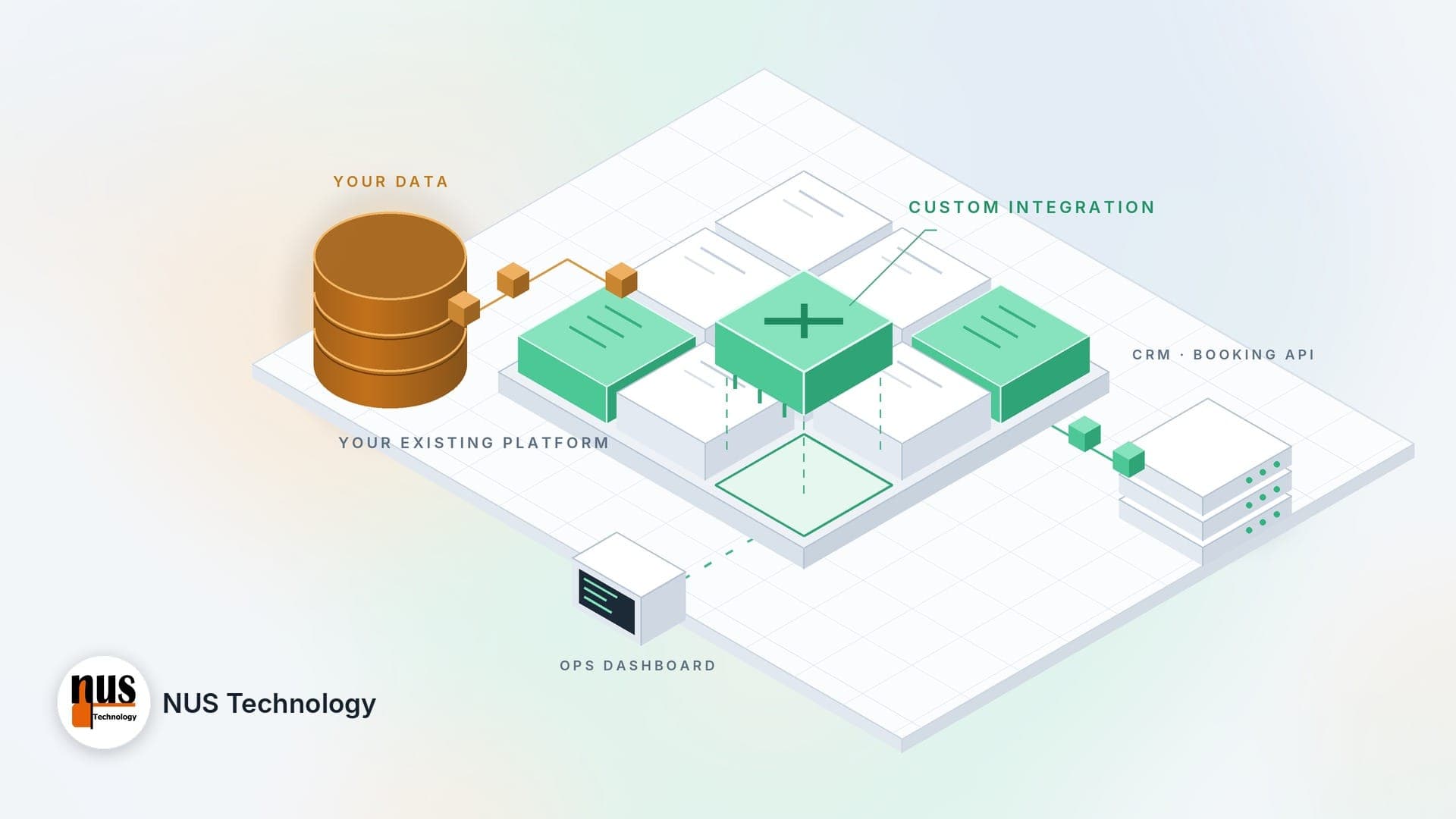
Instead of tightly coupling the entire platform directly to Airbnb's structure, we designed an abstraction layer between the crawler and the rest of the Zens ecosystem. That decision became critical later.
The crawler acted as a translation engine:
- normalize booking data
- standardize guest information
- map conversations into internal workflows
- feed downstream automation systems
This allowed the rest of the platform to behave as if a proper integration already existed.
Years later, when Airbnb released official APIs, the migration became far less painful because the internal architecture had already isolated the external dependency.
That separation layer probably saved months of redevelopment work. One reason the migration remained manageable was because the Zens ecosystem had already been architected around operational abstraction layers rather than tightly coupling workflows directly to Airbnb's platform. The full technical breakdown is covered in this detailed Zens case study.
Building More Than a Dashboard
Many software teams think operational software means building an admin panel.
The Zens ecosystem quickly proved otherwise.
The platform eventually evolved into multiple connected products:
1/ ZensApp
A centralized operations dashboard aggregating bookings from all channels while automating guest communication and operational workflows.
2/ ZensTablet
A property-installed guest check-in system using AWS Rekognition facial recognition for identity verification and frictionless entry.
3/ ZensWork
A mobile app automatically assigning cleaning staff based on booking schedules and checkout timing.
Together, these products formed a unified hospitality operations ecosystem rather than a standalone booking tool. You can see the complete architecture and workflow automation approach in the full Zens platform case study.
The important lesson here is that operational complexity rarely stays inside a single application.
Once software becomes responsible for real-world workflows, it inevitably expands into:
- mobile systems
- hardware integrations
- automation engines
- messaging infrastructure
- role-specific interfaces
This is one reason why many hospitality platforms struggle at scale. Fragmented tools eventually create conflicting sources of truth. Modern hospitality systems increasingly rely on centralized operational coordination across multiple services and integrations.
At NUS Technology, this type of challenge is exactly why we focus heavily on operations backbone platforms rather than isolated software features.
Why Reliability Matters More Than Features
One of the biggest misconceptions in software development is that feature count determines product quality.
In operational platforms, reliability matters far more.
A hospitality system does not succeed because it has the most dashboards. It succeeds because operations continue functioning correctly during edge cases, API failures, and high-volume periods.
The Zens ecosystem needed to reliably coordinate:
- booking aggregation
- smart-lock timing
- cleaning schedules
- guest onboarding
- identity verification
all without introducing operational bottlenecks.
We integrated:
- Airbnb
- Beds24
- RemoteLock
- AWS Rekognition
into a unified workflow engine.
One particularly useful integration was RemoteLock, which automatically generated time-sensitive door access codes for guests.
That sounds simple on paper.
In practice, timing logic becomes surprisingly difficult:
- access too early creates security issues
- access too late frustrates guests
- booking modifications require instant synchronization
- failed cleanings may require delayed check-ins
Operational software is mostly edge-case management.
This is also why AI-generated code and "vibe coding" approaches often fail badly in operations-heavy systems. The complexity is not just writing features. It is understanding real operational workflows deeply enough to model them safely.
The Architecture Decision That Paid Off Later
One architectural decision became especially valuable over time:
We treated third-party systems as unstable dependencies from day one.
That mindset shaped the entire platform architecture.
Instead of assuming integrations would remain stable forever, we built the system expecting:
- API changes
- platform restrictions
- data inconsistencies
- synchronization failures
This allowed the Zens ecosystem to evolve gradually as external systems matured.
When Airbnb eventually launched official APIs, we did not need to redesign the entire platform. We only replaced the integration layer feeding the existing operational workflows.
That flexibility matters because third-party platforms always change eventually.
Many companies discover this too late after tightly coupling their business logic directly to external APIs.
At NUS Technology, we apply similar principles when building complex system integration projects for businesses dealing with operational dependencies and fragmented infrastructure.
What We Learned From Building Around Constraints
Looking back, the missing Airbnb API was probably a blessing in disguise.
It forced stronger architectural discipline early.
If the API had existed from the beginning, it would have been tempting to tightly bind business workflows directly to Airbnb's implementation. Instead, the constraint forced us to think carefully about:
- abstraction layers
- fault tolerance
- synchronization logic
- operational resilience
Those decisions made the platform significantly more adaptable later.
The final result was not just an integration. It became a complete hospitality automation ecosystem that eliminated manual booking coordination, automated guest communication, prevented double bookings, and ensured reliable property turnovers.
More importantly, it proved something we still see repeatedly today: The hardest software problems are rarely about technology alone.
They are about designing systems that can survive operational complexity, external dependencies, and real-world unpredictability.
FAQ
How did hospitality platforms integrate with Airbnb before official APIs existed?
Many early platforms relied on custom integrations such as web crawlers, email parsing, calendar synchronization, or unofficial automation methods. These approaches were significantly harder to maintain because Airbnb could change its interface or workflows without warning.
Why is hospitality automation more difficult than typical SaaS products?
Hospitality systems coordinate real-world operations involving guests, cleaners, property managers, locks, schedules, and bookings. Small synchronization failures can create immediate operational problems like double bookings or failed check-ins.
What technologies were used in the Zens ecosystem?
The platform used Ruby on Rails, React, React Native, PostgreSQL, AWS, and integrations including Airbnb, Beds24, RemoteLock, and AWS Rekognition.
What is the biggest lesson from this project?
Do not tightly couple your core business logic directly to third-party platforms. APIs, integrations, and external systems will eventually change. Strong abstraction layers and operational resilience matter far more long term.
Conclusion
Building an Airbnb integration before Airbnb had an API forced us to think differently about architecture, resilience, and operational reliability.
The project was never just about syncing bookings. It was about building a system capable of coordinating real-world hospitality operations without introducing new points of failure.
That mindset continues to shape how we approach complex platforms today at NUS Technology. If you want to see what a fully integrated hospitality automation ecosystem looks like in practice, you can explore the complete Zens case study here.