




The founders of Culture Radar came from a strong background in business consulting and professional services. Having advised numerous organizations on operational efficiency, they recognized a recurring gap: while companies could measure financial performance easily, they lacked real-time, quantitative data on their own internal culture.
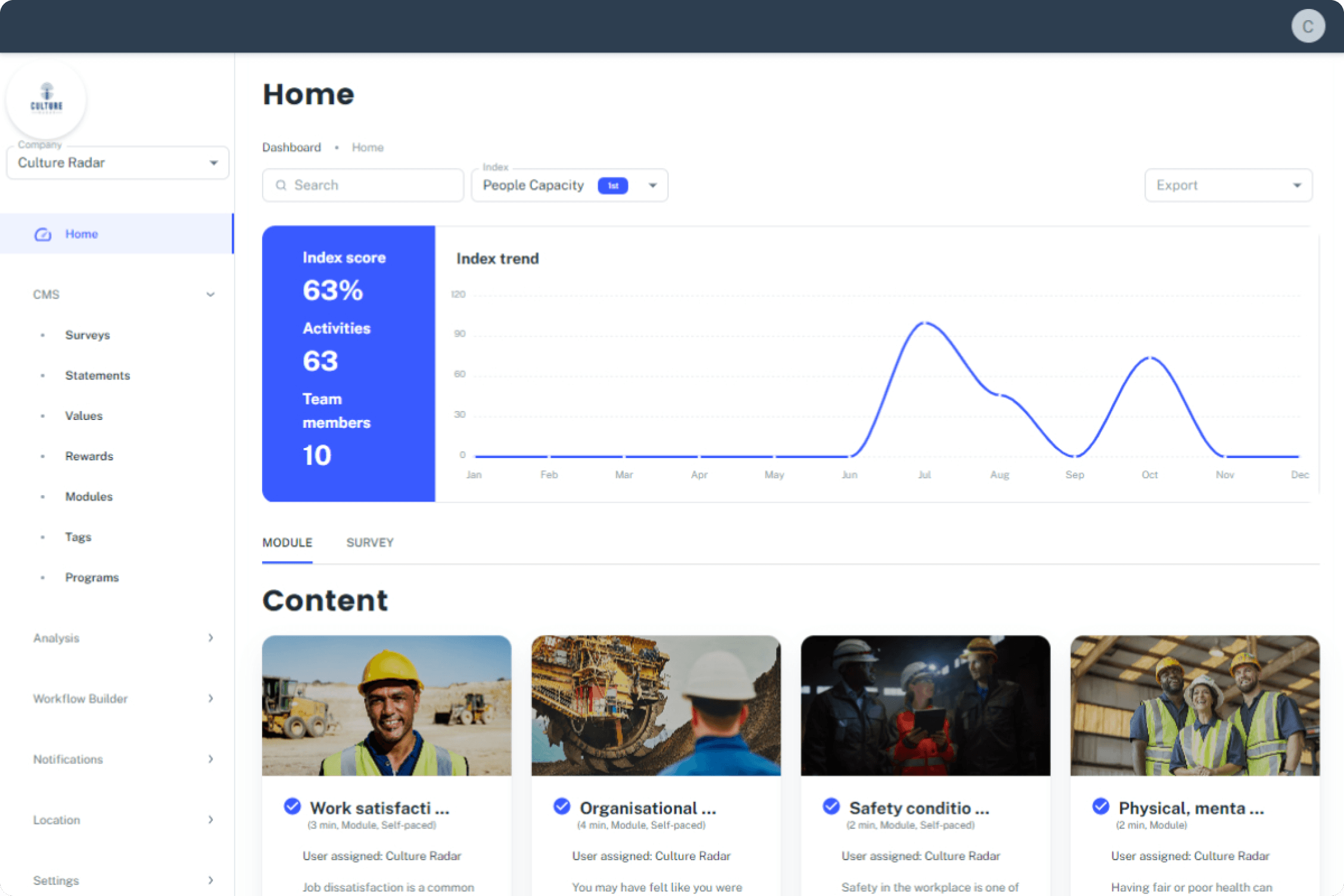
They envisioned a continuous, data-driven platform where businesses could seamlessly manage CMS content, such as surveys and learning modules, and push them directly to employees' mobile devices. Their goal was to calculate "index scores" based on user responses, providing a quantitative measure of every aspect of a user's working environment. However, as they scaled to welcome over 37 companies within their first 6 months, the need for a robust, automated system became undeniable.

Name
Culture Radar
Backend
ExpressJS
Database
MySQL (Amazon RDS)
Frontend
ReactJS (Web), React Native (Mobile)
Infrastructure
AWS
Industry
Human Resources & Corporate Training
Market
Global
Integration
SendGrid, Geolocation Services
 THE CHALLENGES
As the platform grew, the manual management of academic content and surveys became a bottleneck. The core challenges included:
• Automation at Scale: With expanding user data, manually sending content to the right users at the right time was no longer feasible for the administrative team.
• Data Integrity Risks: Live data collected from end-users needed to be stored directly and securely. Any mistake in data capture or loss of live connectivity could severely impact the accuracy of the "index scores" and, consequently, the business insights derived from them.
• Contextual Delivery: Simply sending a survey wasn't enough; the content needed to be triggered by specific user contexts, such as their physical location or specific actions.

 THE SOLUTION
NUS Technology partnered with Culture Radar to engineer a system that prioritized automation, ease of use, and data security.
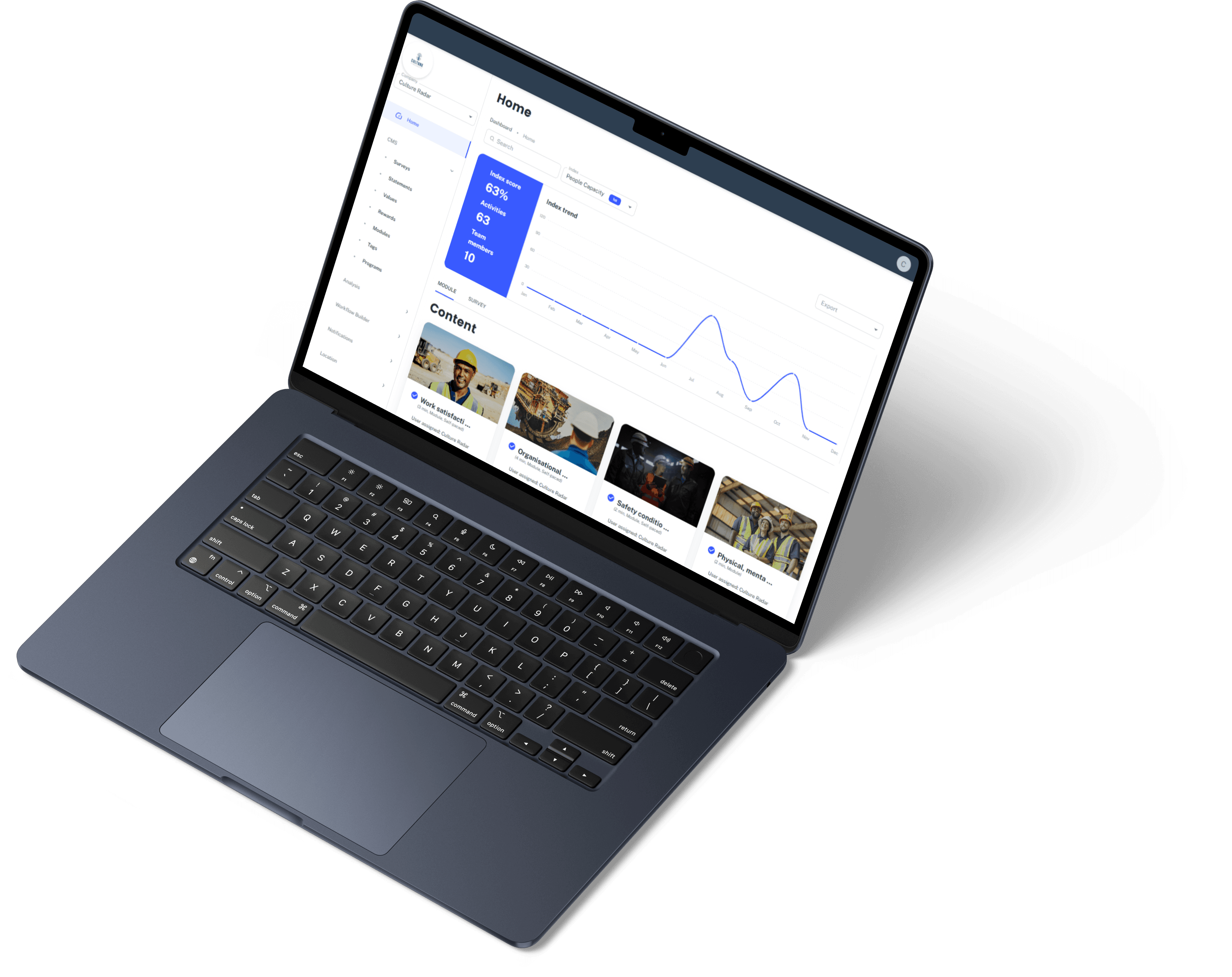
To ensure scalability and cross-platform compatibility, the team selected React Native for the mobile application. This allowed for a consistent, high-performance user experience on both iOS and Android devices without the overhead of maintaining two separate codebases. ExpressJS was chosen for the backend, providing a lightweight yet powerful framework for handling API requests, while ReactJS powered the responsive web portal for administrators.
For the critical database layer, the team implemented MySQL on Amazon RDS (Relational Database Service). This choice was strategic; it allowed for automated retention period backups, enabling database restoration to any point within 35 days. This architecture secured the storage of live data, mitigating the risk of data loss during critical operations.
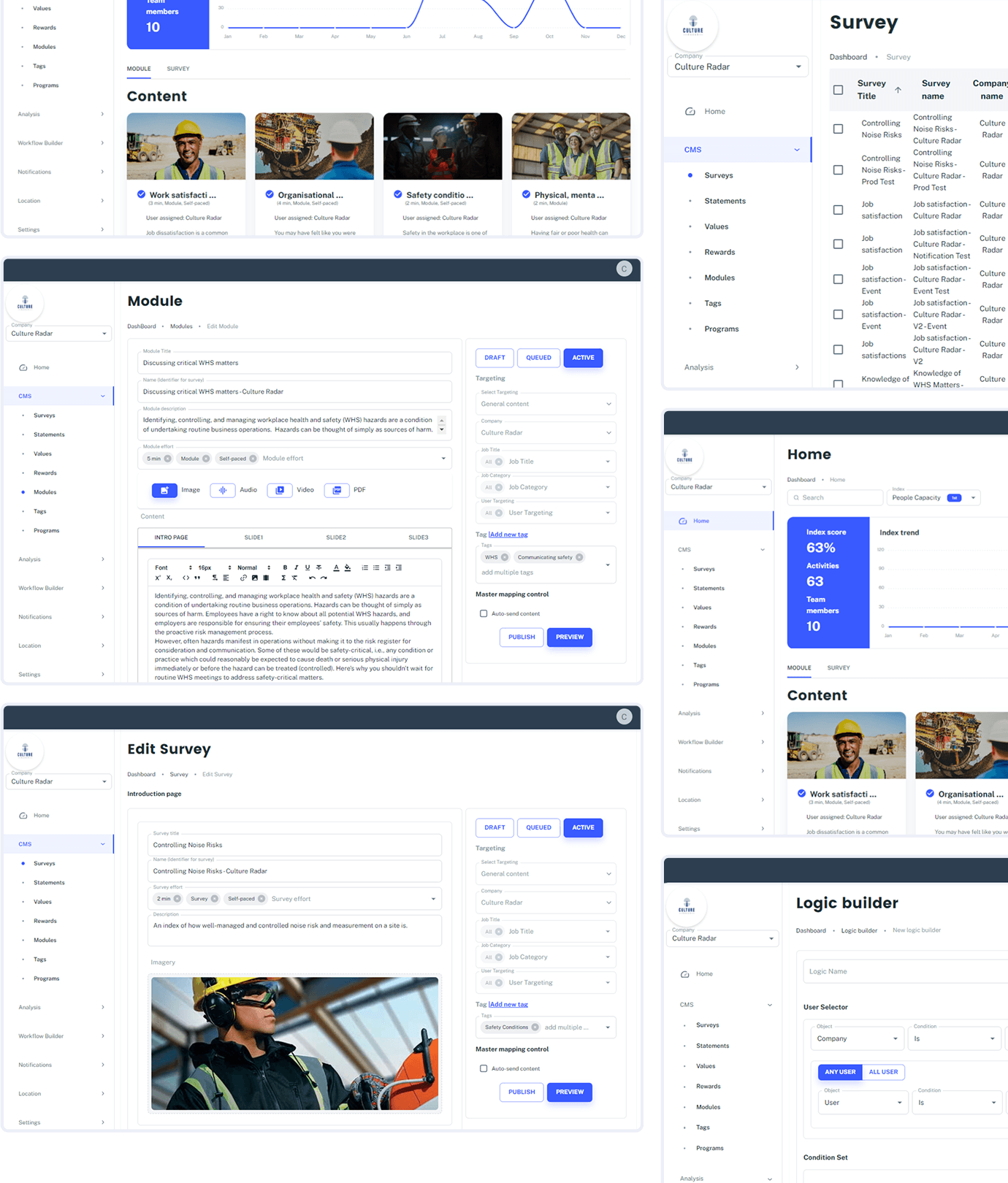
The standout innovation in this project was the Logic Builder. NUS Technology developed a sophisticated function that automates workflows based on conditional actions defined by the administrators.
For Administrators: A streamlined, form-based interface allows admins to easily configure "If This, Then That" rules without needing technical knowledge. For example, an admin can simply select options to ensure that if a user completes Module A, Survey B is automatically unlocked.
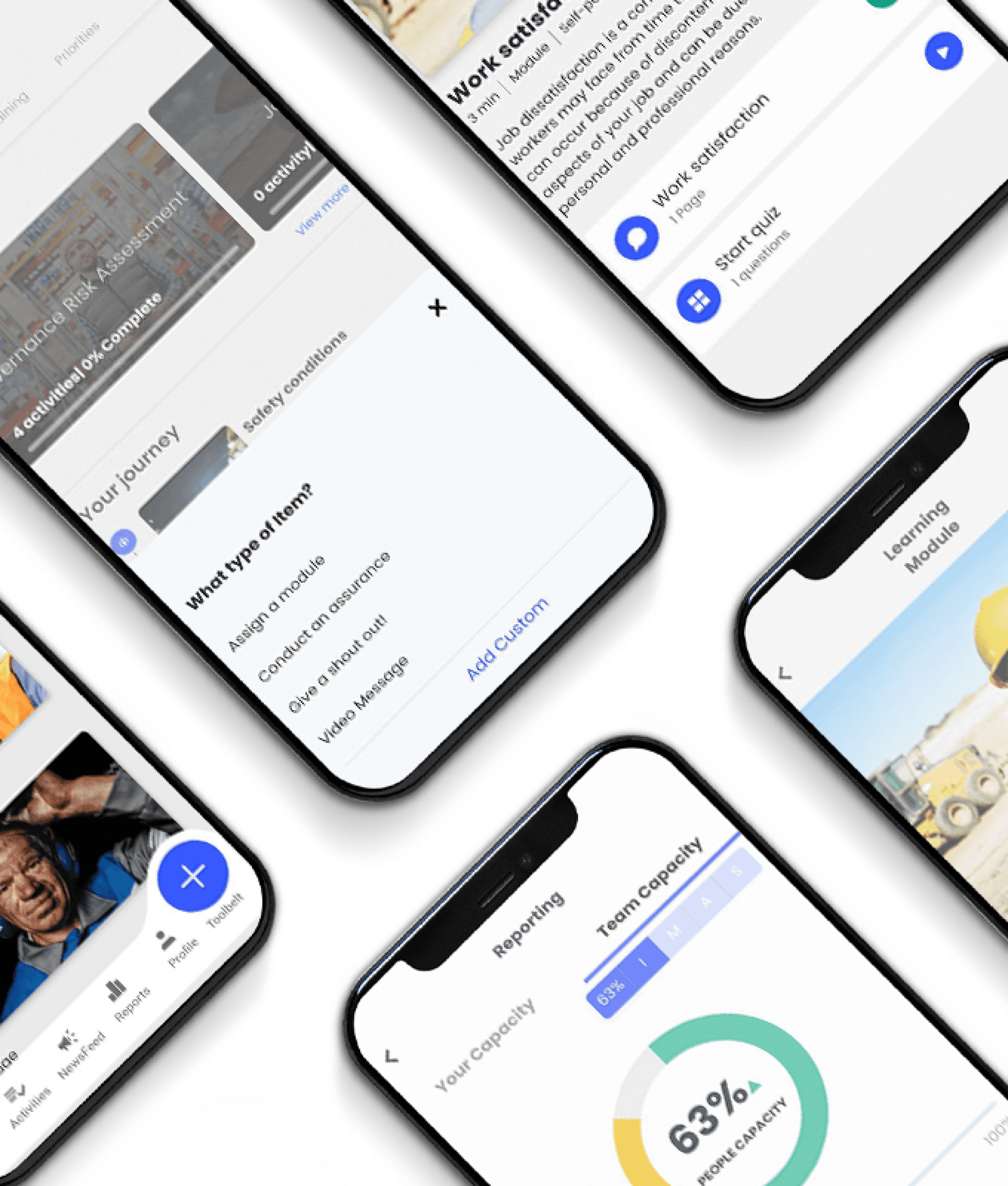
For Mobile Users: A seamless experience where content appears exactly when it is relevant, removing the friction of manual searches or missed notifications.
One of the unique technical requirements was integrating the Logic Builder with the mobile app's .
THE RESULTThe platform successfully launched and scaled rapidly, onboarding 37 companies in its first half-year of operation. The new system delivered significant qualitative improvements:

The Logic Builder drastically reduced the administrative burden on HR teams, allowing them to focus on strategy rather than manual content distribution.
The AWS RDS implementation ensured high availability and secure data retention, building trust with enterprise clients handling sensitive employee feedback.
Companies could now view live statistics and index scores, enabling immediate interventions in workplace culture rather than waiting for annual review cycles.
Streamlined Operations
Enhanced Data Security
Accelerated Feedback Loops

The collaboration between Culture Radar and NUS Technology demonstrates how complex logic and location-based data can be synthesized into a user-friendly platform. By automating the delivery of learning modules and surveys, Culture Radar has empowered organizations to move from guessing about their culture to measuring it with precision.
 TESTIMONIAL
Get the full story in PDF format, including project details, technical insights, and measurable results you can apply to your own business.


Let’s have a strategic conversation about your goals and how we can achieve results like these for your business.



The challenge was to trigger content delivery not just based on time, but on physical presence. The team engineered a solution where the system detects when users log in or out of specific geographical areas defined by the client. This allows for highly contextual data gathering, such as prompting a "Safety Check" survey immediately upon a worker entering a specific job site.
