


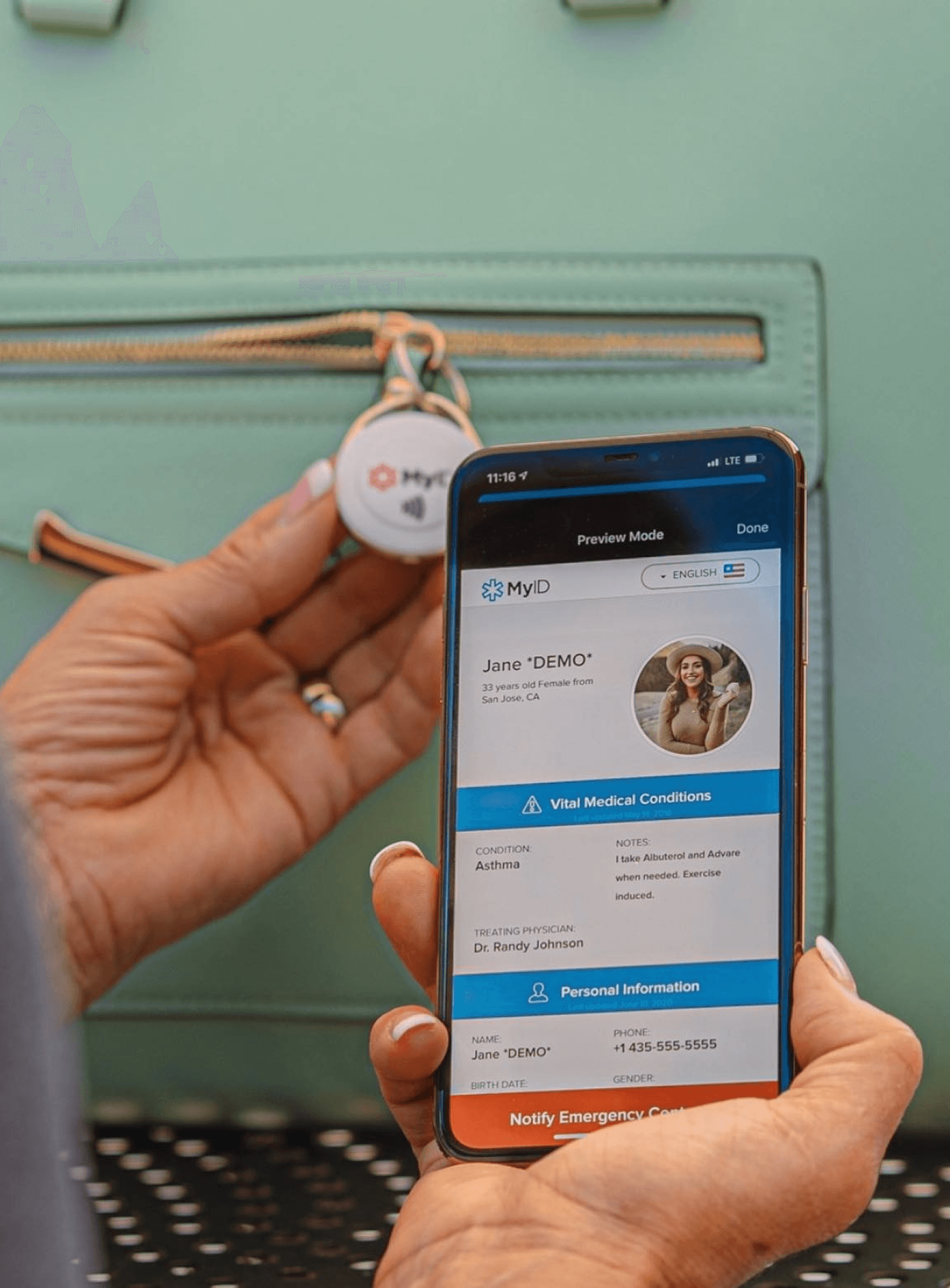
MyID was founded with a simple but powerful mission: to ensure that critical medical information is available when it matters most. By giving individuals a secure, online medical profile that could be linked to wearable products and accessed via QR code, the platform provides peace of mind in emergencies. Whether faced with an accident, an allergic reaction, or a sudden health condition, first responders and caregivers can instantly retrieve essential health data to make informed decisions.
In 2014, MyID partnered with NUS Technology to strengthen and expand its offering. The goal was to transform an existing but underperforming system into a reliable, scalable, and user-friendly platform that could serve individuals globally.

Name

MyID
Backend
Ruby on Rails
Database
MySQL
Frontend
React Native (Mobile), Bootstrap (Web)
Infrastructure
AWS
Industry
Healthcare / Medical Information Management
Market
Global
Integration
Stripe, HealthKit, Google Maps
 THE CHALLENGES
When MyID first approached NUS Technology, the company already had an application in place. However, the existing platform struggled with performance bottlenecks, limited scalability, and a development pace that could not keep up with product demands. For a solution intended to provide life-saving access to information, these issues posed serious risks to user trust and adoption.
The challenge was not to start from scratch, but to take over an existing codebase, stabilize it, and guide it toward a stronger technical foundation. This required both technical expertise and a flexible development process that could adapt to ongoing needs.
 THE SOLUTION
NUS Technology’s team began by auditing the existing application and identifying its weakest points. The backend, powered by Ruby on Rails, was optimized for stability and speed, while the mobile applications were re-built with React Native to support both iOS and Android with a single codebase. For data management, MySQL was retained but restructured for better efficiency.
The platform was deployed on AWS, providing a scalable and secure infrastructure. Recognizing the importance of sensitive data, NUS implemented encryption both in transit and at rest, ensuring that users’ medical details were safeguarded. Key integrations included Stripe for secure payments, HealthKit for syncing health data, and Google Maps for location-based features.
The platform’s design was tailored to its audience: individuals who wanted control over their own health data and the ability to make it available in emergencies.
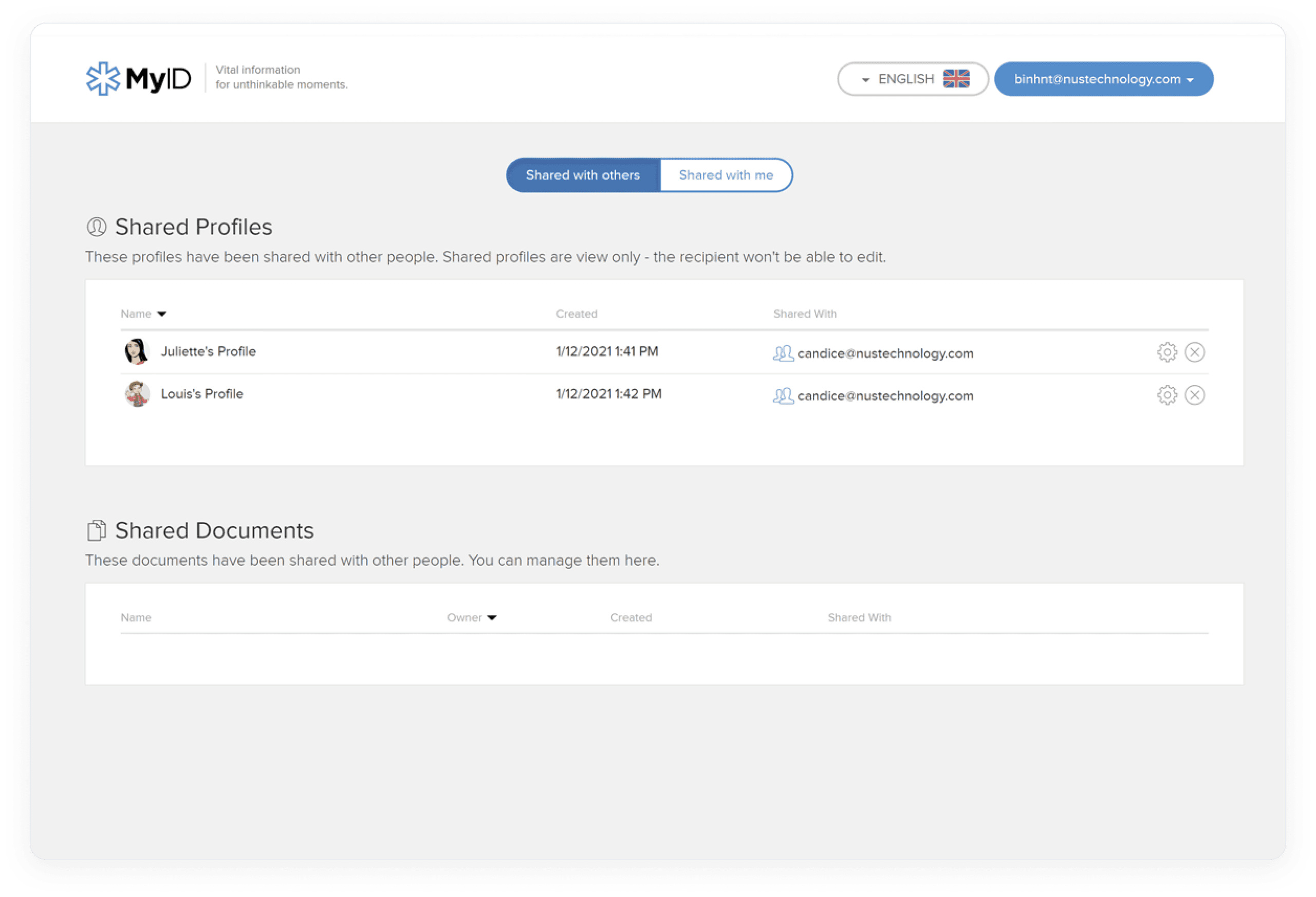
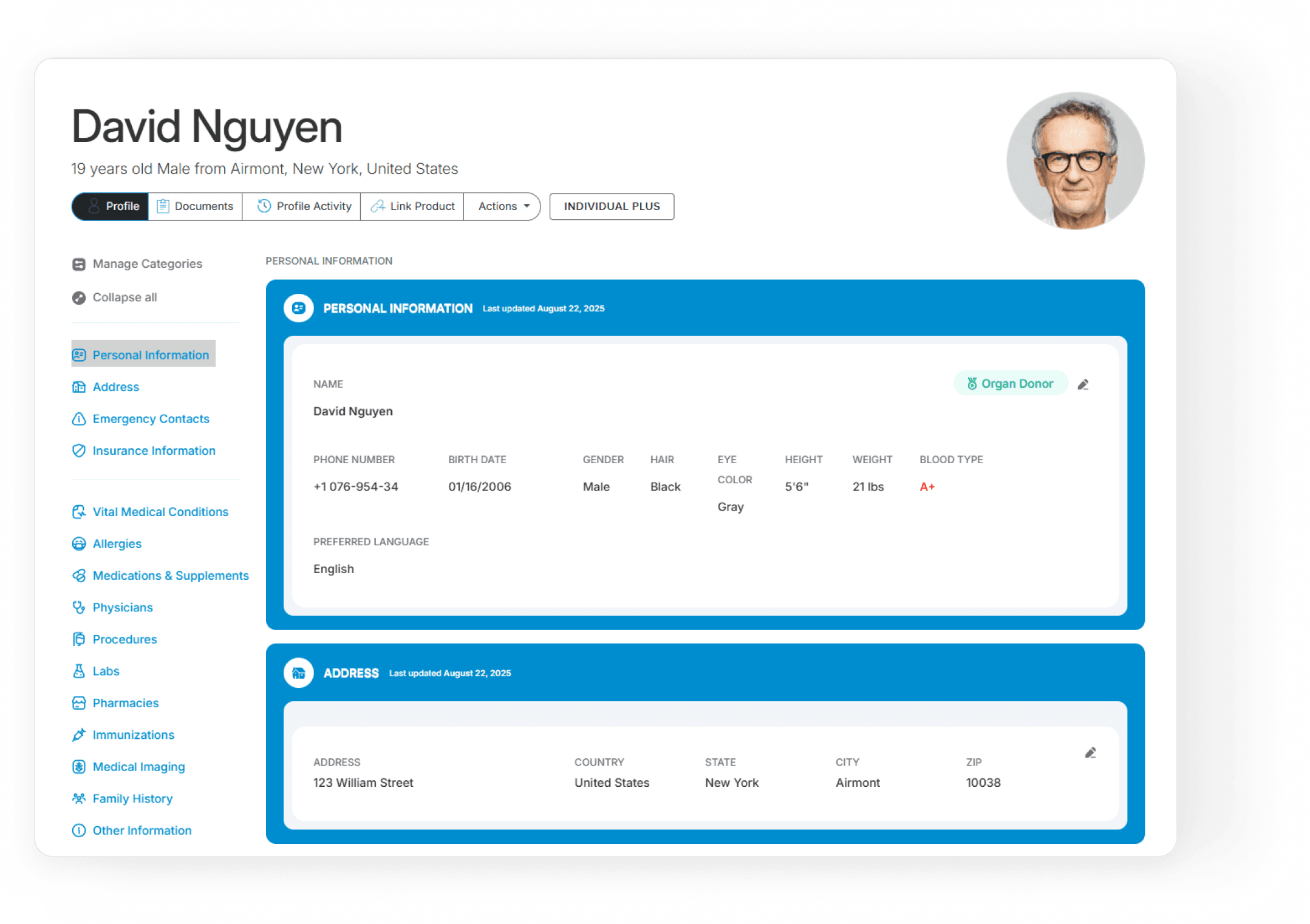
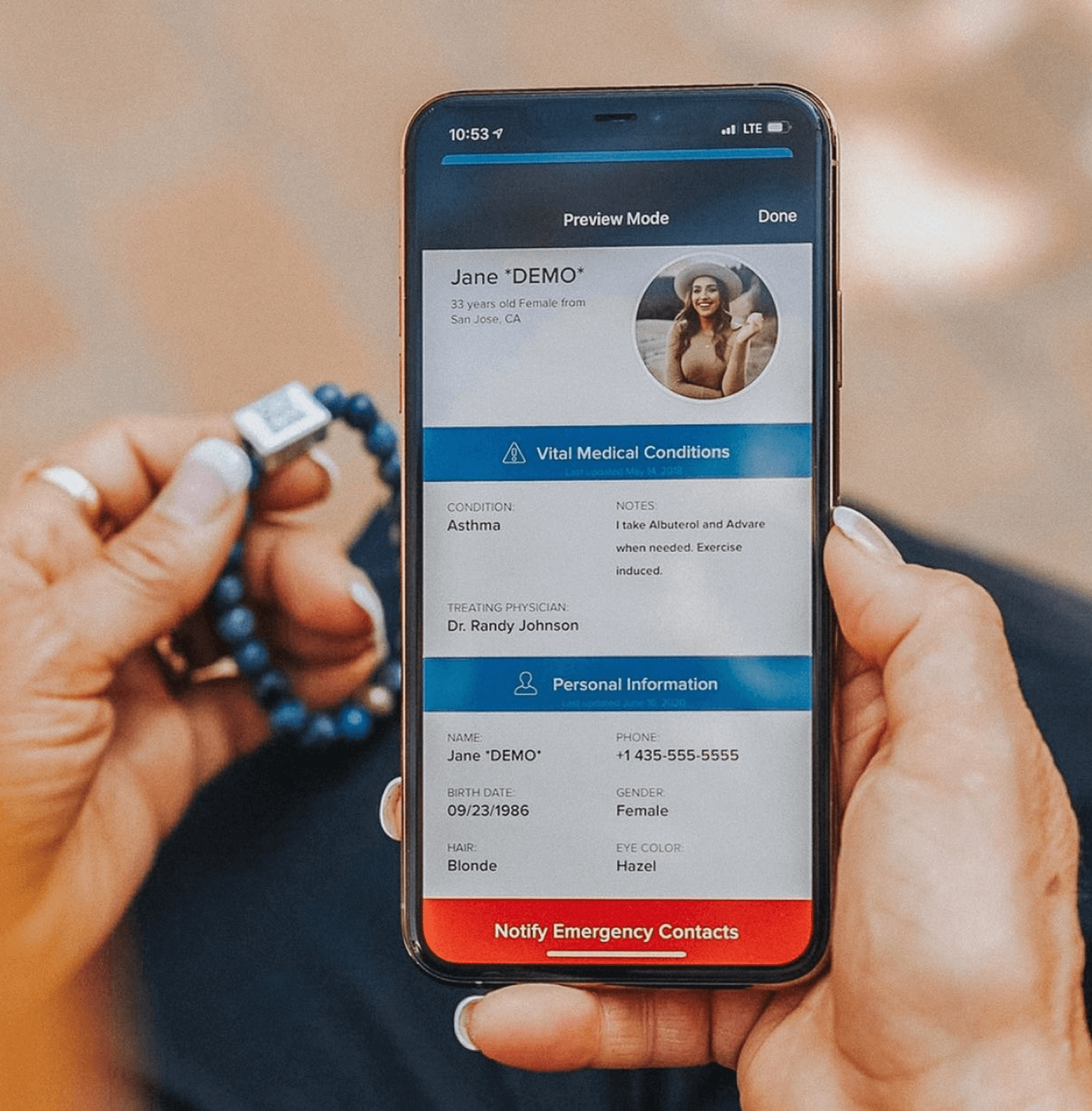
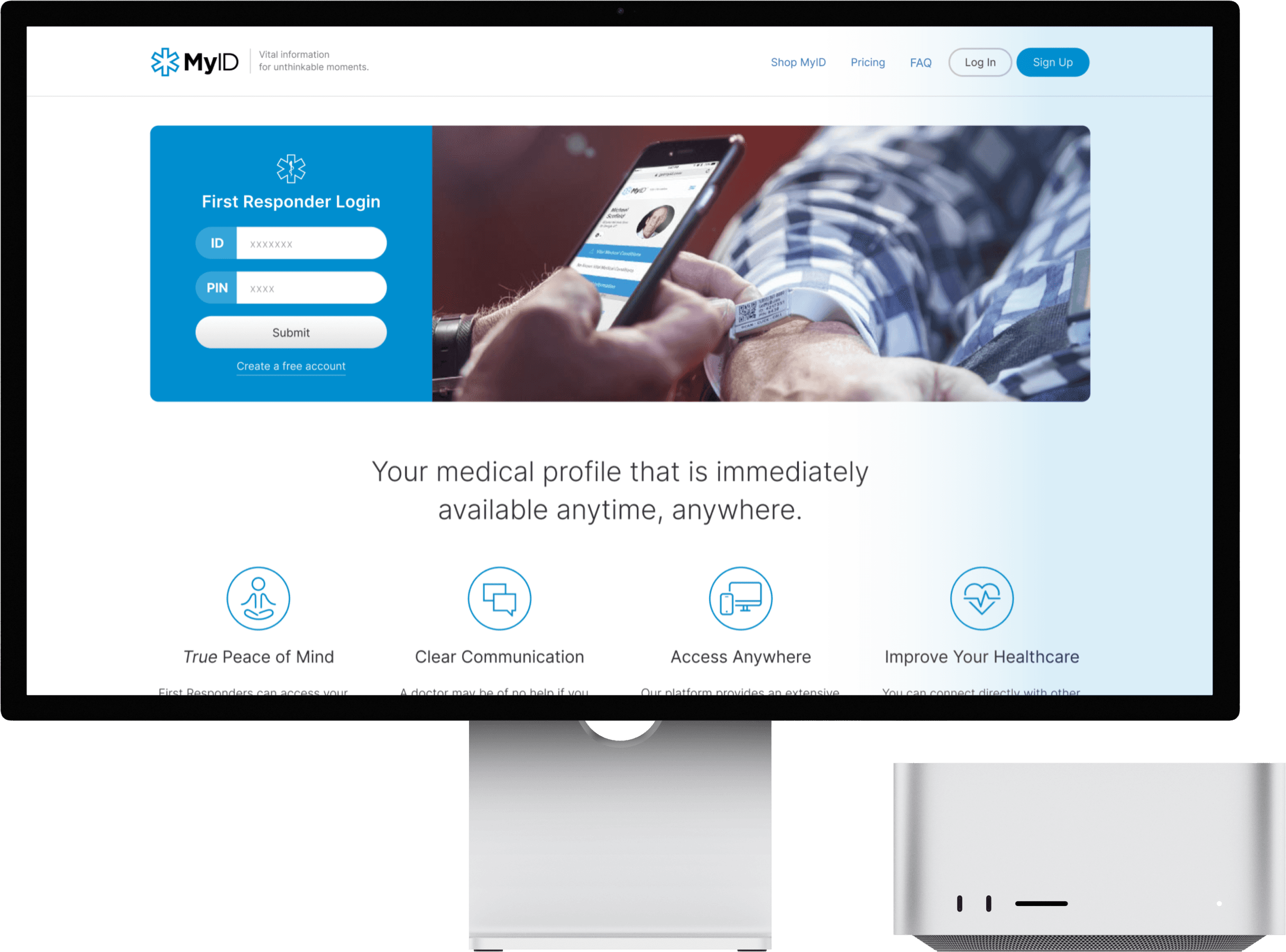
The web application focused on profile creation and management. Users could enter medical histories, upload documents, and customize their accounts. Meanwhile, the mobile apps were streamlined for speed and accessibility. They enabled QR code scanning, quick profile access, and essential features designed to be useful under stress.
Although the initial prototypes were provided by the product owner, NUS Technology ensured that the final implementation delivered a clean, intuitive experience across both web and mobile.
Taking ownership of an existing application meant addressing several technical hurdles. One of the biggest challenges was performance. The original system was prone to slowdowns, which could be critical in emergency use. NUS optimized database queries and refactored key parts of the system, reducing response times by nearly 30%.
Another challenge was file and document management. Users needed a way to securely upload and store medical records, requiring a Dropbox-like file system. The team implemented Marionette for structured file handling and engineered a custom migration solution to transfer data live without downtime.
THE RESULTThrough its partnership with NUS Technology, MyID was transformed into a stable, scalable, and user-friendly platform capable of meeting the demands of a global audience. The system became faster and more reliable, ensuring that users could access their health profiles seamlessly whenever they needed them.
The improvements were especially significant for mobile users, who benefited from a smoother, more responsive application experience. By streamlining the QR-code scanning process and optimizing the way data was retrieved, the platform became much more dependable in emergency situations where every second counts.

More reliable performance, ensuring consistent access to medical data
Smoother app usage with faster QR scanning and improved responsiveness
Stronger encryption and safe handling of sensitive information
Renewed trust and adoption of the platform as a reliable health tool
More reliable
The MyID project showcases how the right development partnership can turn a struggling platform into a trusted, scalable, and life-improving solution. By combining technical expertise with a focus on real-world usability, NUS Technology helped transform an existing product into a reliable global service that empowers individuals to take control of their health information.
For MyID, this meant not only improving performance and security but also building confidence among users that their most vital data would be available in emergencies. For NUS Technology, the collaboration reaffirmed its ability to step into complex projects, stabilize them, and deliver results that matter.
As MyID continues to evolve, it stands as a testament to the impact of thoughtful engineering, user-focused design, and long-term collaboration, qualities that NUS Technology brings to every partnership.
 TESTIMONIAL
Director of Operations
We have worked with NUS Technology for several years now. Working with their team has been a game-changer for MyID. They took on the tough challenge of our existing codebase and transformed it into a fast, stable, and secure platform that our users can rely on during emergencies. They’re more than just developers; they feel like a true extension of our own team who genuinely care about our mission. Their partnership has been key to making MyID the trusted service it is today.
Get the full story in PDF format, including project details, technical insights, and measurable results you can apply to your own business.



We’re currently updating this section. Please check back later for new case studies.
Let’s have a strategic conversation about your goals and how we can achieve results like these for your business.



Smoother experience
Stronger, safer
Better adoption

Security was also a major outcome of the redevelopment. With stronger encryption and safer data handling practices, users could feel confident that their sensitive medical information was being protected while still remaining easily accessible when required.
Perhaps most importantly, MyID gained renewed credibility and adoption. What had once been a promising but underperforming platform evolved into a trusted companion that empowers individuals to manage their health information and share it instantly in times of need.