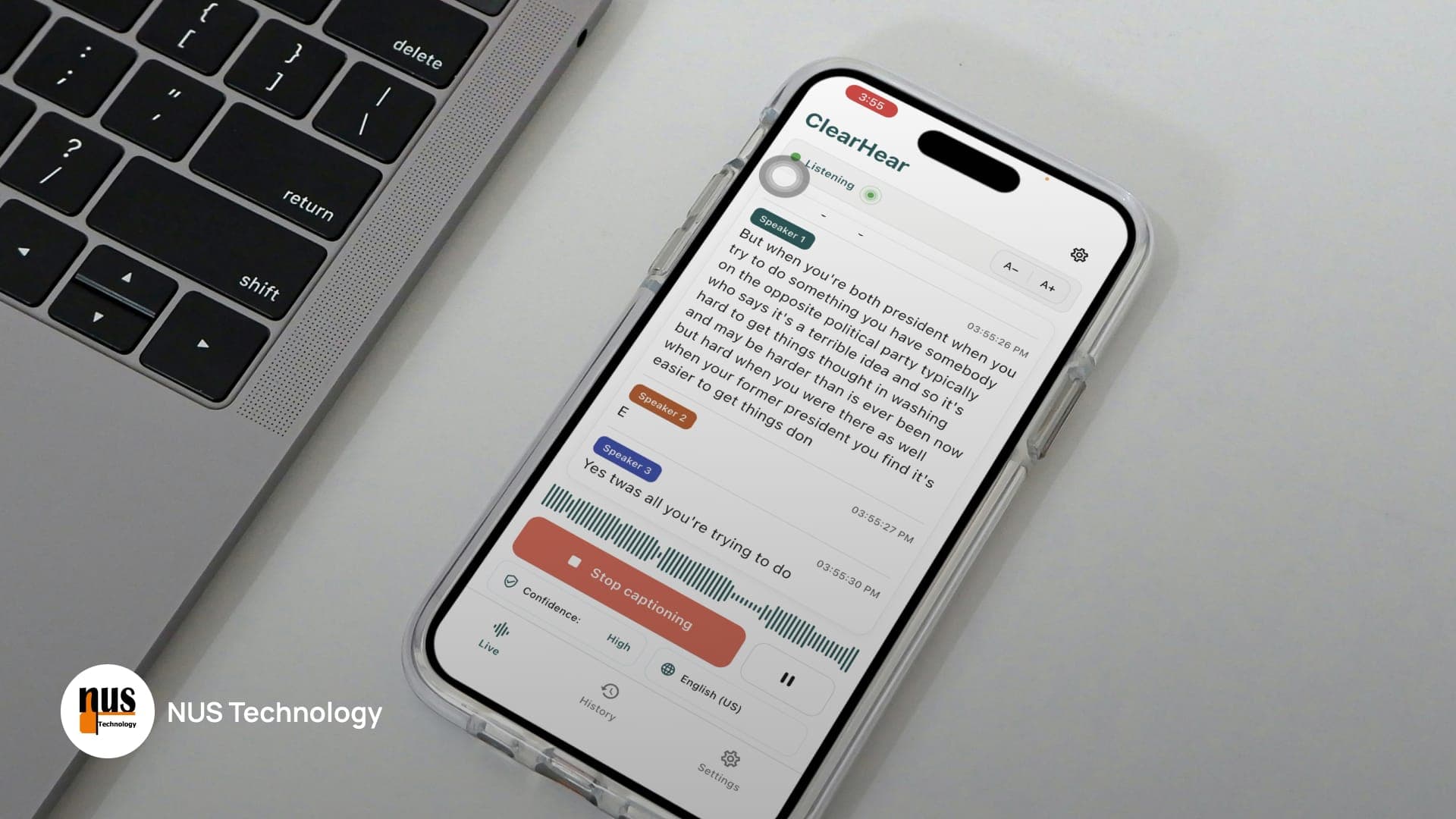

Something changed in late November 2025. Developers across the industry started calling it "Claude Christmas." Anthropic shipped a new version of Claude Code that could autonomously build features, run tests, fix bugs, and review its own output, without a human typing a single line. Engineers who had spent years writing code by hand suddenly felt the ground shift beneath them. One developer told the SF Standard he had written hundreds of thousands of lines of code in two weeks across six side projects. And he had read almost none of it.
So: will AI replace software developers? Partially, yes. The more useful question for you as a founder or product owner is different: what does this actually mean for the software you need to build?
The 2026 Reality Check: AI Has Genuinely Levelled Up
The original version of this post, written in late 2025, described AI as "a copilot that makes mistakes." That was accurate. It is still accurate. But it understates how fast the gap is closing on certain types of work.
The 2025 Stack Overflow Developer Survey found that 84% of developers now use AI tools, up from 15% in 2023. That adoption happened because the tools got genuinely useful. Today's AI coding assistants can scaffold a CRUD application, write test suites, refactor messy legacy code, and generate boilerplate integrations at a speed no human team can match on those specific tasks.
The Pragmatic Engineer's Gergely Orosz, one of the more measured voices in this space, wrote in January 2026 that model releases in late 2025 represented a genuine "tipping point." Things he had spent hours on manually could now be prompted in minutes. That is not hype. That is a practitioner reporting from the field.
Here is what that means in practical terms: the cost of producing mediocre, undifferentiated software is approaching zero. A non-technical founder can spin up a working prototype in an afternoon. A small startup can ship an MVP in weeks rather than months. That is genuinely useful, and it is changing the economics of early-stage product development.
What AI Still Cannot Do (and Why It Matters for Your Project)
The productivity gains are real. But so are the failure modes, and they cluster in exactly the areas where failure is most expensive.
AI does not understand your business. It can write a booking system. It cannot decide whether your booking system should allow partial payments, handle multi-location inventory, or integrate with the legacy ERP your operations team refuses to replace. Those decisions require context, stakeholder interviews, and judgment. They require someone who will still be accountable for those choices six months after launch.
AI-generated code does not maintain itself. The developer on the SF Standard who wrote hundreds of thousands of lines of code "and read almost none of it" will eventually have a production incident. When that happens, debugging unfamiliar AI-generated code under pressure is not faster than debugging code your team wrote and understands.
Complex integrations are still hard. Connecting a storefront to three separate logistics providers with real-time stock sync and compliance-grade audit trails is not a prompt. When NUS Technology built the warehouse management system for a French agricultural eCommerce company, the project required custom integrations with XPO Logistics, DB Schenker, and GLS, plus a barcode-scanning Android app, farm management modules, and dynamic seasonal pricing. That kind of complex system integration does not reduce to a series of prompts to an AI agent. The decisions involved are too interdependent, and the cost of getting them wrong is too high.
The Junior Developer Squeeze: A Real Trend with a Long Tail
One area where the AI impact on software developers is genuinely significant, and not hype, is the entry-level job market.
A Stanford Digital Economy Study found that employment for software developers aged 22-25 declined nearly 20% from its peak in late 2022 by July 2025. Entry-level and "junior developer" job postings are down roughly 40% compared to pre-2022 levels, while the number of computer science graduates has continued to rise. Salesforce announced it would stop hiring new engineers for 2025. Klarna froze developer hiring. Companies that used to absorb early-career developers as a long-term investment have stopped doing so.
This is a real structural shift. AI tools can handle the boilerplate, scaffolding, and pattern-matching work that used to be the training ground for junior developers. The entry ladder is shortening.
But here is what most coverage misses: the mid-to-senior developer market is tighter, not looser. The U.S. Bureau of Labor Statistics still projects 17% growth in software engineering jobs through 2033. The demand is not disappearing. It is restructuring toward people who can architect systems, manage AI-generated output, make sound product decisions, and take ownership of what goes into production. That is a different kind of scarcity from "too many developers."
What This Means if You Are Hiring a Development Partner
If you are a founder or operations leader deciding whether to build with AI agents or hire a software development team, here is the honest breakdown.
AI tools are the right call when:
- You need a prototype or proof-of-concept quickly
- The product is relatively simple and well-defined
- You have a developer on your team who can supervise, debug, and own the output
A development partner is the right call when:
- You are building something that runs core business operations
- The system needs to integrate with other platforms your business relies on
- You need someone accountable for what gets built, not just what gets generated
- You expect to maintain and evolve the product over years, not months
The distinction matters because AI agents do not call you when something breaks at 3am. They do not push back when a requirement is under-specified. They do not carry forward the institutional knowledge of every architectural decision made over the life of your product.
Workflow automation and operational visibility work, in particular, depends on someone deeply understanding how your processes actually work, not just generating code that approximates them.
How Good Engineers Are Actually Using AI Right Now
The developers who are thriving in 2026 are not ignoring AI tools and they are not handing over their keyboards. They are using AI as a productivity multiplier on well-understood tasks while applying human judgment to every decision that actually matters.
In practice, that looks like:
- Using AI to scaffold boilerplate, then reviewing and rewriting the parts that matter
- Prompting AI to draft test cases, then auditing coverage gaps manually
- Using AI to explore multiple implementation approaches quickly, then choosing based on architectural considerations the AI does not have access to
- Generating first drafts of documentation and API specs, then editing for accuracy
A GitHub study found developers using AI assistants completed tasks up to 56% faster on tasks where the domain is well-understood. The gains are real. But they accrue to engineers who can judge when the AI is wrong, which requires deep understanding of what right looks like.
This is exactly why NUS Technology invests in platform modernisation projects rather than just feature delivery. When you took over the Your Best Grade nursing exam platform after 11 years of technical debt, cutting the Test Creator load time from 70-120 seconds down to 3-7 seconds was not a prompt-engineering exercise. It required a full audit of the Rails backend, Redis caching with AWS ElastiCache, and a clear architectural decision about where the bottleneck actually lived.
FAQ
Will AI fully replace software developers?
Not in any near-term timeframe that should affect how you build products today. AI tools can generate code, but they cannot own decisions, manage tradeoffs, or take accountability for what runs in production. The more likely outcome, already visible in the data, is a restructuring: fewer junior generalist roles, stronger demand for engineers who can supervise, architect, and guide AI output. The U.S. Bureau of Labor Statistics still projects 17% growth in software engineering jobs through 2033.
Should I use AI coding tools to build my MVP?
Possibly, yes, for the prototype stage. AI tools are genuinely useful for scaffolding a working proof-of-concept quickly. The question is what happens next. If your MVP is the foundation for a product your business will run on, you want human engineers who understand the system, can maintain it under pressure, and can make architectural decisions as your requirements evolve. Many companies discover the AI-generated version of their product becomes a liability faster than they expected.
What kinds of software projects still need a real development team in 2026?
Projects where failure has real consequences: healthcare platforms, logistics and operations systems, multi-tenant SaaS products, anything requiring compliance-grade security or deep third-party integrations. These projects need engineers who can be held accountable, who understand the business context, and who will still be there when something breaks. AI agents are not yet equipped to handle that kind of ownership.
How is AI changing how software development agencies work?
The honest answer is that it is compressing timelines on well-understood work and raising the bar on complex work. Agencies that were primarily selling execution speed on generic tasks are under pressure. Agencies that specialise in hard problems, long-term partnerships, and systems that require real domain knowledge are seeing demand increase. The value of 12+ years of experience building mission-critical systems in specific industries does not diminish when AI gets better at writing boilerplate.
The Bottom Line
AI coding tools have genuinely improved. The step-change was real. Junior developer hiring is contracting. Some types of software are now cheaper and faster to build than they were two years ago.
But the question was never really "will AI replace software developers?" It was always: "will AI replace the judgment, accountability, and domain knowledge that makes software actually work?" On that question, the answer in 2026 remains no.
If you are building something your operations depend on, or a product you intend to grow and maintain over years, the calculus has not changed as much as the headlines suggest. You still need engineers who understand your system, own the decisions, and will be there when things go wrong.
If you want to talk through what your project actually needs, our team at NUS Technology has been building complex software for international businesses since 2013. Tell us what you're working on and we can give you a straight answer.
NUS Team
Share This Article