Signs Your Rails App Needs a Rescue Project (Not a Rewrite)
 April 8, 20267 min read
Your Rails application has been running in production for a few years. It works. Sort of. Deployments still happen, users still log in, revenue still comes in. But something has quietly shifted. Features that used to take a week now take a month. Your engineers dread certain parts of the codebase. And somewhere in the back of your mind, you keep wondering if the whole thing is one bad deploy away from an outage.
That feeling is worth paying attention to. Most Rails apps that reach this state do not need a full rebuild - they need a Rails rescue project: a structured, incremental effort to stabilise, optimise, and modernise the parts of your system that are causing the most pain.
The question is knowing when you are actually there, and not just dealing with normal growing pains.
Your Engineers Are Spending More Time Firefighting Than Building
Here is one of the clearest signals: look at how your engineering team actually spends its week.
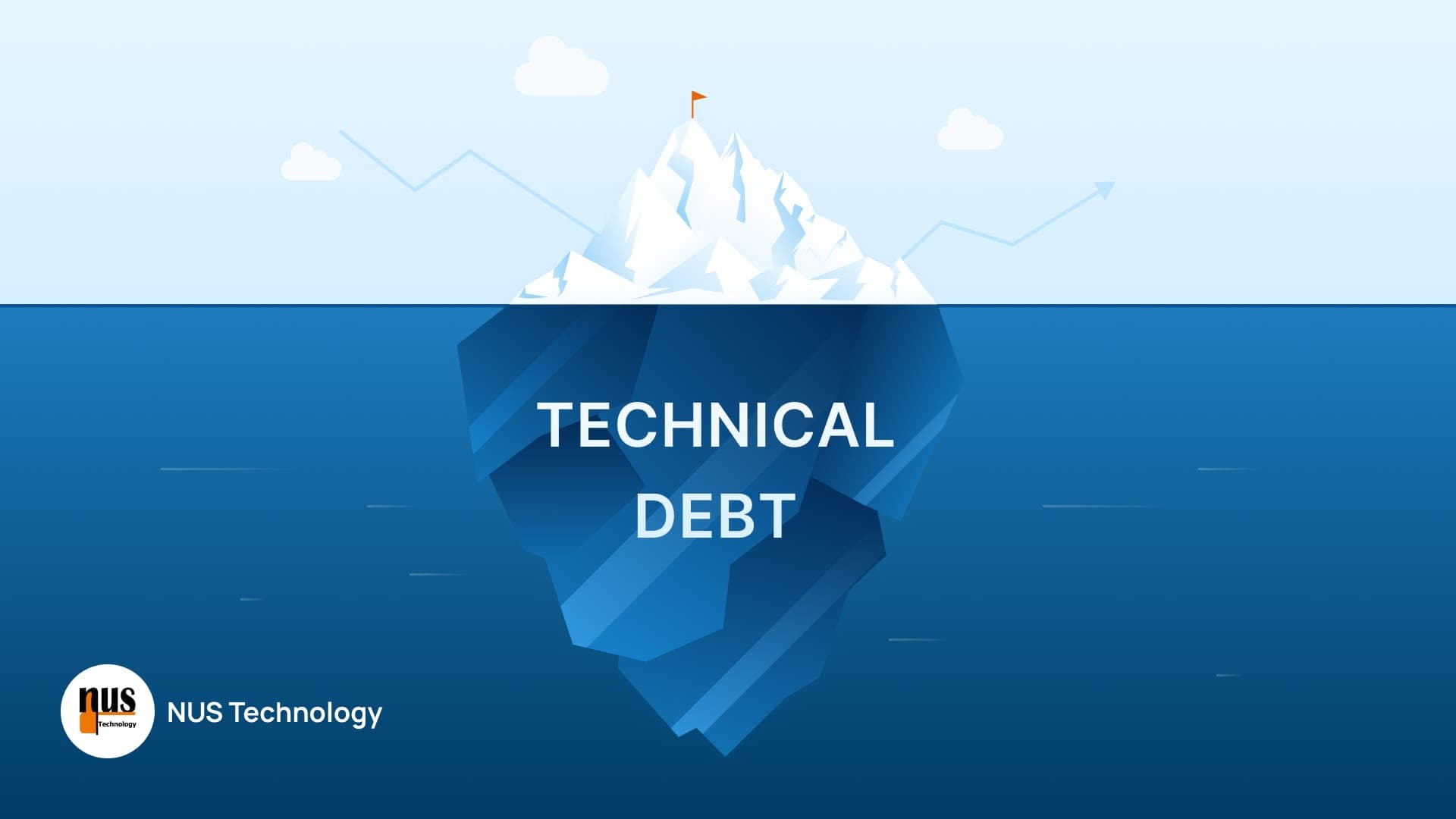
According to Stripe's Developer Coefficient report, developers spend around 33% of their working time - roughly 13 hours per week - dealing with technical debt and bad code rather than building new features. For a team of five engineers, that is effectively one and a half full-time developers consumed entirely by maintenance work.
In a healthy Rails app, that number should be far lower. When your team is constantly patching the same broken workflows, chasing intermittent bugs they cannot reproduce reliably, or spending half a sprint upgrading a gem that conflicts with three others, the codebase is no longer serving the business - the business is serving the codebase.
The tell-tale pattern: your sprint velocity looks reasonable on paper, but almost nothing new ships. Tickets sit in "in progress" for two or three times longer than estimated. Your engineers know which parts of the codebase to avoid and route new features around them, which compounds the problem over time.
Deployments Have Become a High-Stakes Event
Deploying to production should be boring. It should happen multiple times a week without anyone losing sleep.
If your team has drifted into a pattern of large, infrequent deployments that require a dedicated "war room" session - or if someone always needs to be on standby to roll back - your app has crossed into rescue territory.
The root cause is usually one of three things: no meaningful test coverage (so every change is a gamble), tightly coupled code where a change in one model silently breaks behaviour three layers away, or an infrastructure setup that was never designed to support zero-downtime deploys.
When NUS Technology took over the MyID emergency medical profile platform, the existing codebase had performance bottlenecks and fragile infrastructure that made every release a risk. The first priority was not new features - it was restoring deploy confidence and cutting response times before anything else. That kind of stabilisation work is the core of a Ruby on Rails rescue and maintenance engagement.
Performance Has Degraded to the Point of Affecting Users
Slow is a relative term, but there is a threshold where slow becomes a business problem.
A McKinsey Digital study found that organisations with high technical debt deliver new features 25-50% slower than competitors and spend 40% more on maintenance costs. But the user-facing side of performance debt is just as damaging: customers who hit slow load times or errors are three times more likely to churn, according to technical debt quantification research from Full Scale.
In Rails apps, performance degradation usually follows a predictable pattern. It starts with N+1 queries nobody noticed during development. Then missing database indexes as traffic grows. Then background job queues backing up. Then database CPU spiking to 100% during peak load.
The YourBestGrade platform, an EdTech product NUS Technology has worked on for 8+ years, had a Test Creator feature timing out at 70-120 seconds under load. The fix was not a rewrite - it was a Redis caching layer (AWS ElastiCache) that decoupled question-serving from the database entirely. Test creation dropped to 3-7 seconds. That kind of targeted intervention is what a platform modernisation engagement looks like in practice.
Your Gem Dependencies Are Years Out of Date
Outdated gems are not just a housekeeping issue. They are an active liability.
Rails 7.1.x hit end-of-life for security fixes in October 2025. If your app is still running on Rails 6.x or earlier, it is receiving no security patches at all. That matters especially if your app handles payments, medical data, or any personally identifiable information.
Beyond security, dependency debt creates a compounding problem. One outdated gem can block a Rails version upgrade. That Rails upgrade block prevents you from using newer Ruby features. Which means you cannot adopt libraries that require modern Ruby. Which makes hiring harder because newer engineers are unfamiliar with the old patterns.
The practical warning sign is when your bundle outdated output is so long that nobody looks at it anymore. Or when a dependency upgrade that should take a day becomes a two-week archaeology project to untangle conflicts. Complex system integration work often begins exactly here - unpicking years of accumulated dependency tangles before the real integration work can even start.
New Engineers Cannot Get Productive in a Reasonable Time
A codebase that only two or three "original" engineers can navigate is a business risk, not just a technical one.
If onboarding a new backend developer takes more than two weeks before they can make a meaningful contribution - not because of domain complexity, but because the codebase is inconsistent, undocumented, and full of implicit conventions - you have a rescue-level problem.
This is distinct from just having a complex product. Complex products are fine. The issue is when complexity has accumulated through years of quick fixes, inconsistent patterns, and undocumented workarounds that made sense to someone at the time but left no trail.
Research from Sonar found that technical debt costs the equivalent of 5,500 developer hours per year for a one million line-of-code project, roughly $306,000 in engineering time. Onboarding friction is a significant but often uncounted part of that figure. When a mid-level engineer spends four hours trying to understand why a model has three different ways of calculating the same value, that cost is invisible on a sprint board but very real on a balance sheet.
The Business Is Growing Faster Than the Platform Can Support
This is the sign that many teams miss until it is urgent: your application architecture was designed for a version of your business that no longer exists.
Maybe you started as a two-sided marketplace serving one country and are now multi-region, multi-currency, and multi-tenant. Maybe what was a simple CRM has become the operational nerve centre for 50 staff. Maybe your data volume has grown 10x but your database schema and query patterns have not changed.
When the architecture was designed for a simpler version of the business, growth puts pressure on every seam. You start hitting edge cases that were never anticipated. Workflows that worked fine for 100 users break unpredictably at 10,000. Integrations that were acceptable become bottlenecks.
This is the scenario where a rescue project overlaps with an operations backbone rebuild - not a full rewrite from scratch, but a structured effort to redesign the load-bearing parts of the system so the rest can evolve safely. The distinction from a full rebuild is important: you keep what works, you stabilise what is fragile, and you replace only what cannot be salvaged.
What a Rails Rescue Project Actually Involves
Most articles list the warning signs and leave you there. But it is worth being clear about what a rescue engagement actually looks like, because it is not a single sprint and it is not magic.
A well-run Rails rescue project typically starts with a codebase audit: reviewing server logs, database activity, slow query logs, Sidekiq queue behaviour, test coverage gaps, and gem dependency health. The goal is to build a prioritised list of problems ordered by business impact, not just technical elegance.
From there, the work usually proceeds in roughly this order: stabilise (fix the things that are causing production incidents), optimise (address the performance bottlenecks affecting users), modernise (upgrade dependencies, improve test coverage, refactor the worst-offending areas), and finally enable (get the codebase to a state where the team can ship new features confidently again).
The HelpfulCrowd project is a good example of this sequence in practice. NUS Technology ran a deep performance audit, rewrote SQL queries and added indexing, migrated infrastructure from AWS to Heroku to cut costs by 50%, and reduced 95th-percentile server response times from several seconds down to 500ms. Only after stabilisation did new feature work - including an OpenAI integration and a frontend redesign - become viable. You can see more examples like this in our case studies.
FAQ
How do I know if my Rails app needs a rescue project or a full rebuild?
If your core business logic still works and your team can onboard new developers within a few weeks, even if painfully, a rescue project is almost always the better option. Full rebuilds take 12-18 months, carry high risk of scope creep, and often recreate the original problems if the root causes are not understood. A rescue makes sense when at least two or three of the warning signs above apply. A full rebuild is only justified when the existing codebase is completely unmaintainable - when nobody understands it and it cannot be safely changed at all.
How long does a Rails rescue project typically take?
It depends on the severity of the problems and the size of the codebase, but a realistic range is 3-6 months for stabilisation and initial modernisation, with ongoing maintenance engagement afterward. Some targeted performance fixes can show results in the first 2-3 weeks. Expecting a full rescue to be complete in a single sprint is a common mistake - the issues took years to accumulate and take months to resolve properly.
What does a Rails rescue project cost compared to a rewrite?
A rescue project is typically 30-60% cheaper than a full rewrite for an equivalent codebase, and delivers value much faster because you are iterating on something that already works rather than waiting for a new system to be built from scratch. The more important comparison is the ongoing cost of doing nothing: engineering time lost to maintenance, delayed features, and the compounding risk of running on unsupported dependencies.
Can we keep shipping features while a rescue project is underway?
Yes, and in a well-run rescue engagement you should be. The approach is to stabilise the highest-risk areas first so that normal development can continue in parallel. Stopping all feature work to "fix the codebase" is rarely practical and often unnecessary. The goal is to reduce the drag on your existing team, not to pause the business.
Conclusion
A Rails application that has become a source of anxiety rather than confidence is not necessarily broken - it is a signal that the codebase has accumulated debt faster than it has been paid down. The six signs above are not binary: most struggling applications show several of them at once, and the pattern usually gets worse before anyone acts.
The good news is that most Rails applications at this stage do not need to be thrown away. They need focused, experienced attention from engineers who have done this before.
If several of these signs are familiar, the right next step is a codebase audit before committing to any particular solution. If you want to talk through what that looks like for your specific situation, reach out to the NUS Technology team - we have been doing this kind of work with international clients since 2013.